Taha Hussein: The Blind Boy Who Became Dean of Arabic Literature and Made Education a Right "Like Water and Air"
A blind child from a village in Upper Egypt became the "Dean of Arabic Literature" — and when he took over the Ministry of Education, he turned his own maxim, "education is like water and air," into the 1950 decree that made secondary schooling free. It is a journey that tells every reader: knowledge is a right of citizenship, not the privilege of a class. So how did a man who never saw the light bring it about?
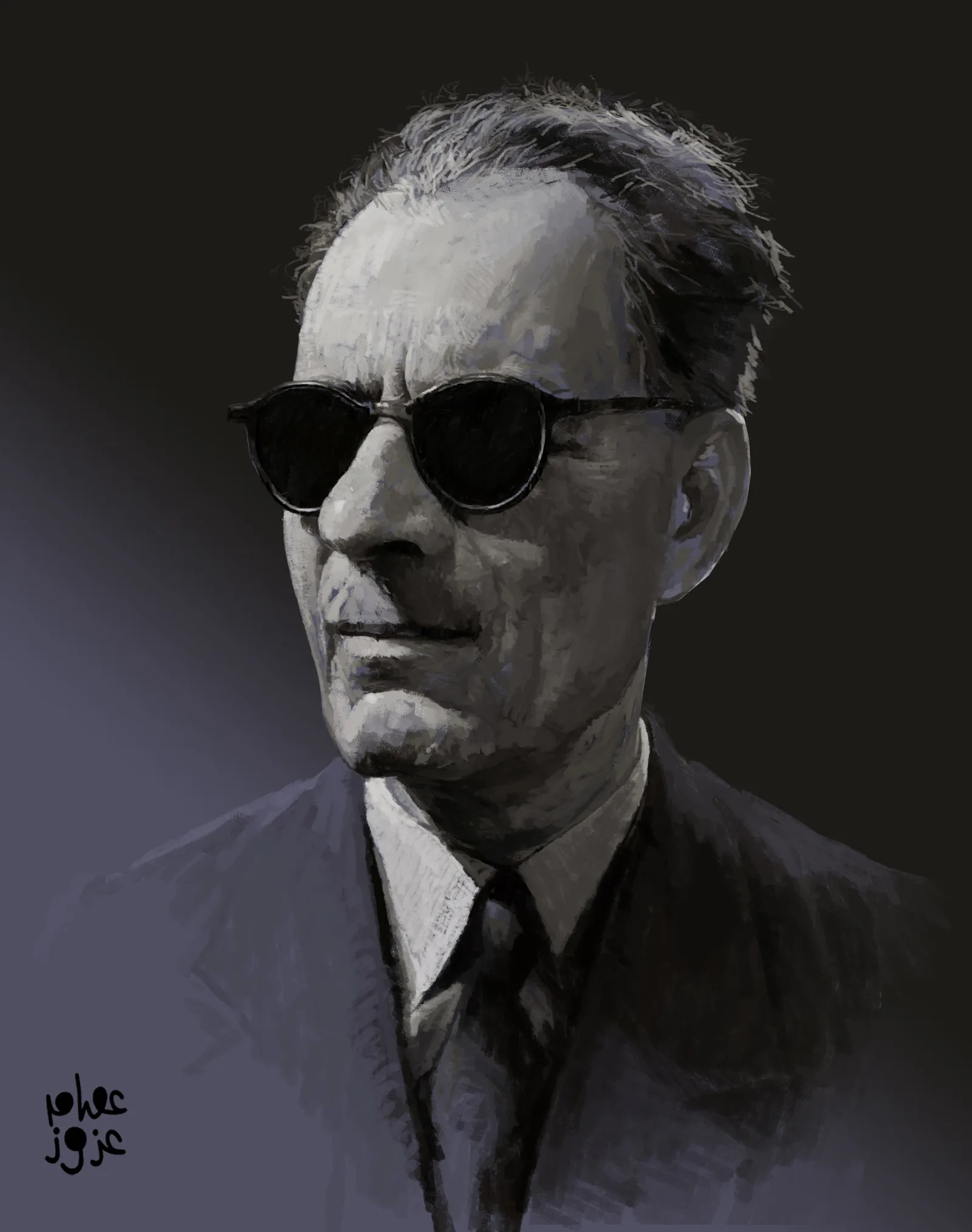
Picture a small village near Maghagha in the governorate of Minya in the closing years of the nineteenth century: no electricity, no doctor, and no schooling beyond a kuttab where boys learned the Qur'an by heart. Taha Hussein was born in that village in 1889, and there, still a small child, he lost his sight when his infected eyes were treated with folk remedies by people who knew nothing of medicine. The story could have ended right there, as the stories of thousands of children swallowed by poverty ended without a trace. But this blind boy in particular would become the Dean of Arabic Literature, and decades later would sign a decree that opened the doors of secondary schools to every Egyptian child.
Losing his sight was not merely a private tragedy in the man's life; it was his first lesson in what ignorance means and what it costs. His eyes were not struck by a disease that defeats science; they were struck by ophthalmia, and lost to an ignorant cure. That simple, brutal fact would inhabit everything he wrote: ignorance is not a shortage of information but a hazard that tears out eyes and squanders lives. From there you understand why Taha Hussein never treated education as a cultural luxury, but as a matter of life and death.
At the kuttab the boy committed the entire Qur'an to memory, proving that his recall was sharper than his classmates' eyesight. Then, still a child, he was taken to Cairo to enroll at al-Azhar, where he spent years studying in the old manner: circles of memorization, repetition, and commentary heaped upon commentary. But his restless mind refused to receive without asking; he chafed at rote learning, and some of his sheikhs chafed at him. His unruly questions were the first announcement that a critic was being born, and his first collision with an education that demanded obedience before understanding.
Then came the moment that changed his course entirely: the opening of the Egyptian University in 1908. He enrolled in its earliest days and sat listening to kinds of knowledge unfamiliar in the study circles he had known — history, civilizations, modern methods of research. In 1914 he received the first doctorate the university ever awarded, on Abu al-Ala al-Maarri. The choice of al-Maarri was no accident: another blind man who laid siege to his age with his intellect, as though the blind student were writing about his distant master to say that blindness had stopped neither of them from seeing further than everyone else.
He then travelled to France on a scholarship, from Montpellier to the Sorbonne in Paris, and there fought a silent daily battle: a foreign language learned by ear, and references he could read only through other people's eyes. He mastered French, absorbed Western research methods, and earned a Sorbonne doctorate on Ibn Khaldun. There, too, he met Suzanne, the young Frenchwoman who read aloud to him and so became his eyes, then his wife and lifelong companion to the end. Their story carries a lesson no less valuable than the degrees: brilliance alone is never enough; behind every ascent is a hand that took hold of another, and a small circle of people who believed in a man before the world did.
He returned to Egypt as a university professor, and in 1926 detonated the most dangerous of his intellectual battles with the book On Pre-Islamic Poetry: he applied the method of systematic doubt to verse attributed to the age before Islam and argued that much of it was forged, composed long afterward. The country erupted: press campaigns, uproar in parliament, formal complaints that reached the public prosecutor. The investigation ended with the complaint dismissed — the man was deemed a scholar advancing a scholarly opinion, not an offender bent on insult — a decision that became a landmark in the history of freedom of inquiry in Egypt. He revised the book and reissued it as On Pre-Islamic Literature, but the message had already landed: the university is a place for questions, and ideas are answered with ideas, not with courts.
In those same years he began publishing The Days, the memoir he wrote about himself in the third person: a blind boy in a forgotten village, feeling his way along walls, storing up voices, retaining what the sighted could not. Whole generations of schoolchildren were raised on that book, and it was translated into several languages as one of the first modern autobiographies in Arabic. But read it today with a different eye: not only as fine literature, but as a document of educational deprivation, and of a child who broke the cycle because one single door opened in front of him. The question the book leaves hanging over every reader is this: how many talents like his died because the door never opened?
When he became dean of the Faculty of Arts, he entered a battle of another kind, and its subject was the dignity of the university. In the early 1930s he refused to let honorary degrees be handed out as favours to politicians; he paid for it and was pushed out of the university under the Sidqi government. He lost his post but not his stand, and he went on writing and resisting until he returned to his place years later, vindicated. The lesson here goes beyond the man himself: the independence of educational institutions is not an administrative comfort but the first condition for producing knowledge that commands respect and graduates who can hold their heads high.
Then came the book that turned the thinker into the author of a national project: The Future of Culture in Egypt, in 1938. He wrote it after the 1936 treaty, gripped by a single question: what use is independence if we do not use it to build the human being? His answer was categorical: education first, for education is as necessary to life as water and air, and the state has a duty to provide it to all its children rather than sell it to those who can pay. The phrase was no rhetorical ornament but a full programme of action: schools with room for everyone, Arabic taught through modern curricula, and universities spreading beyond the capital.
In January 1950 he was handed the opportunity a thinker is rarely given: to have his ideas judged by their execution. He took over the Ministry of Education in the Wafd government, converted the slogan into a decree, and declared secondary education free in 1950, raising his famous line: education is like water and air, a right for every citizen. He lasted only about two years in office, but the decision opened the road for the sons of peasants and workers into secondary schools and then universities, and changed the face of Egypt's educated class for decades afterward. This is how real policy is measured: not by the noise of its launch, but by the number of doors it opens for those with no backing and no connections.
His siding with ordinary people was not simply a ministerial slogan; it was the very substance of his literature. In The Call of the Curlew, The Tree of Misery, and The Sufferers on Earth he wrote about the poor, the crushed, and the victims of ignorance and disease — indeed, The Sufferers on Earth so unsettled the censors of the day that it first appeared outside Egypt. Literature, for him, was not salon decoration but a standing plea on behalf of people who have no one to plead for them. Pull on that thread and the unity of his project appears: the novel, the essay, and the ministerial decree were all weapons in a single war against deprivation.
Taha Hussein died on 28 October 1973, a few days after the fighting stopped in the October War, as though he had refused to leave before the country knew an hour of pride. He had been nominated for the Nobel Prize more than once, carried the title Dean of Arabic Literature unchallenged, and seen his books translated East and West. But his true monument is neither a statue nor a street bearing his name: it is every child who walks into a state school without a father paying for the seat, and every young woman from a distant village standing today in a university lecture hall.
So what do you take from this story? Take three practical things. First: put The Days into your children's hands; our shelves hold no more eloquent lesson in the truth that circumstances are not a final verdict. Second: treat education in your home the way you treat water and air, for it is an investment like no other — it stays with its owner wherever he goes and no one can strip it from him — and defend it as a right of citizenship every time you hear someone cast it as a favour or a commodity. Third: remember that neither disability nor poverty was the end of the road once there was an open door and a steadying hand; so be the door, or the hand, for those around you — through a door like that walked a blind boy from Upper Egypt, and out of it came the Dean of Arabic Literature.
Related Stories

International Translation Day: From the 1835 Alsun School to Egypt's National Center for Translation
On 30 September the world marks International Translation Day, and behind the translated book you carry home from the fair lies a two-century Egyptian story: an Azhar sheikh back from Paris founded Egypt's first modern school for translators in 1835, and committees and projects rose and stalled, until the National Center for Translation was founded in 2006. This is the whole story, and what it means for you.
September 30, 2026 · 7 min read
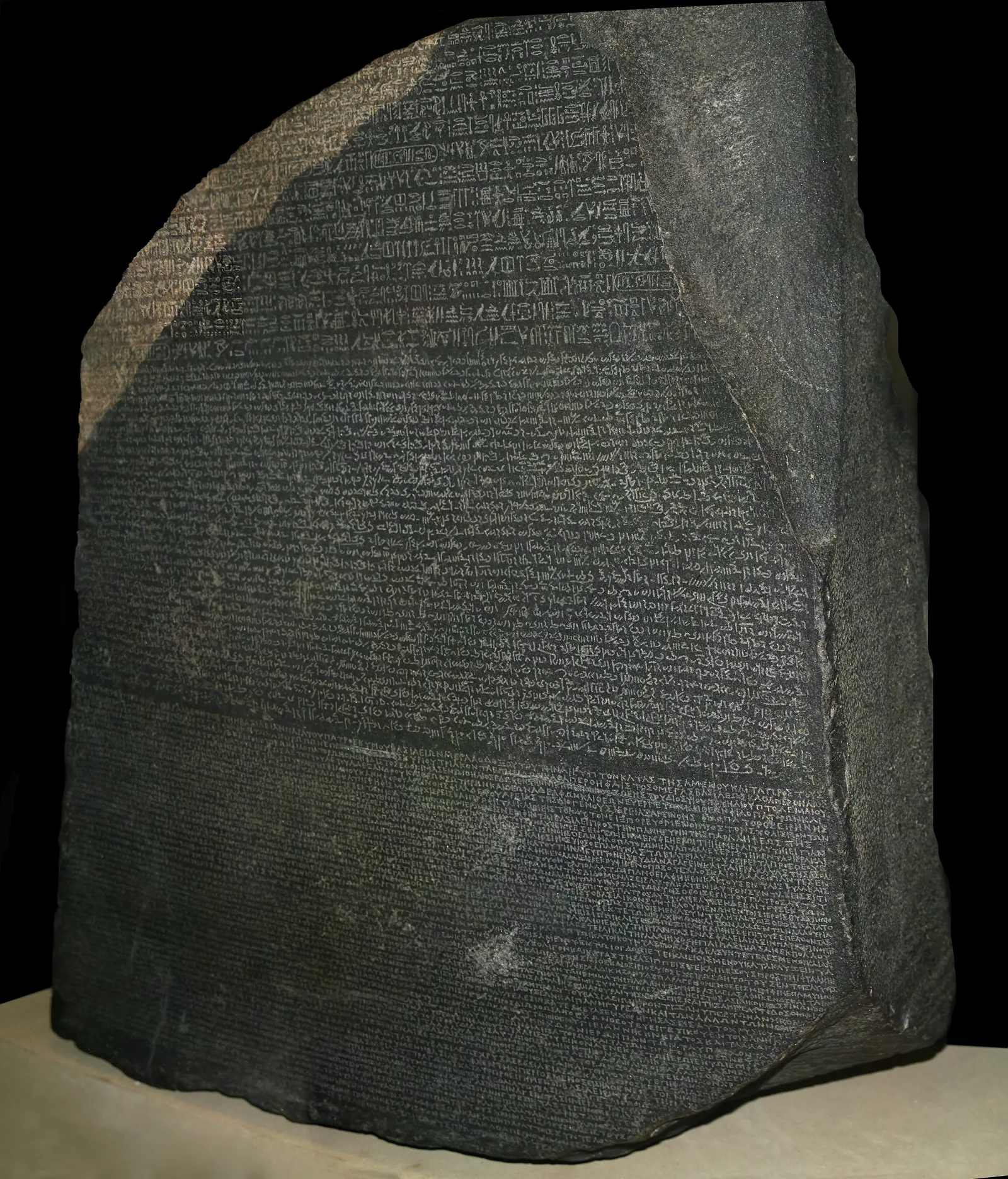
27 September 1822: The Day the Ancient Egyptians Found Their Voice Again — The Rosetta Stone and Its Key
In a hall in Paris, a 31-year-old read out a letter that gave Egypt's ancient walls back the power of speech after a long silence. From Rashid in 1799 to London in 1802 to the Academy in 1822, then on to Ahmed Kamal Pasha and the dictionary that was never printed in his lifetime, and finally to today's question: will the Stone come home? The story of a key that was lost and found again.
September 26, 2026 · 8 min read
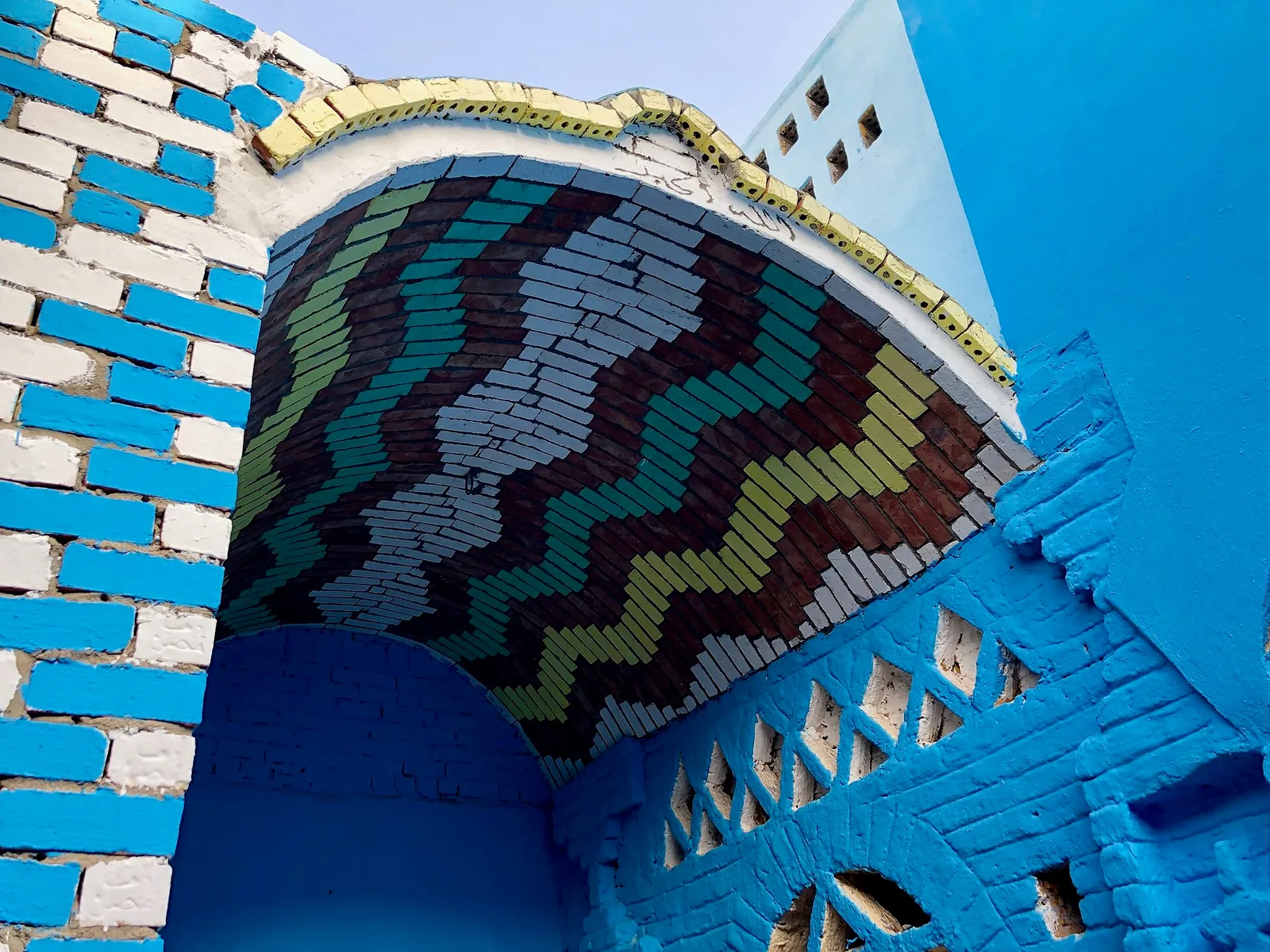
Hassan Fathy: The "Architect of the Poor" Who Built an Architecture from Egyptian Mud That Astonished the World
In an age when air conditioning devours the household budget, the life of Hassan Fathy revives an old question: why did we abandon an architecture that cooled our homes without electricity? The story of the "Architect of the Poor," who built an entire village out of Egyptian mud, wrote a book the world translated, and anticipated the green-building wave by decades.
September 4, 2026 · 8 min read