屏幕时代的育儿:儿科权威机构究竟建议什么?
在恐慌与放任之间,全球儿科权威机构就儿童与屏幕问题给出了冷静、循证的指导:年龄限制究竟怎么说?为什么睡眠优先?为什么内容质量比时长更重要?家庭媒体使用计划又该如何落地?
Few parenting questions cause as much daily friction in Egyptian homes as the screen: the phone that quiets a toddler at a family gathering, the tablet that buys a parent an hour of peace, the television that runs all evening. Between voices declaring screens a catastrophe and others waving the worry away, parents deserve something better than slogans. The world's major pediatric bodies — including the World Health Organization and the American Academy of Pediatrics — have studied the evidence and issued practical guidance. It is calmer, and more useful, than the shouting suggests.
For babies and toddlers under about two years, the guidance is at its firmest: avoid screen media almost entirely, with one warm exception — live video calls with grandparents and relatives. The reason is not that screens emit some mysterious harm, but that infants learn language and thinking from live human faces, voices, and back-and-forth interaction, and laboratory studies consistently find they learn very little from video. Every hour in front of a screen at this age is an hour taken from the interaction that actually builds the brain.
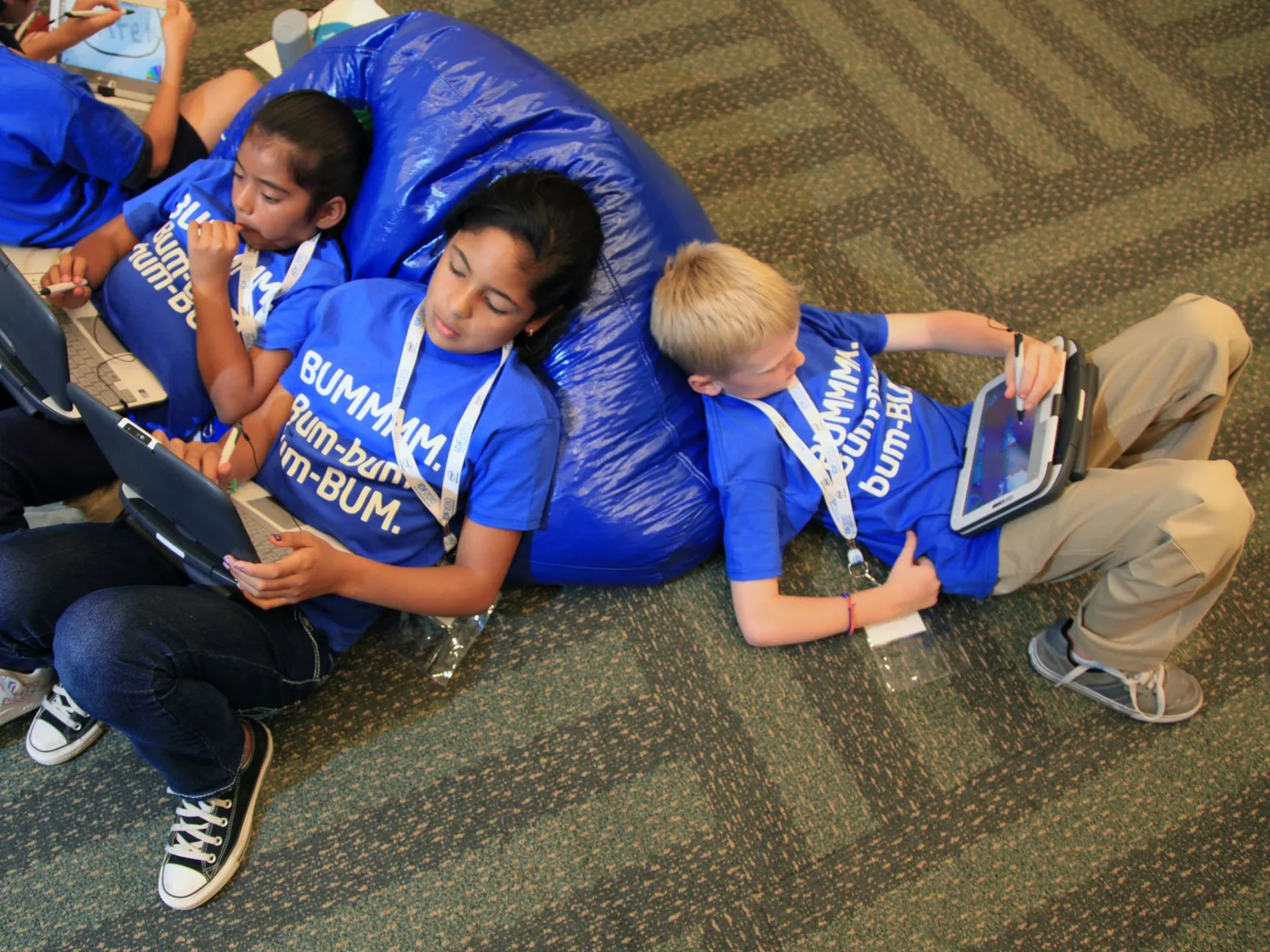
For children between two and five, the widely cited ceiling is about one hour a day — and the World Health Organization adds plainly that less is better. Just as important as the amount is the type: slow-paced, well-designed educational programmes, watched together with an adult who talks about what is on the screen, are a world apart from an endless stream of algorithm-fed clips. At this age, a parent sitting beside the child — naming, asking, laughing — converts passive watching into something closer to shared reading.
For school-age children and adolescents, pediatric bodies no longer insist on a single magic number of minutes. Instead they recommend consistent family rules built around priorities: enough sleep for the child's age, at least an hour of physical activity daily, time for homework, meals, and face-to-face family life — and screens fit into whatever remains. The American Academy of Pediatrics encourages families to write an explicit 'family media plan', so the rules are agreed in advance rather than renegotiated in nightly battles.
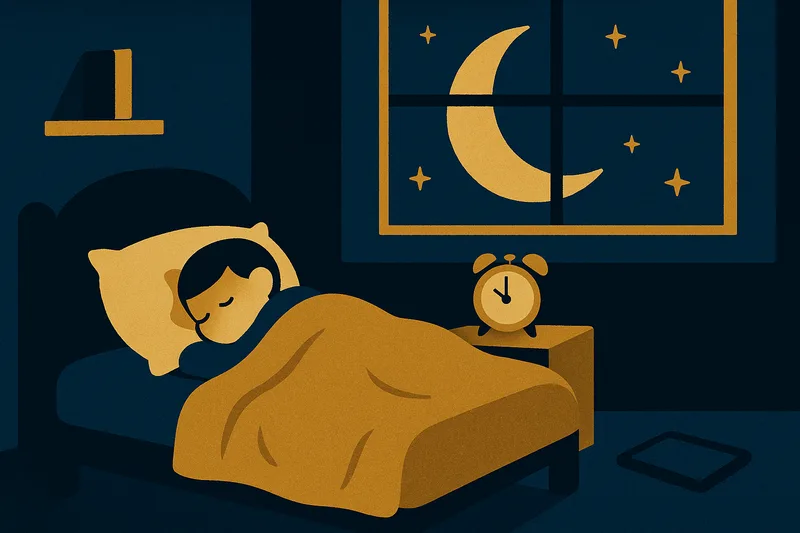
The strongest and most consistent evidence concerns sleep. Screens in the evening delay bedtime, and the light they emit suppresses melatonin, the hormone that signals the body to sleep; the stimulation of games and videos does the rest. The practical rules are simple and non-negotiable in most pediatric guidance: no televisions or phones in the child's bedroom, all screens off roughly an hour before bed, and devices charged overnight outside the room. A child who sleeps well gains more from that single habit than from many other interventions combined.
What a child watches matters as much as how long. Fast-cut, frantic content trains attention to expect constant novelty; violent content is linked to aggression in a large body of research; and recommendation algorithms are engineered to prolong watching, not to serve a child's development. Choosing specific programmes rather than open-ended autoplay, using child profiles and parental controls as imperfect helpers, and above all watching alongside the child and discussing what appears — these shift the balance from the platform's interests to the family's.
One quiet culprit deserves special mention: the television running in the background all day. Studies find that background TV reduces the quantity and quality of parent-child conversation and interrupts young children's play — the very activities through which they learn. The fix costs nothing: switch the set off when no one is actively watching, and keep mealtimes free of screens for everyone. A silent room in which an adult chats with a child is a richer classroom than it appears.
Researchers increasingly frame the issue as displacement: the harm of screens lies largely in what they replace. Childhood needs free play, movement, boredom that breeds imagination, paper books, and above all conversation — the 'serve and return' of a child speaking and an adult responding, which language science identifies as the engine of vocabulary growth. A family that guarantees these things need not panic over a reasonable amount of screen time; a family that loses them cannot compensate with the finest educational apps.
Parents' own habits are part of the prescription. Children copy what they see, and a parent scrolling through dinner teaches more powerfully than any rule announced aloud. Pediatric guidance also warns against making the screen the default tool for calming every tantrum: children need practice managing boredom and frustration, and a device that removes every uncomfortable moment removes the practice too. Occasional use on a long journey is real life; automatic use in every quiet moment is a habit worth breaking — for the adults first.
The practical path for a family is neither prohibition nor surrender but a clear agreement: screen-free zones such as bedrooms and the dining table, screen-free times such as the hour before sleep, content chosen rather than drifted into, and attractive alternatives kept ready — a ball, colouring pens, a kitchen task, a story. Change goes more smoothly by degrees than by sudden bans, and video calls with faraway relatives remain warmly encouraged at every age. The screen is a tool in the house; the family, not the algorithm, sets its terms.
相关报道

埃及婚嫁成本的漩涡:聘礼、订婚首饰、婚房……与再度升温的简办婚礼之议
从聘礼、订婚首饰“沙布卡”,到婚房和家什清单“卡伊玛”,埃及的结婚清单已堆成一座推迟年轻人梦想的经济大山。本文冷静剖析婚嫁成本的构成、背后的社会压力,以及宗教界与社会各界日益高涨的简办婚礼呼声。
2026年8月18日 · 5 分钟阅读

从月球上能看到中国长城吗?宇航员早已给出答案
教科书里有个人们津津乐道的说法:中国长城是从月球上唯一可见的人造建筑。但亲身登上太空的宇航员——包括中国首位航天员本人——都给出了否定答案,光学原理也支持他们。至于从太空真正能看到什么——从城市灯火到熠熠生辉的尼罗河三角洲——那是一个更精彩的故事。结论:错误。
2026年8月18日 · 5 分钟阅读

维生素C能预防感冒吗?数十年临床试验的真实结论
数百万人一打喷嚏就把希望寄托在维生素C上。但数十年的对照试验讲述的故事更为微妙:对大多数人而言,它并不能预防感冒;若平时坚持服用,或可略微缩短病程——真正的预防效果只见于马拉松选手、滑雪运动员和承受极端体能消耗的士兵。结论:部分属实。
2026年8月18日 · 5 分钟阅读