跳至正文

埃及婚嫁成本的漩涡:聘礼、订婚首饰、婚房……与再度升温的简办婚礼之议

从聘礼、订婚首饰“沙布卡”,到婚房和家什清单“卡伊玛”,埃及的结婚清单已堆成一座推迟年轻人梦想的经济大山。本文冷静剖析婚嫁成本的构成、背后的社会压力,以及宗教界与社会各界日益高涨的简办婚礼呼声。
发布于 2026年8月18日·5 分钟阅读
صورة تاريخية لموكب زفاف مصري تُحمل فيه العروس على الجمال

Few moments in Egyptian life carry more joy — or more arithmetic — than a marriage. Long before the zaffa procession and the wedding hall, two families sit down to negotiate a checklist that has grown heavier with every generation: the dowry, the gold, the apartment, the furniture, the appliances, and the party itself. What was once a covenant sealed with modest gifts has, for many households, become a financial mountain that takes years of saving to climb, and the country has been talking about it, openly and anxiously, for decades.

The list has its own vocabulary. The mahr is the dowry the groom presents to the bride, a religious requirement in Islam for which scripture sets no minimum. The shabka is the gold — rings, bracelets, sometimes a full set — whose weight is often read as a measure of seriousness. Then comes the apartment, the furniture and appliances known as the gehaz, and in many families the qayma: a signed inventory of the marital home's contents that protects the bride's property rights.

Custom, not law, decides who pays for what, and custom varies by region and class. In the most common urban arrangement, the groom secures the apartment and the shabka while the bride's family furnishes much of the home; in the countryside the balance can differ. Every item is negotiable in theory. In practice, families feel watched by relatives and neighbours, and the fear of appearing stingy — or of undervaluing a daughter — pushes both sides toward the maximum they can afford, and sometimes beyond it.

The heaviest line on the list is housing. In Cairo, Alexandria and the Delta's crowded towns, the price of even a modest apartment can swallow many years of an ordinary salary, which is why the question 'does he have a flat?' often precedes any question about character. Some grooms buy unfinished units and complete them room by room; others sign long instalment plans; many postpone the entire project. The housing hurdle, more than any gold or party, is what stretches engagements across years.

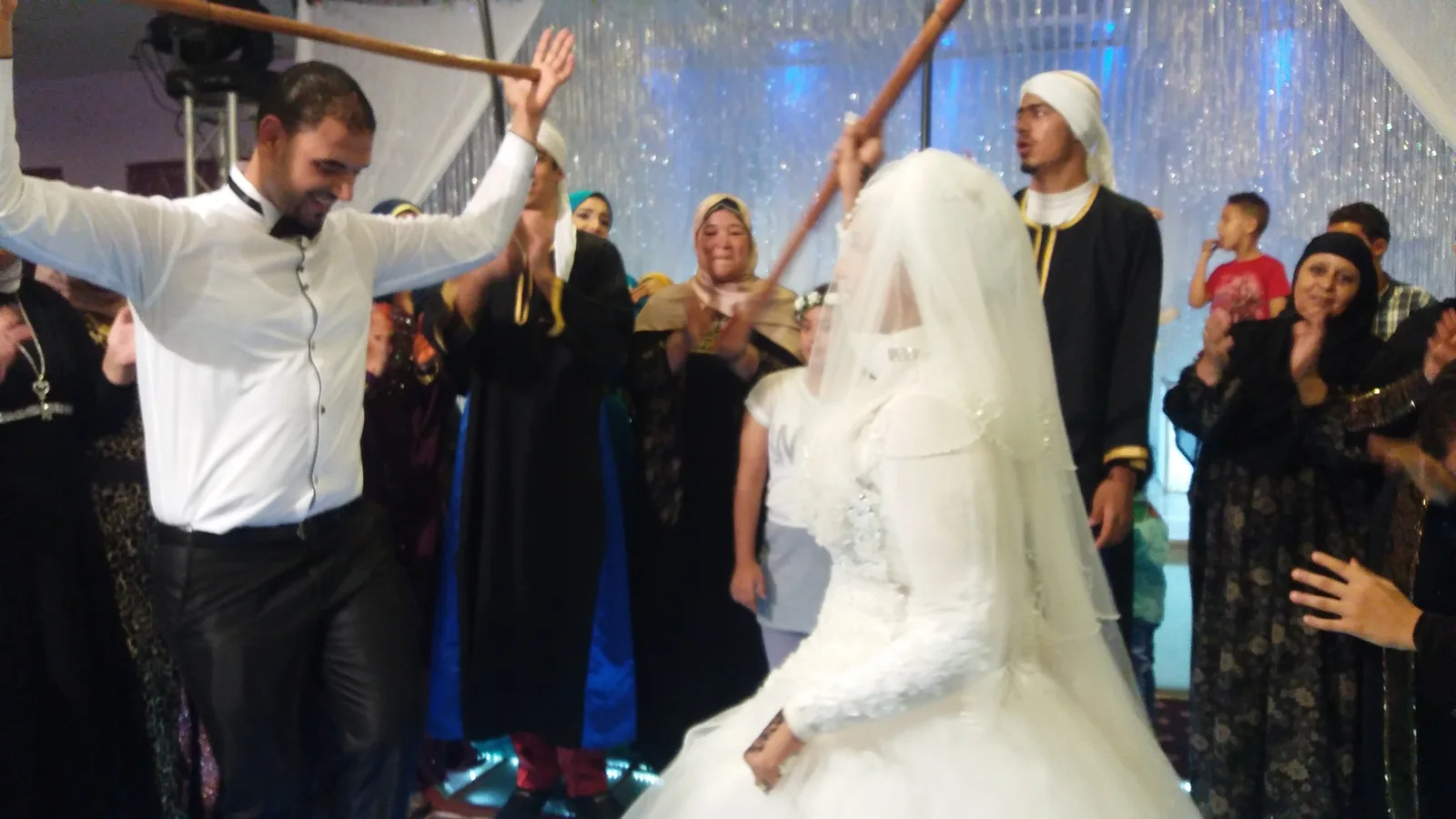
The celebration itself has its own inflation. A wedding hall or hotel ballroom, a kosha stage for the couple, a singer or DJ, photography, dresses and suits, dinner for hundreds of guests — each element has become a stage on which families perform their standing. Social media has sharpened the comparison: every wedding is now filmed, shared and measured against others. Many parents privately admit the party money would be better spent inside the new home, yet few feel able to be the first to scale down.

Sociologists and religious scholars alike have long linked these costs to the slow drift upward in the age of marriage. Young men delay proposing until they can afford the checklist; engagements stretch on and sometimes collapse under the strain; families exhaust savings or join informal savings circles, the gam'iyyat, to raise cash. The pressure does not fall on the groom alone — brides' families often sell land or gold of their own to furnish the home, and both households can begin married life already in debt.

Egypt's religious institutions have preached simplicity for generations. Muslim scholars cite the Prophet Muhammad's teaching that the most blessed marriage is the one easiest in cost, and Friday sermons regularly urge families to lower dowries and expectations. Coptic clergy counsel engaged couples in the same direction. The consistent religious message is that marriage is a bond and a responsibility, not an exhibition — and that pricing it beyond the reach of the young is itself a social harm.

Alternatives are visible and growing. Charitable associations across the country organise collective weddings that equip dozens of couples at a time with basic furnishings, an established tradition in many governorates. Some families now announce publicly that they ask only a symbolic dowry or have dropped the qayma altogether, framing the choice as confidence rather than concession. Public figures and preachers who celebrate simple weddings are applauded online — a sign that the conversation is shifting even if the customs move slowly.

For couples negotiating today, the practical advice repeated by counsellors is to rank the list. A sound apartment and essential furnishings serve the marriage for decades; a lavish single night does not. Talking honestly about budgets before the engagement, resisting itemised competition with cousins and colleagues, and agreeing that gold can be added later are all ways families quietly trim costs without public confrontation. The couples who manage it usually say the same thing afterward: nobody remembers the chandeliers.

None of this diminishes the beauty of the Egyptian wedding — the zaffa drums, the ululations, the gathering of two extended families into one. The question the country keeps asking itself is not whether to celebrate, but at what price, and who is left outside the door when the price keeps rising. A marriage, as every grandmother says, is built on understanding, not on inventory. The homes that last are rarely the ones that started with the heaviest checklist.

相关报道