跳至正文

新行政首都:它是什么?政府如何搬迁?成本之争为何不休?

在开罗以东约45公里处,埃及正从零开始建造一座新的政务中枢。新行政首都究竟是什么?各部委的分阶段搬迁如何推进?它与开罗如何连接?它的造价又为何始终是一场有据可查的真实争论?
发布于 2026年8月18日·5 分钟阅读
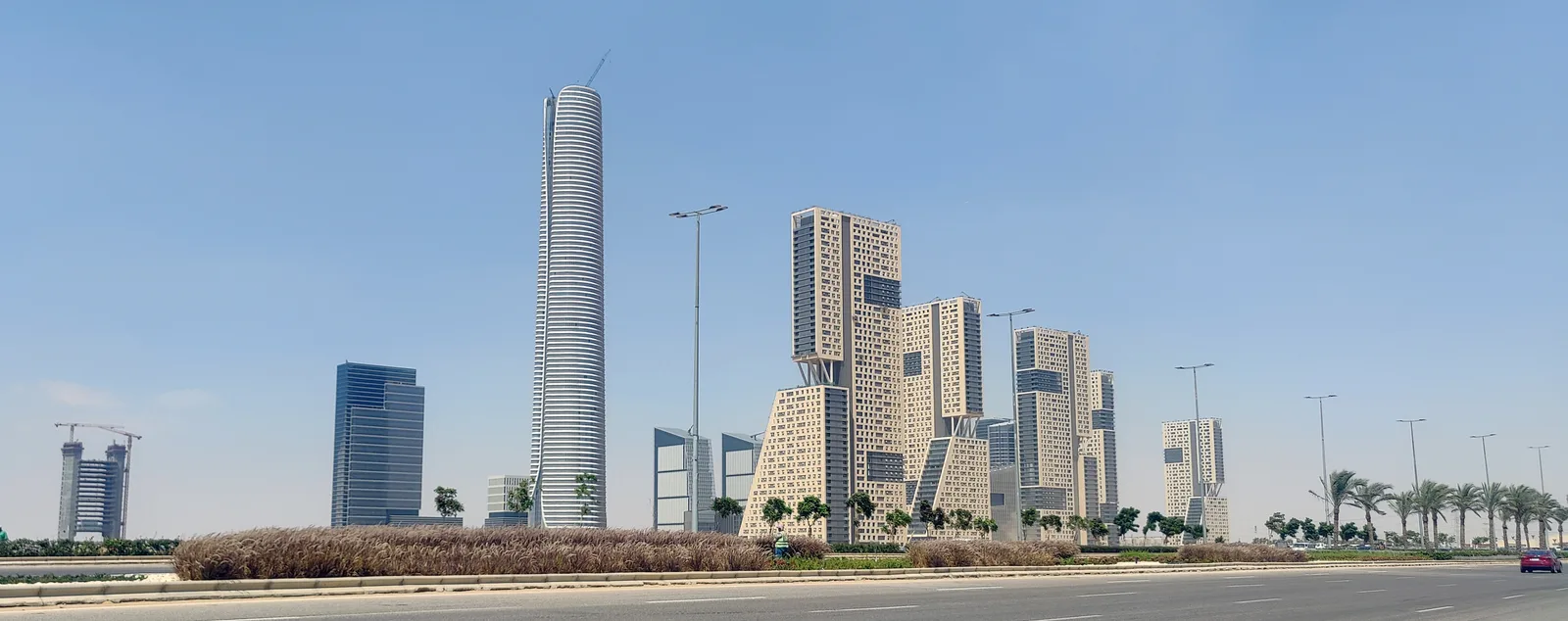
منظر للعاصمة الإدارية الجديدة شرق القاهرة يُظهر أفق حي المال والأعمال مع البرج الأيقوني والمباني الحكومية الجديدة وسط الصحراء.

Some forty-five kilometres east of Cairo, on desert land along the road to Suez, Egypt has been building an entirely new city intended to become its seat of government. Announced in March 2015 at an economic conference in Sharm El-Sheikh, the New Administrative Capital is the largest of the country's many new-city projects. This explainer sets out what the city is, how the phased move of government offices works, how it connects to Cairo, and why its cost has been the subject of documented public debate.

On paper, the project covers roughly 700 square kilometres — an area often compared to Singapore. The master plan includes a government district housing ministries and the cabinet, a new parliament complex, a presidential quarter, a central business district crowned by the Iconic Tower, a diplomatic quarter for embassies, residential neighbourhoods, universities, a vast central park dubbed the 'Green River', and sports facilities. Planners speak of a city that could eventually house millions of residents, although building a population is a far slower matter than building towers.

The official rationale begins with Greater Cairo itself, a metropolis of well over twenty million people whose streets, utilities and housing stock strain under constant growth. Ministries long operated out of ageing, crowded buildings scattered across downtown Cairo, complicating both daily administration and traffic. Egypt has built satellite cities since the 1970s — Sixth of October, New Cairo and Tenth of Ramadan among them — to pull growth out of the Nile Valley's narrow ribbon. The Administrative Capital is by far the most ambitious chapter of that decades-old policy.

The city is developed by the Administrative Capital for Urban Development company, known as ACUD, whose ownership combines state land agencies affiliated with the armed forces and the housing ministry. Officials have repeatedly described the project as self-financing: the company sells serviced land and property to developers and uses the proceeds to fund infrastructure, rather than drawing directly on the state budget. Economists and critics have questioned how complete that separation is in practice, pointing to guarantees, public contracts and borrowing that ultimately connect to public finances.

Several landmarks have come to define the skyline. The Iconic Tower in the business district is widely described as the tallest building in Africa. The Al-Fattah Al-Aleem Mosque and the Cathedral of the Nativity — inaugurated in January 2019 and among the largest churches in the Middle East — anchor the city's religious architecture. A broad government promenade, an octagonal defence ministry complex, new universities, an arts and culture city, and a towering flagpole complete a deliberately monumental first impression.

The government's relocation has been deliberately phased. After years of construction and trial runs, ministries began moving staff to the government district in stages, starting with pilot groups of civil servants before wider transfers. Cabinet meetings, parliamentary sessions and presidential functions have progressively shifted eastward. The move involves tens of thousands of employees, new payroll and transport arrangements, and digitised workflows that officials present as a chance to modernise administration itself, not merely to change its address.

Because most employees still live in Greater Cairo, transport links are the project's daily test. An electric light-rail line connects the city to the Adly Mansour interchange, where it meets Cairo's third metro line. A monorail has been under construction to link eastern Cairo with the new capital's districts, and the city is also served by regional buses and a widening highway network, with high-speed rail plans on the drawing board. For commuters, the journey's cost and duration remain decisive facts of daily life.

The cost is where documented debate is sharpest. Estimates reported over the years for the full build-out run into the tens of billions of dollars, and precise, audited totals are not public. Critics — including Egyptian economists and opposition voices — have asked whether a state carrying heavy external debt should prioritise a new capital over upgrading existing cities, schools and hospitals. Supporters answer that land sales fund the work and that the project attracts investment. The disagreement is real, ongoing, and worth understanding on its own terms.

Urban planners raise further questions that go beyond money. Will drawing government and business eastward hollow out historic Cairo, or relieve it enough to allow restoration of its heritage core? Can a city planned around wide roads and gated compounds nurture the street life that makes Egyptian cities vivid? And how will water, services and affordable housing be secured in the desert at this scale? These are the questions on which the project's long-term verdict will ultimately rest.

History offers mixed precedents. Purpose-built capitals such as Brasília, Islamabad, Abuja and Astana took decades to grow from administrative outposts into living cities, and some never fully did. Egypt's new capital already functions as a seat of government; whether it becomes a place where millions genuinely live, work and belong is a story that will unfold over a generation. For now, the fairest summary is that the city exists, the move is under way, and the debate about its price and priorities continues.

相关报道