孩子的疫苗接种卡:一面免费的终身护盾
在埃及,强制性儿童疫苗在各地卫生站免费接种,而疫苗是科学迄今保护儿童免受致命疾病侵害最成功的手段。接种时间表、儿童接种卡、副作用的真相,以及漏种一针该怎么办——父母需要知道的都在这里。
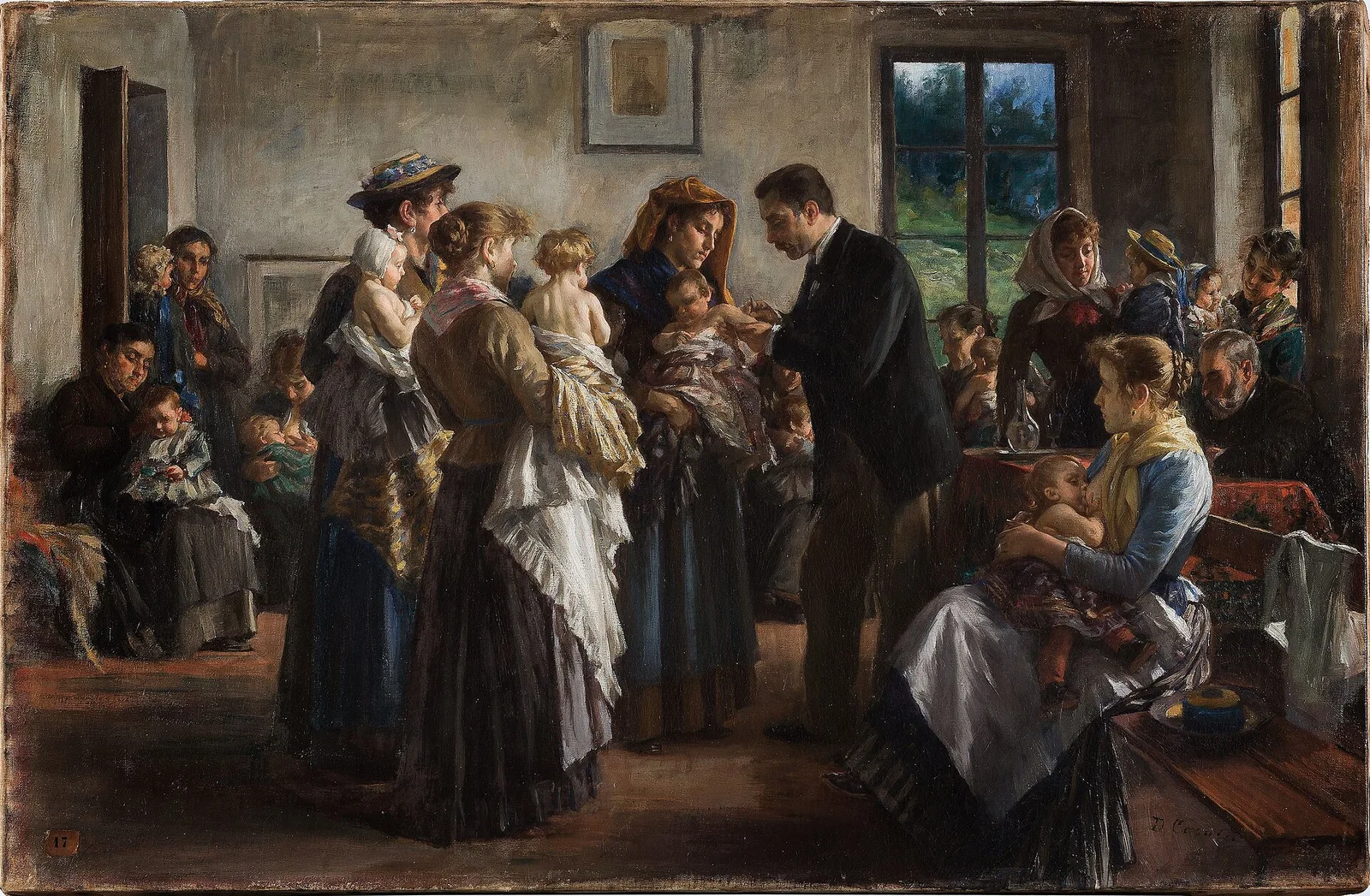
Of everything modern medicine has achieved, vaccination sits unrivaled at the top of the list. By the World Health Organization's estimates, vaccines save millions of lives worldwide every year, and they have turned diseases that once killed or permanently disabled children into entries in medical history books. In Egypt, the compulsory immunization program has run for many decades, entirely free of charge, through the network of health offices and health units spread across every district and village.
The idea of vaccination itself is simple and ingenious: introducing the child's immune system to a weakened or inactivated form of a microbe — or a piece of it — so it trains to fight it and retains a defensive memory. If the real disease ever attacks, it finds an army already prepared. It is a safe rehearsal for a real battle, fought without paying the price of the disease itself.
Every Egyptian child's vaccination journey begins at the health office along with birth registration, where the child receives the vaccination card that records every dose and its date. This card is a document to be kept as carefully as the birth certificate itself: it is the reference doctors rely on, schools will request it at enrollment, and it may be needed for travel or clubs. Losing it is not the end of the world — a record can be retrieved from the health office where the child is registered — but keeping it safe spares a great deal of trouble.
Egypt's national immunization schedule covers the most dangerous diseases of childhood. It begins at birth with first vaccinations, among them the BCG vaccine against tuberculosis — the arm injection that leaves its famous small mark — and a hepatitis vaccine. Then, through the first months of life, come successive doses including oral polio drops and combination vaccines that protect against several diseases in a single injection, such as diphtheria, tetanus, and whooping cough. After the first birthday come the MMR vaccine against measles, mumps, and rubella, and booster doses. The precise authority on timing is the card itself and the health office physician — they are the first to know of any updates to the schedule.
The story of polio alone is proof enough of vaccination's value. A disease that once left thousands of children permanently disabled — Egypt has recorded no wild poliovirus case since the mid-2000s, thanks to routine immunization and national campaigns. So when the national campaign team knocks on the door to give polio drops, the right answer is always yes — even if the child's doses are complete. The extra doses are entirely safe, and they are what keeps community immunity an impenetrable wall against the virus returning from abroad.
What about the side effects that worry mothers? The common ones are mild, normal, and even reassuring: a slight fever, redness or soreness at the injection site, and a day or two of fussiness and reduced appetite. These are signs the immune system is working and training. They can be managed with compresses and a fever reducer at the dose the doctor specifies. Severe reactions are very rare; if a high persistent fever or a strong allergic response appears, the rule is to see a doctor immediately.
In an age of rumors, one thing must be said plainly: the claim linking vaccines to autism arose from a single study proven fraudulent, retracted from publication, its author stripped of his medical license — and dozens of massive studies covering millions of children have since examined the question and found no link whatsoever. Likewise, the notion that 'natural infection gives stronger immunity' is a losing gamble: infection may indeed leave immunity, but its price can be measles complications in the brain or permanent paralysis from polio — while vaccination grants the immunity without exacting that price.
If a dose is missed because of travel, illness, or force of circumstance, there is no cause for panic — and no excuse for endless postponement. Immunization schedules are designed for catch-up, and the medical rule is that missed doses are resumed from where they stopped, without restarting the series from the beginning. The right move is to go to the health office with the card at the earliest opportunity so the physician can set a catch-up plan.
One final dimension reaches beyond your child to everyone else's: community immunity. When everyone is vaccinated, the microbe cannot travel, and an umbrella forms that shelters even those who cannot be vaccinated — infants too young for their doses, and children whose illnesses prevent immunization. Vaccinating your child is therefore not only their protection; it is a contribution to the fence guarding society's most vulnerable children.
A practical summary for parents: keep the card somewhere safe and photograph it as a backup; honor the dates written in it; ask the health office doctor about whatever puzzles you rather than social media pages; record the next dose's date in your phone after every visit; and welcome the national vaccination campaigns whenever they knock. A few minutes of commitment in the early years buys your child a shield that accompanies them for life.
相关报道
安全的屏幕:保护儿童上网的冷静实用指南
当父母与孩子平等交流而不只是监视时,孩子在网上才更安全。从家长监护工具和平台年龄规则,到关于陌生人的那次谈话,再到埃及16000儿童求助热线,这是一份基于证据、不靠吓唬的家庭指南。
2026年8月18日 · 5 分钟阅读

如何养出一个爱读书的孩子?埃及家庭培养阅读之爱的指南
爱读书的孩子绝非偶然天成。从睡前故事和卡米勒·基拉尼的经典童书,到公共图书馆、学校书架和开罗国际书展,这份实用指南告诉埃及家庭如何在孩子心中播下终生热爱书籍与阿拉伯语阅读的种子。
2026年8月18日 · 5 分钟阅读

从月球上能看到中国长城吗?宇航员早已给出答案
教科书里有个人们津津乐道的说法:中国长城是从月球上唯一可见的人造建筑。但亲身登上太空的宇航员——包括中国首位航天员本人——都给出了否定答案,光学原理也支持他们。至于从太空真正能看到什么——从城市灯火到熠熠生辉的尼罗河三角洲——那是一个更精彩的故事。结论:错误。
2026年8月18日 · 5 分钟阅读