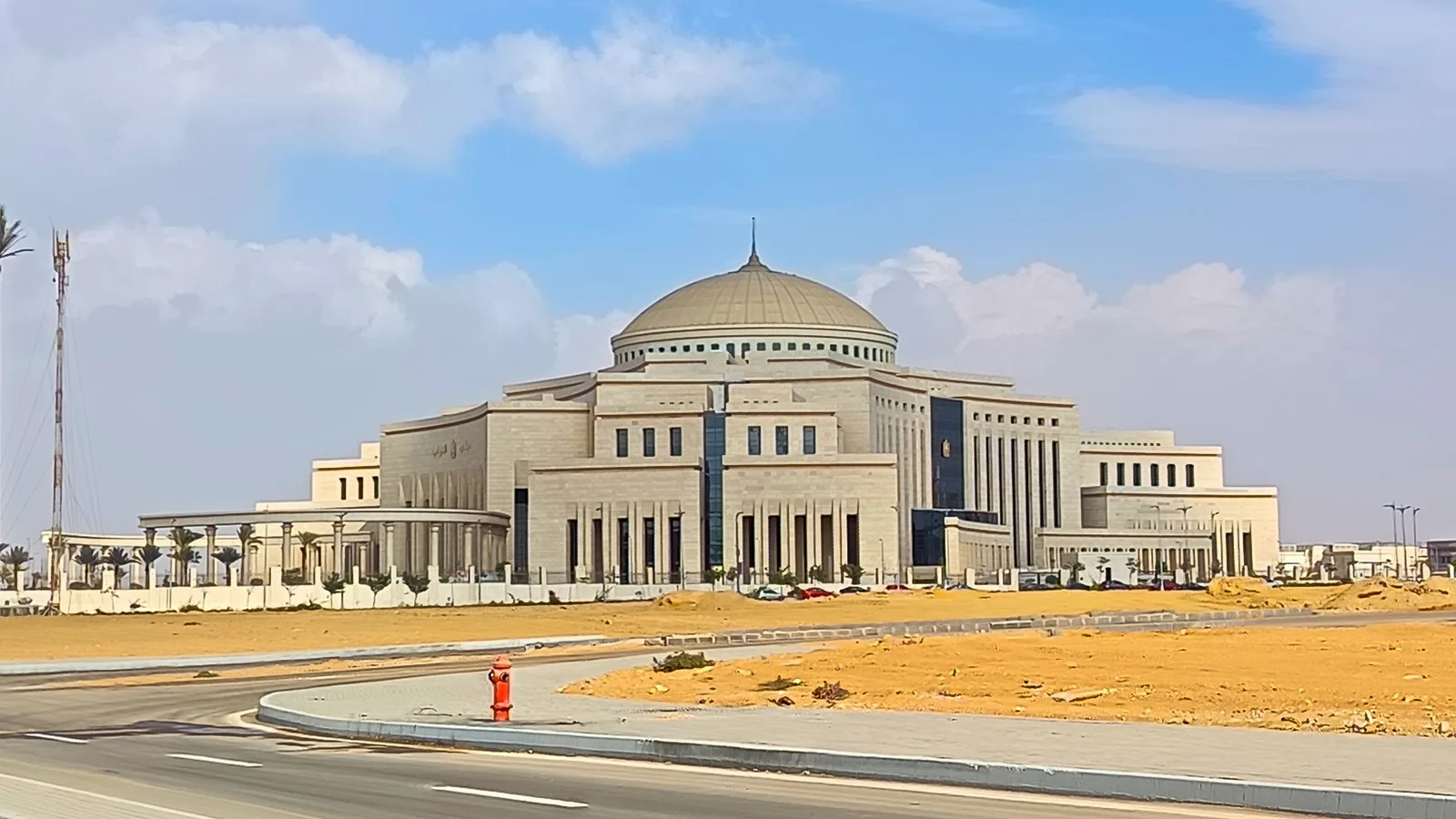
图解埃及参议院:构成、职权与边界
三百名议员,其中三分之一由任命产生,在宪法、条约和法律草案上行使咨询职能。随着2019年宪法修正案恢复两院制,本文解读参议院如何组成、能做什么、不能做什么,以及它在埃及立法链条中的位置。

Bicameralism returned to Egyptian parliamentary life with the constitutional amendments approved by referendum in 2019, which provided for a Senate alongside the House of Representatives; its first elections were held in the summer of 2020. Egypt thereby regained a second chamber that had been absent since the Shura Council was abolished by the 2014 constitution — though with a composition and powers redrawn from scratch.
The Senate consists of three hundred members divided into thirds: one hundred elected on an individual basis, one hundred through closed party lists, and one hundred appointed by the president of the republic. Membership runs for five years from the chamber's first sitting. This blend of election and appointment continues a tradition entrenched in Egypt's second chambers since the 1920s.
A candidate or appointee must be an Egyptian enjoying civil and political rights, must hold a university degree or its equivalent, and must be at least thirty-five years old on the day candidacy opens, as detailed in the Senate's governing law. The rules also guarantee women no less than one tenth of the total seats.
The chamber's mandate is essentially consultative. It is charged with studying and proposing whatever it deems capable of widening democracy and supporting social peace and the basic values of society, and its opinion is taken on proposed constitutional amendments, the general plan for social and economic development, treaties of peace and alliance and matters touching sovereign rights, and draft laws referred to it by the president or the House of Representatives.
The limits are equally clear. The Senate neither grants nor withdraws confidence in the government, does not approve the state budget, and does not have the final word in legislation: the power to pass laws belongs to the House of Representatives alone, while the senators contribute opinion and study that enrich the texts before they are settled.
Internally, the Senate works much like its counterpart: plenary sessions led by a speaker and two deputies elected at the start of each legislative term, specialised committees that study referred files and prepare reports, and a long annual session whose details are governed by the chamber's internal regulations.
Clear rules of separation govern the relationship between the two chambers. No one may hold membership of both the Senate and the House at once, and the Senate's opinions and reports are transmitted to the body that requested them to weigh as it sees fit — keeping the chamber's role an institutional tributary of study and review rather than a rival power.
Elections are held in large constituencies for the closed lists, where the list winning an absolute majority of valid votes takes the seats, and in individual constituencies where the contest may go to a run-off between the front-runners if no candidate wins outright in the first round — all under the supervision of the National Elections Authority.
The chamber belongs to a venerable parliamentary family tree. It is heir to the Senate created by the 1923 constitution, which stood until the July revolution, and then to the Shura Council introduced by the 1980 amendments and abolished in 2014, before the 2019 amendments restored the second chamber under its historic old name.
The Senate's existence is not without debate. Supporters see a chamber of expertise and deliberation that allows legislation to be reviewed away from the pressure of daily politics and draws in talents who might never contest a general election; critics question the value of an advisory chamber whose opinion binds no one, and its cost to the public purse — a familiar argument in bicameral systems the world over.
Wherever one stands in that debate, following the Senate's work — from its committee discussions to its reports on economic and social questions — offers a useful window onto the early stages of Egypt's lawmaking kitchen, before texts reach the hall of final decision in the House of Representatives.
相关报道

埃及议会中的女性:配额制的兴衰与回归
从1957年拉维娅·阿提亚载入史册的议席,到宪法保障众议院四分之一议席:女性配额制有据可查的兴起、废止与回归,七十年来塑造着埃及议会中的女性代表格局。
2026年8月18日 · 6 分钟阅读
从投诉到立法:公民诉求在埃及议会中的旅程
从一纸书面投诉,到提案与投诉委员会,再到问询请求和议会质询,有时最终催生一部新法律:本文逐步解读公民诉求在埃及议会内部走过的有章可循的路径。
2026年8月18日 · 5 分钟阅读

从月球上能看到中国长城吗?宇航员早已给出答案
教科书里有个人们津津乐道的说法:中国长城是从月球上唯一可见的人造建筑。但亲身登上太空的宇航员——包括中国首位航天员本人——都给出了否定答案,光学原理也支持他们。至于从太空真正能看到什么——从城市灯火到熠熠生辉的尼罗河三角洲——那是一个更精彩的故事。结论:错误。
2026年8月18日 · 5 分钟阅读