尼罗河畔的好莱坞:埃及电影的黄金时代
整整三十年间,开罗的电影制片厂让埃及成为阿拉伯世界的电影之都。从1935年米斯尔制片厂的创立,到法坦·哈玛玛、奥马尔·沙里夫和《开罗车站》,本文讲述黄金时代如何铸就,以及它的黑白经典为何至今仍在上映。
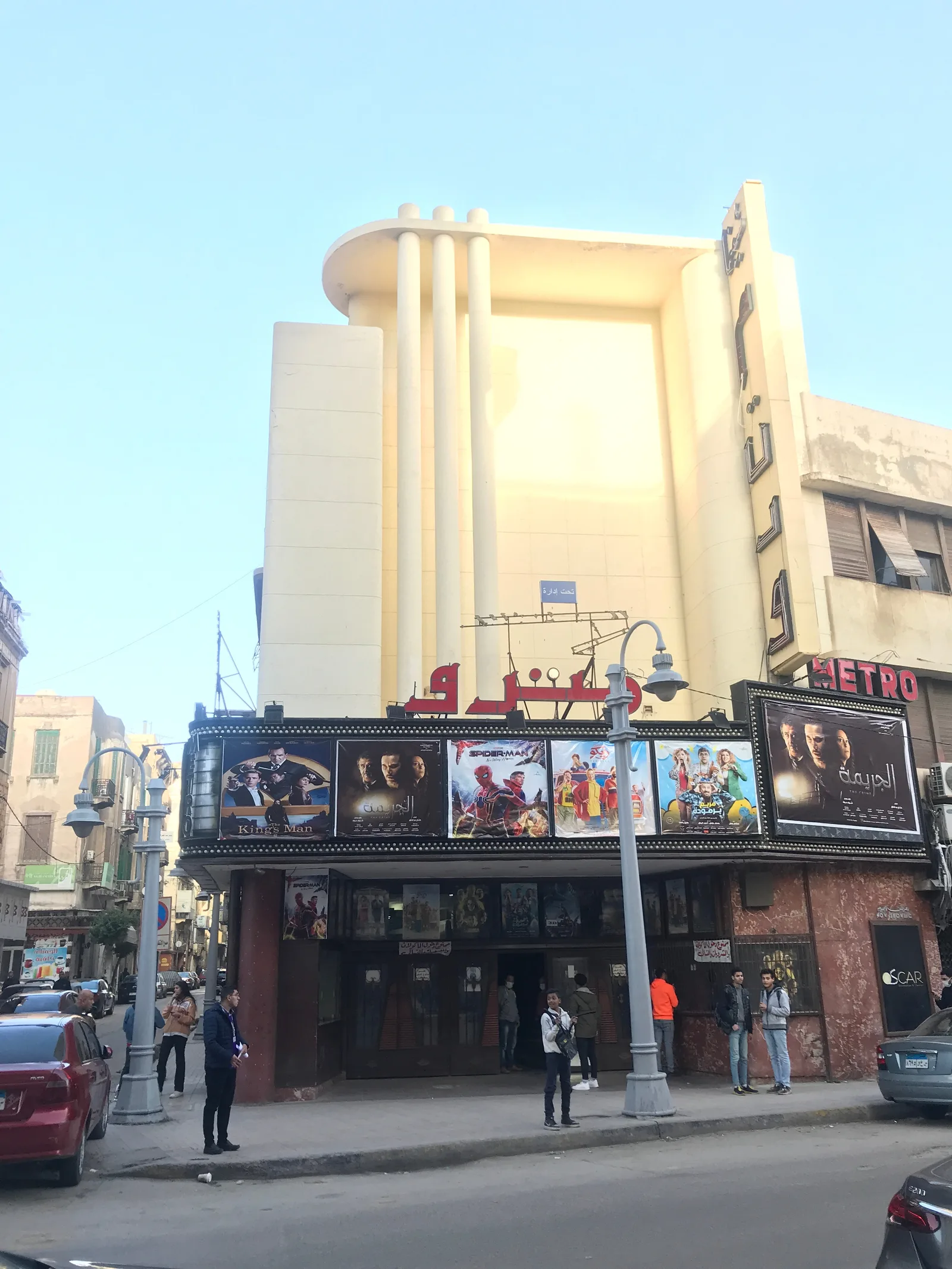
For roughly three decades, from the late 1930s to the late 1960s, Cairo was the undisputed film capital of the Arab world. Its studios turned out melodramas, musicals and comedies at a pace no neighbouring country could match, and its stars were recognised from Casablanca to Baghdad. Critics and historians call the period the golden age of Egyptian cinema, and the city itself earned a nickname that stuck: Hollywood on the Nile. This is the story of how that industry was built, the people who made it shine, and why its films still play on screens today.
Cinema arrived in Egypt astonishingly early. Moving pictures were screened in Alexandria in 1896, within months of the Lumière brothers' first shows in Paris, and permanent cinema halls soon followed in Alexandria and Cairo. For decades the screens showed mostly imported films, but Egyptians gradually moved behind the camera. The silent feature 'Layla' (1927), produced by and starring the pioneering actress Aziza Amir, is widely honoured as the first full-length Egyptian film — proof, at a time when few believed it, that a national cinema was possible.
Sound changed everything. In 1932 Egypt produced its first talking pictures, among them 'Awlad al-Zawat' and the musical 'Unshudat al-Fuad', and audiences discovered that films could carry Egyptian voices and Egyptian songs. Three years later came the decisive step: Studio Misr, opened in 1935 by the economist Talaat Harb as part of his Banque Misr industrial group. With modern sound stages, laboratories and technicians trained in Europe, it was the first fully equipped studio in the region, and it gave Egyptian cinema an industrial backbone.
The studio era ran on song. Musicals built around the composer-singer Mohamed Abdel Wahab and the beloved Layla Mourad filled cinemas, and Studio Misr's early production 'Wedad' (1936) put the great singer Umm Kulthum on screen. Farid al-Atrash added his own string of musical romances, often opposite the dancer Samia Gamal, while Tahiya Carioca made Oriental dance a cinematic art of its own. These films travelled with their songs: a hit number in a Cairo production could be hummed across the entire Arab world within months of its premiere.
Comedy and melodrama were the industry's other two pillars. Naguib al-Rihani, master of the Egyptian stage, brought a humane, needling wit to the screen in films such as 'Ghazal al-Banat' (1949), while Ismail Yassine later became the face of popular comedy, headlining an entire series of films that carried his name. On the opposite emotional register stood Youssef Wahbi, the aristocrat of theatrical melodrama, whose thunderous morality tales taught a generation of actors how to command a close-up. Between laughter and tears, the studios learned to serve every audience in the same programme.
Alongside the entertainment machine, a more serious cinema took shape. Kamal Selim's 'The Will' ('Al-Azima', 1939) followed ordinary people in a popular Cairo alley and is regarded as the founding film of Egyptian realism. Salah Abu Seif deepened that school after the war, and Youssef Chahine gave it a masterpiece with 'Cairo Station' (1958), in which he himself played a lame newspaper seller consumed by obsession. Novels fed the screen as well: Henry Barakat's 'The Nightingale's Prayer' (1959), from Taha Hussein's novel, showed how literary adaptation could reach critics and crowds alike.
The golden age minted stars whose names still open conversations. Faten Hamama, 'the Lady of the Arab Screen', combined restraint and steel across four decades of roles. Omar Sharif, her co-star and husband, leapt from Cairo to global fame with 'Lawrence of Arabia' (1962) and 'Doctor Zhivago'. Hind Rostom brought glamour and fire, Shadia moved effortlessly between song and drama, and in the 1960s the young Soad Hosny — 'the Cinderella of Egyptian cinema' — arrived to charm an entire region. The star system sold tickets, but it also set enduring standards of craft.
Egyptian films did not stay home. Distributors carried them to every Arab capital, where audiences met Egypt's streets, jokes and songs week after week. That steady export is one reason the Egyptian dialect became the most widely understood form of spoken Arabic — generations across the region grew up hearing it at the cinema. At home, the picture palaces of downtown Cairo and Alexandria anchored a whole urban culture of premieres, film magazines and star gossip, and going to the movies became a weekly ritual for families of every class.
The 1960s brought a turning point. The state nationalized much of the industry, folding studios and cinemas into a public sector that produced some ambitious films — including major literary adaptations — but also bureaucracy and debt. Many historians date the end of the golden age to the late 1960s, when the studio system weakened and stars and directors scattered. Production revived in private hands during the 1970s, yet the old integrated machine — studio, star, songwriter and cinema chain working as one — never fully returned in its classic form.
The heritage, however, was secured. When Egyptian cinema marked its centenary in 1996, critics chose the hundred most important Egyptian films, with 'The Will' at the top of the list — a canon that still guides viewers today. The Cairo International Film Festival, founded in 1976 and one of the oldest in the region, keeps the city on the world's cinematic map, and restoration projects continue to rescue classic prints so that new generations can watch them as their first audiences once did.
Ask why these films endure and the answer is simple: they are still watched. Satellite channels and streaming platforms run the black-and-white classics daily; their songs live on radio and phones; their lines are quoted like proverbs. For filmmakers, the golden age remains a masterclass in craft — story, star and song held in disciplined balance. For everyone else, it is a family album: the elegant, mischievous version of Cairo that the whole Arab world once fell in love with, twenty-four frames at a time.
相关报道

伊斯兰开罗与科普特开罗:从征服之门到悬空教堂的露天博物馆
很少有城市能让来客在一次漫步中穿越千年建筑史。1979年即列入世界遗产名录的开罗历史城区正是如此:从穆伊兹大街及其清真寺群,到老开罗的教堂和本·埃兹拉犹太会堂,还有一段让古老石头重焕生机的修复故事。
2026年8月18日 · 7 分钟阅读

从月球上能看到中国长城吗?宇航员早已给出答案
教科书里有个人们津津乐道的说法:中国长城是从月球上唯一可见的人造建筑。但亲身登上太空的宇航员——包括中国首位航天员本人——都给出了否定答案,光学原理也支持他们。至于从太空真正能看到什么——从城市灯火到熠熠生辉的尼罗河三角洲——那是一个更精彩的故事。结论:错误。
2026年8月18日 · 5 分钟阅读

维生素C能预防感冒吗?数十年临床试验的真实结论
数百万人一打喷嚏就把希望寄托在维生素C上。但数十年的对照试验讲述的故事更为微妙:对大多数人而言,它并不能预防感冒;若平时坚持服用,或可略微缩短病程——真正的预防效果只见于马拉松选手、滑雪运动员和承受极端体能消耗的士兵。结论:部分属实。
2026年8月18日 · 5 分钟阅读