车流中横穿马路:行人与司机共同埋单的一场豪赌
距离人行天桥或过街通道不过几米,行人却一头扎进柏油路的车流,在车缝间奔跑穿行,朝疾驰而来的车辆举起手掌,仿佛那只手就是刹车。这一幕天天上演,我们看得太惯,以至于忘了它的真相:这是拿行人的性命做赌注,也是在赌司机的神经——他随时可能猛打方向盘,殃及无辜。这样不对——双方都有错,国家也难辞其咎。
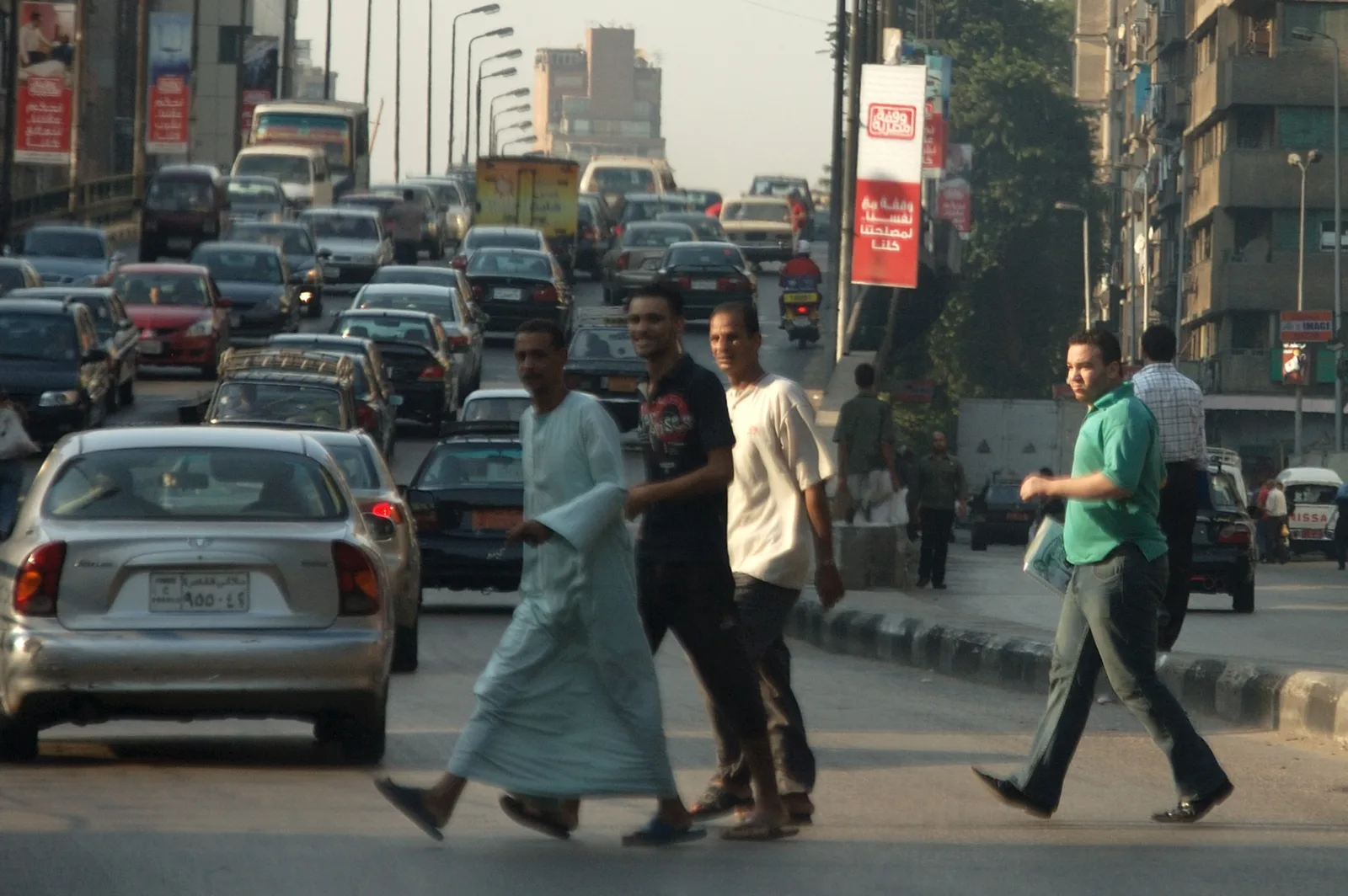
The scene is so familiar we no longer notice it: a highway or main road with cars streaming past, a footbridge or marked crossing a few metres away — and yet the pedestrian chooses the shortest straight line. He steps down into the river of asphalt, dodges one car, freezes in front of another, raises his palm at the oncoming traffic as though a palm were a brake, then sprints the rest of the way to the far bank while the hearts of everyone watching hang in the air.
Let us call this act by its name: a gamble. A bet in which the walker places his life on the table to save two minutes, or the effort of climbing a bridge's steps. And it is a bet in which he holds only half the cards; the other half is in the hands of a driver he has never met. Was he paying attention? Are his brakes sound? Is the road wet? Is the sun in his eyes at precisely this moment? Every successful random crossing is not proof of skill — it is a dice roll that happened to win this time.
The forgotten victim in this scene is the driver. We always speak of the danger to the person crossing, and forget that the driver in front of whom a human figure suddenly appears mid-road is handed an impossible choice in a fraction of a second: hit the person; brake violently and be rammed by the car behind; or swerve and strike another car — or another pedestrian on the pavement. Imagine driving at a legal speed, fully alert, when someone leaps out from between two parked cars. What is your sin? And what justice is there in a person carrying, for a lifetime, the weight of a crime he never committed — because someone else gambled with his own life in front of his wheels?
Here lies the moral indictment that concerns us before the law: whoever crosses through traffic is not risking only himself — though that alone deserves blame — he is imposing on every driver on that road a risk the driver never chose, and loading him with the possibility of a psychological and legal catastrophe that is in no way his fault. Your freedom to hazard your own body ends the moment you conscript someone else into the gamble.
More dangerous still: random crossing is a habit inherited by example. The child holding his father's hand as he threads through moving cars learns exactly one lesson: this is how a street is crossed. A thousand school safety lessons will not undo one repeated scene starring a parent. Whoever jaywalks with a child in hand commits the offence twice — once today, and once in every crossing that child will make alone tomorrow.
In fairness, Egyptian traffic law has not left the scene unregulated: it obliges pedestrians to use designated crossing places where they exist, and obliges drivers to yield to pedestrians at those crossings. The legal rule is there; like many others, it needs someone to recall it — and someone to enforce it.
And we would not be honest with the reader if we laid the whole burden on the walker. Let us say it plainly: in many places the safe crossing simply does not exist, or is unbearably far, or is a decaying footbridge — broken steps, unlit, a place no woman feels safe at night and no elderly or disabled person can manage at all. When a road is designed as though pedestrians did not exist, do not be surprised when they cross as though cars did not exist. Crossing safety is a shared responsibility: the walker must use what is provided, and the state must make what is provided humane and usable.
What do we ask of the citizen? One rule with no exceptions: cross at the designated place wherever one exists, whatever extra steps it costs — the minute you "save" by darting through traffic may be your last, or the first minute of an innocent driver's nightmare. And where no safe means exists and you must cross: stop, look both ways, cross in a straight line, no running, no phone in hand — and never, ever bring a child into the gamble with you.
And what do we ask of the state? Safe crossings at reasonable intervals on main roads: clear, well-lit markings; pedestrian signals that actually work; footbridges that are clean, lit and maintained, with ramps for the elderly and disabled so that the bridge is a real option rather than a punishment. Then, enforcement of the traffic rules on both sides: on the driver who does not stop at a pedestrian crossing, and on the walker who plunges into the road with the safe route metres away.
Between the two banks of a street there are lives: the walker's life, the driver's nerves, and the watching eyes of a child who is learning. The few metres saved by storming the road are not worth any one of them. To the pedestrian weaving between cars with the footbridge over his head, and to the official who left a main road without a humane crossing, we say it together and with the same firmness: this is wrong.
相关报道

女性割礼:法律定罪、宗教与医学共同否定的罪行——不是值得延续的习俗
女性割礼至今仍打着“习俗”与“合乎教义”的旗号在沉默中延续,尽管埃及法律对其课以重刑,尽管爱资哈尔和埃及宗教裁决机构已明确宣布它在宗教上毫无依据,尽管医学界一致认定它有百害而无一利。这篇文章不是在指控家庭,而是在呼吁保护家庭:保护我们的女儿,从父母口中一句清晰的“不”开始。
2026年8月18日 · 7 分钟阅读
“这是我的地盘”:流氓看车人,当强收的保护费披上“服务”的外衣
他站在一条没有他一寸产权的街上,却像分派自家庄园一样分配车位,收费全凭心情;谁敢不服,车门上就多一道尖利的钥匙划痕,或者当着家人的面挨一句羞辱。靠恐吓强行上岗的无证看车人,不是服务提供者,而是收买路钱的勒索者。这样不对:街道是公共财产,法律也早已规范了这个行当——披着行当外衣的流氓行径,没有任何借口。
2026年8月18日 · 5 分钟阅读
人行道属于公民:把行人推向夺命车流的占道小亭
一位母亲推着婴儿车在车流中穿行,一位老人摸索着从小巴旁边挪过——因为为他们修建的人行道,已经被小卖亭、饮料冰柜和摆出来的货物吞掉了。占据人行道的亭子,哪怕有执照,也是在侵吞一条为行人而建的通道,把人推进车流。这样不对:人行道不是可以出租的地产,而是每个公民的安全动脉。
2026年8月18日 · 5 分钟阅读