卢克索西岸:古埃及安葬列王、铸就不朽记忆之地
在卢克索尼罗河西岸,夕阳沉入底比斯群山之处,古埃及人为他们的国王与王后建起一座永恒之城:帝王谷、哈特谢普苏特神庙、门农巨像,还有那座用双手雕刻出历史的工匠村。
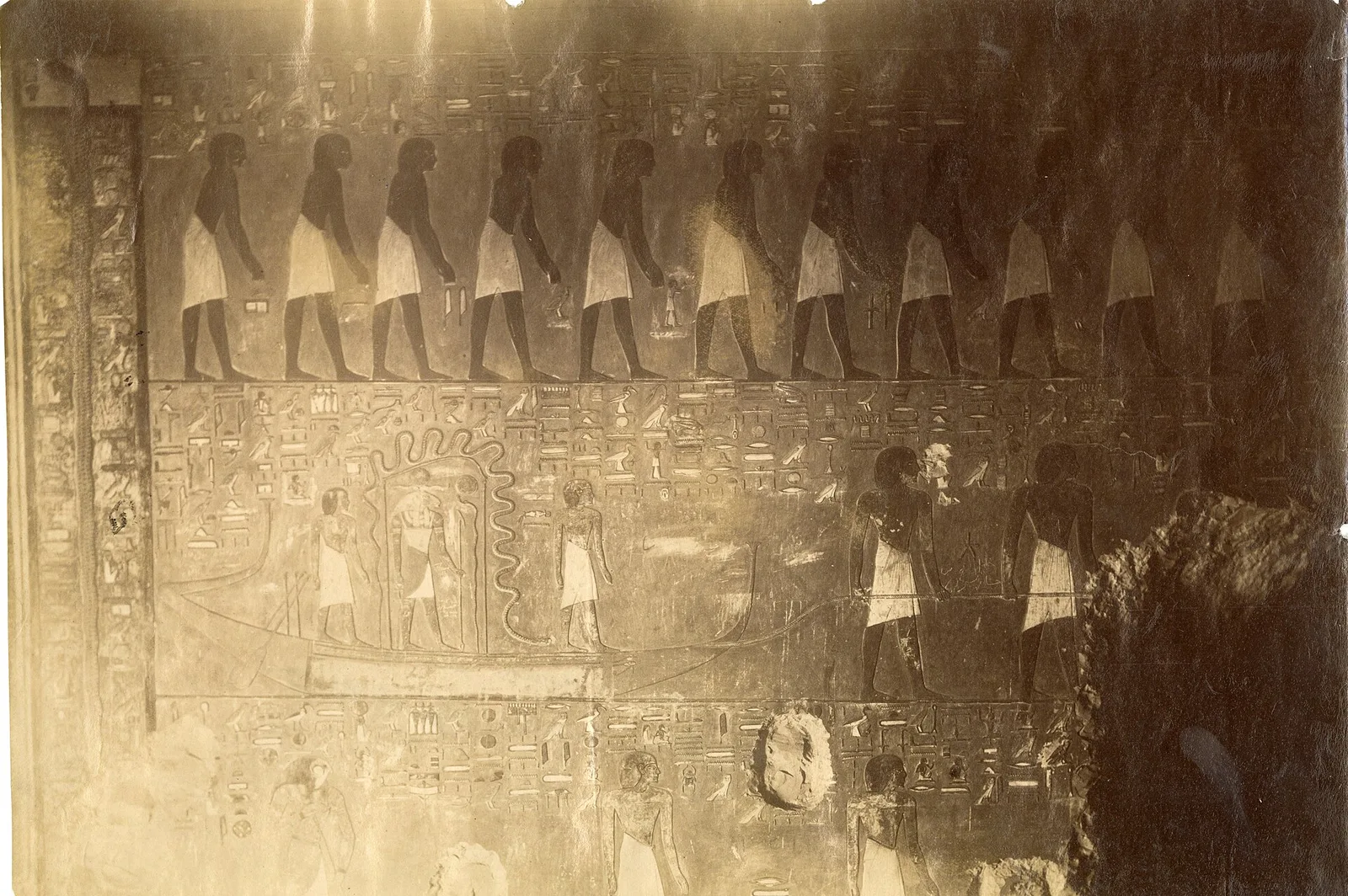
When Thebes was Egypt's capital at the height of its power, the ancient Egyptians divided their city across the Nile according to an elegant cosmic vision: the east, where the sun rises, for the living and the temples of the gods; the west, where it sets, for the dead and the afterlife. Luxor's west bank thus became the greatest funerary city history has known — a site UNESCO inscribed on the World Heritage List in 1979 as an open-air museum without parallel.
Hidden in the heart of the western mountain lies the Valley of the Kings, the rocky wadi that the rulers of the New Kingdom chose as their final resting place over roughly five centuries. Dozens of royal tombs were cut into its slopes, decorated with religious texts and painted scenes charting the king's journey through the underworld. In many of them the colours remain so vivid, more than three thousand years on, that the artists might have finished yesterday.
It was in this valley that the most famous archaeological discovery in history took place, when the British archaeologist Howard Carter found the tomb of the young king Tutankhamun in 1922, nearly intact with its golden treasures. Tutankhamun was no great ruler in life, but his tomb — almost the only one to escape ancient robbers — made him the best-known pharaoh of all and turned the valley into a global pilgrimage site.
Not far away, against a majestic cliff face at Deir el-Bahari, stands the mortuary temple of Queen Hatshepsut, its three ascending terraces appearing to grow naturally out of the mountain. The woman who ruled Egypt as pharaoh built it to immortalise her name and her trading expeditions to the land of Punt. Today it ranks among the most architecturally admired ancient buildings in the world, especially in early-morning light.
On the road to the temples, visitors are met by the Colossi of Memnon, the two giant seated statues that once guarded the entrance to the mortuary temple of Amenhotep III. In Greek and Roman times the northern colossus became famous for emitting a mysterious moaning sound at dawn, caused by cracks from an ancient earthquake. Travellers and emperors came to hear Memnon sing and left inscriptions on its base — until Roman-era repairs silenced the statue for good.
Medinet Habu is the jewel many visitors miss. The mortuary temple of Ramesses III retains its massive enclosure walls and deep-cut reliefs recording his victories over the Sea Peoples, along with astonishing original colour on the ceilings of its gateways and columns. Here the visitor finds a calm rarely available at the more famous sites, with carving that specialists rank among the finest in all Egypt.
The west bank also has a uniquely human face in Deir el-Medina, the village of the artists and craftsmen who cut and decorated the royal tombs. The site yielded thousands of ostraca and papyri revealing the workers' daily lives — their wages, days off and legal disputes — and even the first documented labour strike in history, when the men downed tools over delayed rations in the reign of Ramesses III. Their own small tombs contain some of the loveliest painted art anywhere.
The picture is completed by the Tombs of the Nobles scattered across the hillsides, where scenes of farming, fishing, music and banqueting are painted with a liveliness that sometimes surpasses the royal tombs themselves, and by the Ramesseum of Ramesses II, whose fallen colossus inspired the English poet Shelley's famous poem Ozymandias.
For a bird's-eye view of the funerary city, a dawn hot-air balloon flight remains Luxor's signature experience. Dozens of colourful balloons rise with the first light to reveal the valley, the temples, the sugar-cane fields and the green ribbon of the Nile in a single panorama — a scene that has made Luxor one of the world's most celebrated ballooning destinations.
Practically, visitors reach the west bank by bridge or by the Nile ferries from Luxor city, and tours are best begun early in the morning to escape the heat and catch the best light. Winter is peak season, while the other months offer quieter sites and gentler prices for those who can bear the temperatures. Tickets are sold per site, and at least one full day should be planned.
Visitors leave the west bank understanding that what they have seen is not tombs and stones but an entire civilisation that regarded death as a doorway to eternity — and built and painted so masterfully that eternity became real. More than three thousand years later, the names of kings and workers alike remain carved in the rocks of Thebes, and the world still comes to read them.
相关报道

西奈高山:圣凯瑟琳、千年古修道院与贝都因人引路的步道
在西奈的海滨度假胜地之上,耸立着埃及的最高地:摩西山与凯瑟琳山,一座大门从未关闭过的六世纪修道院,高谷中的贝都因果园,还有“西奈步道”——一条由贝都因部落亲手开辟并亲自领队的长距离徒步线路。
2026年8月18日 · 5 分钟阅读

海滩之外的红海:珊瑚礁、潜水规则、儒艮与海豚之家
埃及的红海海岸远不止度假村:有全球科学家争相研究的耐热珊瑚、严格的潜水规则、儒艮觅食的海草湾,还有飞旋海豚栖息休憩的礁湖。这是一份通往沙滩之外那片大海的指南——教你如何游览而不伤害它。
2026年8月18日 · 5 分钟阅读

锡瓦:沙海边缘的埃及绿洲,盐湖、棕榈与神谕之殿
远离城市喧嚣数百公里,锡瓦绿洲静卧在盐湖与棕榈、橄榄园之间,守护着独一无二的阿马齐格文化遗产,以及两千多年前亚历山大大帝穿越沙漠专程求取神谕的神庙——那一纸神谕,曾改变历史的走向。
2026年8月18日 · 8 分钟阅读