纳吉布·马哈福兹:把开罗小巷写上世界文学地图的讲故事人
从杰马利耶的街巷到诺贝尔领奖台,纳吉布·马哈福兹把开罗变成了一个完整的小说宇宙。这是一位安静的政府职员的故事:他默默笔耕数十年,最终成为首位摘得世界最高文学奖的阿拉伯作家,留下一份至今仍历久弥新的遗产。
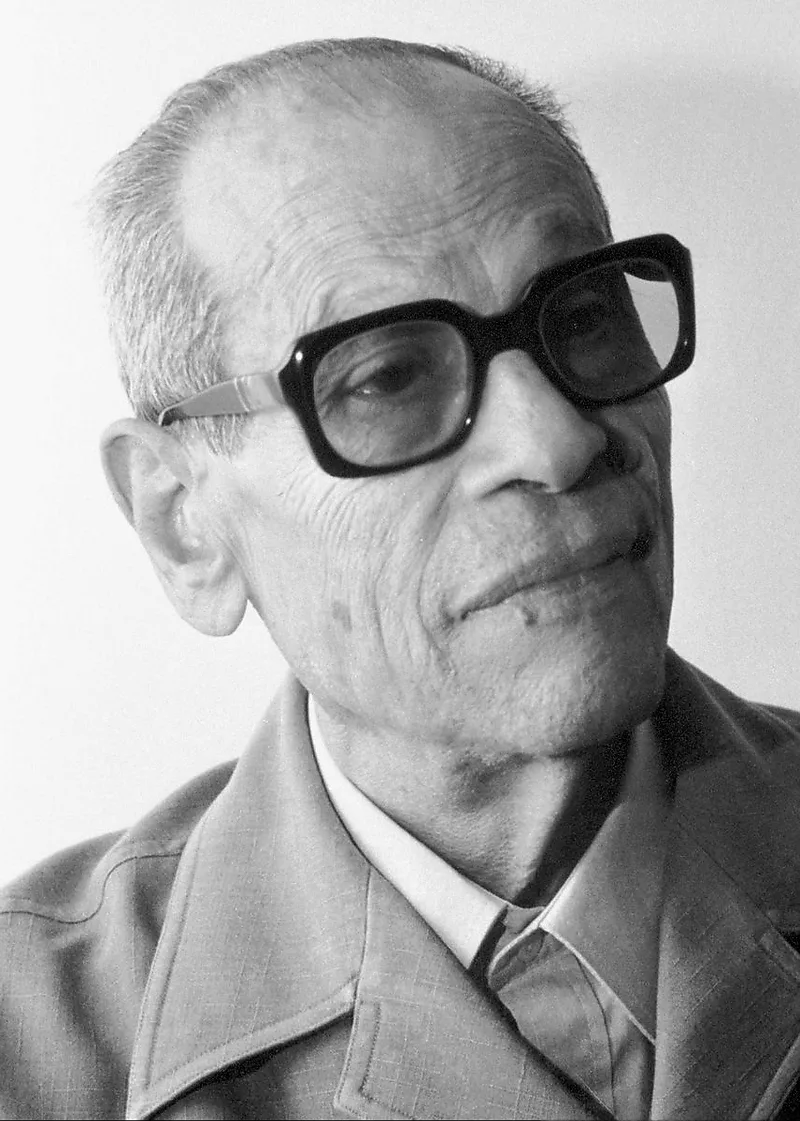
In the autumn of 1988, the Swedish Academy announced that the Nobel Prize in Literature had gone to a 76-year-old Egyptian novelist named Naguib Mahfouz. He was the first writer in Arabic to receive the award since its foundation. He did not travel to Stockholm to collect it — he was a man deeply attached to his daily routines in Cairo — so his daughters represented him while his lecture was read aloud, a speech in which he saluted the two civilisations, Pharaonic and Islamic, whose son he declared himself to be.
Mahfouz was born in December 1911 in the Gamaliya quarter at the heart of Fatimid Cairo, among the alleys, fountains and minarets that would later become the stage of his greatest works. Though his family moved to the Abbasiya district when he was a boy, his heart remained tied to the old quarter, until the alley — the hara — became for him a complete universe in which questions of justice, power and faith could be tested.
He studied philosophy at the Egyptian university and in his youth wavered between thought and literature before committing himself to the novel. For decades he worked as a government employee in the ministries of religious endowments and culture and in the state cinema apparatus, writing at rigidly fixed hours. He believed inspiration was no substitute for discipline, and into old age he kept faith with his appointed times for writing, walking and the coffeehouse.
He began with historical novels set in Pharaonic Egypt — Khufu's Wisdom, Rhadopis of Nubia, Thebes at War — moved by a nationalist dream that saw the distant past as a mirror of the present. But he soon discovered that his true material lived in the present, and he turned to realism with novels such as Cairo Modern, Khan al-Khalili and Midaq Alley, which drew a pulsing social map of 1940s Cairo.
Then came the summit on which critical judgement has settled: the Trilogy. In Palace Walk, Palace of Desire and Sugar Street, published in the 1950s, Mahfouz followed three generations of the family of al-Sayyid Ahmad Abd al-Jawad between the 1919 revolution and the Second World War. Through a single household he wrote the history of a whole nation in transformation, creating characters — from the imposing patriarch to the patient Amina — who entered the Egyptian imagination as if made of flesh and blood.
His road was not without storms. Children of Gebelawi, serialised in Al-Ahram in 1959, provoked a wide religious controversy over its allegorical structure; it did not appear as a book inside Egypt for decades and was printed in Beirut instead. The controversy pursued the novel until its tragic climax in 1994, when a young extremist stabbed Mahfouz in the neck outside his home. The octogenarian writer narrowly survived, but the injury weakened his writing hand, and he dictated his final short texts.
Between these stations, Mahfouz renewed his craft again and again. In the 1960s he wrote novels of existential anxiety and veiled critique such as The Thief and the Dogs, Adrift on the Nile and Miramar. In late works like Fountain and Tomb and Echoes of an Autobiography his prose attained the clarity of Sufi wisdom, proof that a great storyteller does not age so much as distil.
His name was tightly bound to Egyptian cinema in its golden age. He worked as a screenwriter and as an official in the state film organisations, and dozens of his novels and stories became films that are now classics, from Midaq Alley to The Beginning and the End and Cairo 30. Through the screen, his characters reached millions who had never read his books.
His daily rituals became part of his legend: the long morning walk, the coffeehouse sittings from Fishawi in Khan el-Khalili to the cafés of downtown, and the weekly gathering of friends known as the Harafish circle. In those sessions he listened more than he spoke, gathering from people's mouths what he would later transmute into literature.
Naguib Mahfouz died in August 2006, at ninety-four, and was mourned with both a military funeral and a popular one. Today his works are translated into dozens of languages, visitors seek out his museum at the Takiyat Abu al-Dhahab near al-Azhar, and his great question still hangs in every alley he wrote: how is a human being to live justly and freely in a world that never stops changing? Because the answer remains unfinished, Mahfouz will go on being read.
相关报道

尼罗河畔的好莱坞:埃及电影的黄金时代
整整三十年间,开罗的电影制片厂让埃及成为阿拉伯世界的电影之都。从1935年米斯尔制片厂的创立,到法坦·哈玛玛、奥马尔·沙里夫和《开罗车站》,本文讲述黄金时代如何铸就,以及它的黑白经典为何至今仍在上映。
2026年8月18日 · 6 分钟阅读

伊斯兰开罗与科普特开罗:从征服之门到悬空教堂的露天博物馆
很少有城市能让来客在一次漫步中穿越千年建筑史。1979年即列入世界遗产名录的开罗历史城区正是如此:从穆伊兹大街及其清真寺群,到老开罗的教堂和本·埃兹拉犹太会堂,还有一段让古老石头重焕生机的修复故事。
2026年8月18日 · 7 分钟阅读

从月球上能看到中国长城吗?宇航员早已给出答案
教科书里有个人们津津乐道的说法:中国长城是从月球上唯一可见的人造建筑。但亲身登上太空的宇航员——包括中国首位航天员本人——都给出了否定答案,光学原理也支持他们。至于从太空真正能看到什么——从城市灯火到熠熠生辉的尼罗河三角洲——那是一个更精彩的故事。结论:错误。
2026年8月18日 · 5 分钟阅读