跳至正文

尼罗河不是垃圾场:污染大动脉,就是捅向整个身体的一刀

这条自远古以来托起埃及的大河,却被一些人当成敞开的下水道:垃圾袋从桥上抛下,废弃物倒进水里,垃圾丢弃在河岸。往尼罗河里扔东西的人,污染的不是一处“风景”,而是下游千百万埃及人的饮用水。法律对此明文定罪。这样不对。
发布于 2026年8月18日·5 分钟阅读
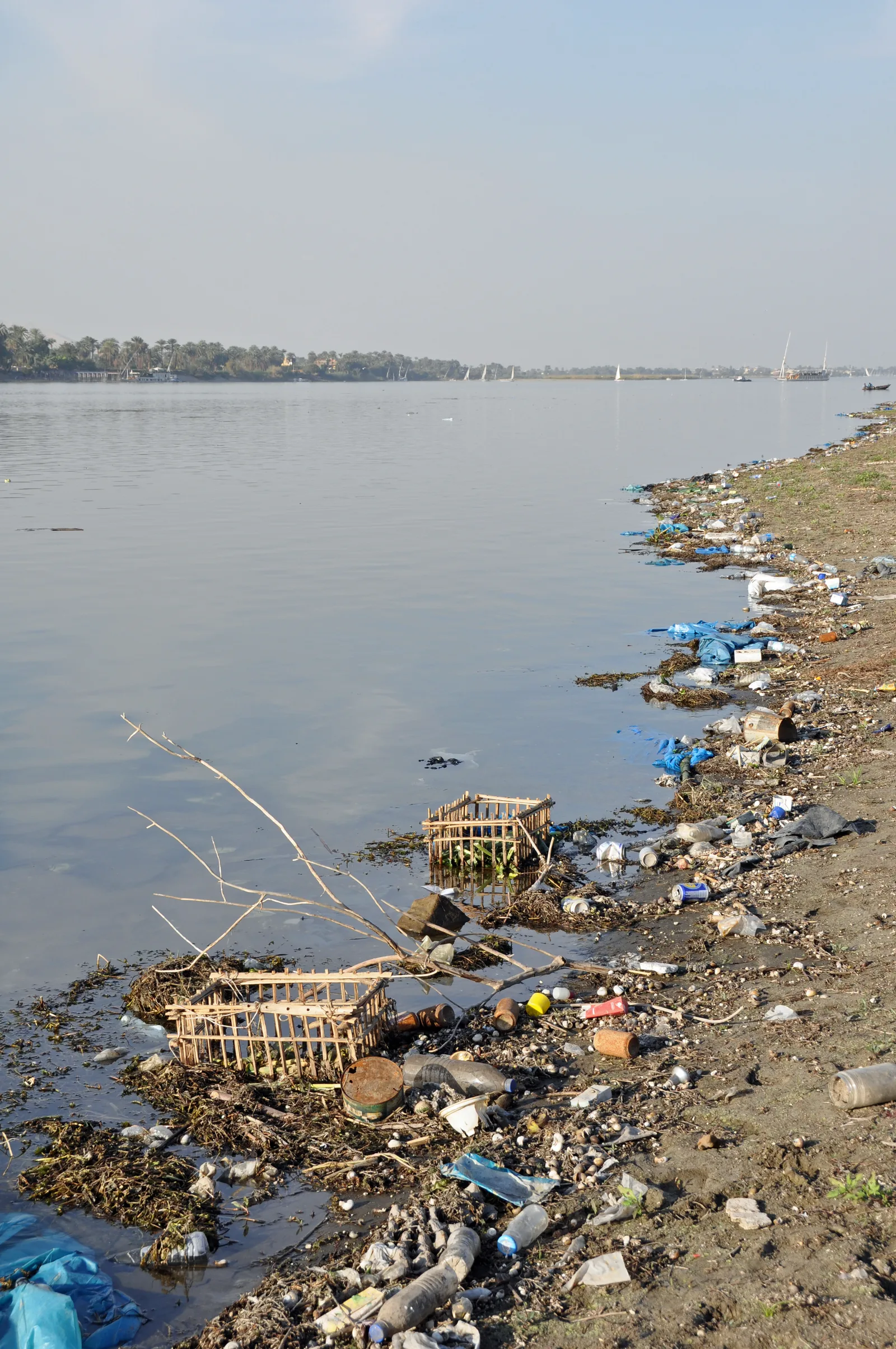
أكياس بلاستيكية ومخلفات طافية متجمعة عند ضفة نهر النيل، ويظهر النهر والمباني في الخلفية.

Before anything else, let us remember what this river is. The Nile is not a tourist attraction or a backdrop for sunset photographs; it is the reason Egypt exists at all. On its banks rose one of the oldest civilisations on earth, and from it Egyptians have drunk, farmed and lived for thousands of years. The Greek historian Herodotus wrote long ago that Egypt is the gift of the Nile, and the sentence remains literally true today: a country that is mostly desert, one artery of water running through its middle, and everything standing upon it.

Now look at how some of us treat that artery. A garbage bag hurled from a bridge with a one-second flick of the hand. Waste emptied at the banks under cover of night. Bottles and plastic bags left behind after a day out on the shore, for the water to carry away. Wastewater finding its way into the channel or into the canals and drains connected to it. Each person tells himself his act is small and the river is big — and the result is that millions of "small acts" accumulate in one and the same water.

Here is the fact that makes polluting the Nile different from any other littering: the river flows. What you throw into the water at one point does not stay there; it travels on to those after you. Drinking-water stations draw from this very channel; farmland is irrigated from it; the fisherman casts his net into it. Whoever pollutes the Nile is not offending a "public view" — he is reaching, in effect, into the water glass in the home of a stranger, and into the food that will be grown with that water.

That is why the crime here is moral par excellence before it is legal. Dumping waste into the Nile is a silent assault on every Egyptian living downstream of you — an assault in which the assailant never sees his victims and they never see him, yet one that is real beyond doubt. And it carries, besides, an insult and provocation to everyone who sees a riverbank turned into a dump: this river belongs to all of us — who gave you the right to disfigure it?

Plastic in particular is an enemy of a special kind. The bag that takes one second to throw remains in the aquatic environment for many years, breaking into ever smaller fragments that are swallowed by the fish that end up on our tables. Today's pollution does not end today; it is a toxic deposit we leave in the river for our children.

The law has a clear and long-standing word here. Law 48 of 1982 on the protection of the Nile and waterways from pollution prohibits discharging solid or liquid waste into the river, its branches, canals and drains except under licence and to set standards; and the Environment Law 4 of 1994, as amended, tightens that protection and prescribes penalties. The texts have existed for decades; what is needed is for them to become a reality visible to anyone tempted to treat the river as a drain.

And let us be fair: not every form of pollution is the act of individuals. Untreated sewage and industrial and agricultural waste are files larger than any one citizen's behaviour, and responsibility for them lies first with state bodies and enterprises; Egypt's wastewater-treatment and canal-lining projects are steps in the right direction that deserve to be built upon. But none of this exonerates the individual: the bag you hurl from the bridge carries no government agency's signature. Each of us answers for his own hand.

What do we ask of the citizen? That nothing leave your hand for the Nile or for any canal or drain connected to it: no bag, no bottle, no picnic waste, no slaughter remains. If you sit on the bank, leave it as you found it or cleaner. And if you see someone casting his waste into the water, do not walk past: a calm, firm word — and a report to the competent authorities when the act is serious. This is wrong.

What do we ask of boat owners and Nile businesses? A waste container on every vessel, and a commitment to bringing it ashore rather than over the side. The Nile is your livelihood before anyone else's, and it is absurd for river commerce to kill the river it lives on.

And what do we ask of the state? Genuine enforcement of Laws 48 of 1982 and 4 of 1994 against polluters, individuals and enterprises alike; continuation and expansion of wastewater-treatment projects; enough garbage bins along corniches and banks to make the right behaviour easier than the wrong one; and support and protection for river clean-up initiatives and their volunteers.

An entire nation lives on a single artery. That is not a rhetorical flourish but a precise geographical description of Egypt. Whoever stabs the artery — with a bag, a drainpipe or a truckload of waste — stabs the whole body, beginning with his own children. The Nile, having given us everything, holds a claim on us for protection. To whoever betrays it, we say — in the river's own voice, had it one: this is wrong.

相关报道

لافتة توعية عامة ضد ختان الإناث معروضة في فعالية مجتمعية، ويقف بجوارها عدد من الحضور.
这样不对

女性割礼:法律定罪、宗教与医学共同否定的罪行——不是值得延续的习俗

女性割礼至今仍打着“习俗”与“合乎教义”的旗号在沉默中延续,尽管埃及法律对其课以重刑,尽管爱资哈尔和埃及宗教裁决机构已明确宣布它在宗教上毫无依据,尽管医学界一致认定它有百害而无一利。这篇文章不是在指控家庭,而是在呼吁保护家庭:保护我们的女儿,从父母口中一句清晰的“不”开始。

2026年8月18日 · 7 分钟阅读

这样不对

“这是我的地盘”:流氓看车人,当强收的保护费披上“服务”的外衣

他站在一条没有他一寸产权的街上,却像分派自家庄园一样分配车位,收费全凭心情;谁敢不服,车门上就多一道尖利的钥匙划痕,或者当着家人的面挨一句羞辱。靠恐吓强行上岗的无证看车人,不是服务提供者,而是收买路钱的勒索者。这样不对:街道是公共财产,法律也早已规范了这个行当——披着行当外衣的流氓行径,没有任何借口。

2026年8月18日 · 5 分钟阅读

这样不对

人行道属于公民:把行人推向夺命车流的占道小亭

一位母亲推着婴儿车在车流中穿行,一位老人摸索着从小巴旁边挪过——因为为他们修建的人行道,已经被小卖亭、饮料冰柜和摆出来的货物吞掉了。占据人行道的亭子,哪怕有执照,也是在侵吞一条为行人而建的通道,把人推进车流。这样不对:人行道不是可以出租的地产,而是每个公民的安全动脉。

2026年8月18日 · 5 分钟阅读