海滩之外的红海:珊瑚礁、潜水规则、儒艮与海豚之家
埃及的红海海岸远不止度假村:有全球科学家争相研究的耐热珊瑚、严格的潜水规则、儒艮觅食的海草湾,还有飞旋海豚栖息休憩的礁湖。这是一份通往沙滩之外那片大海的指南——教你如何游览而不伤害它。
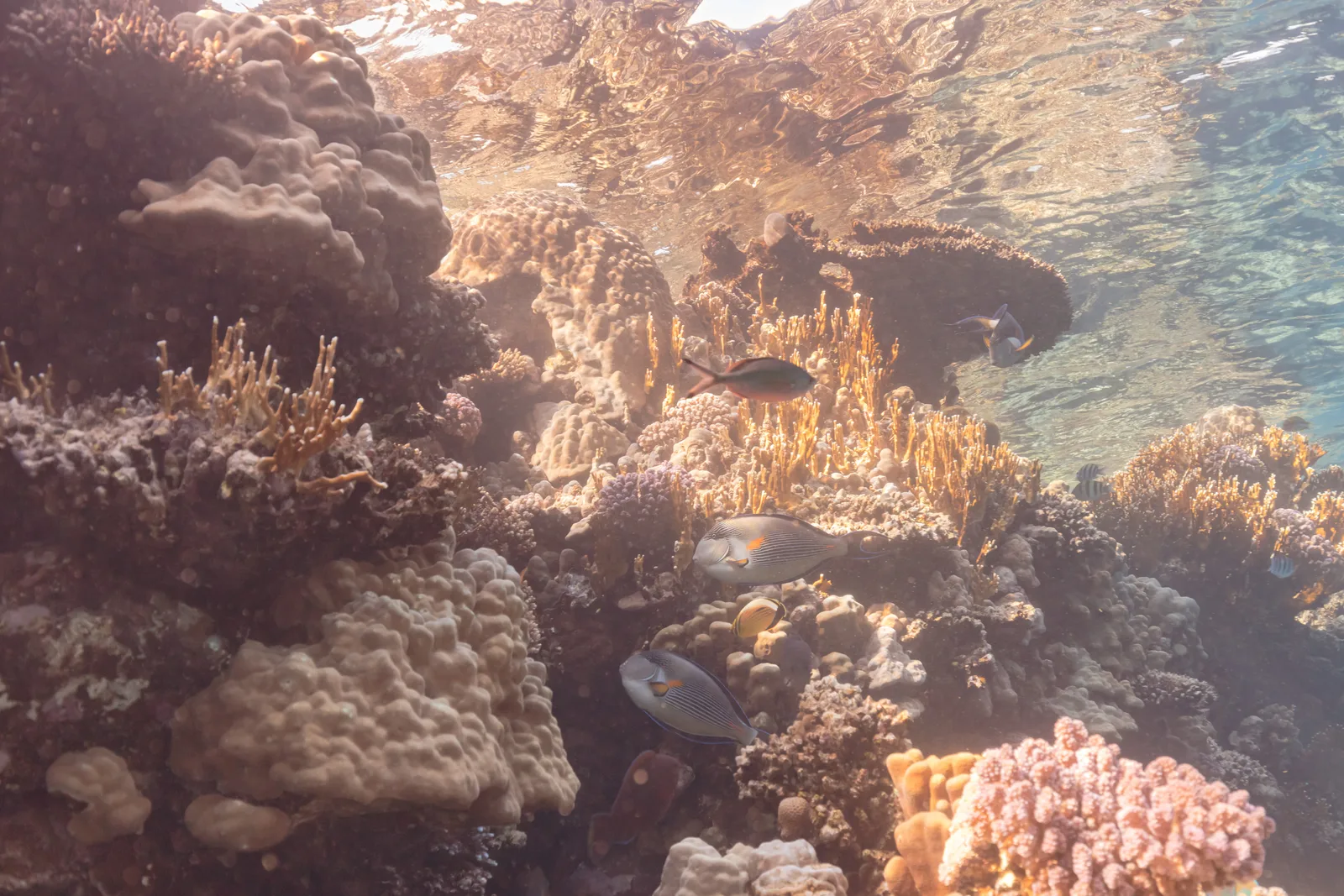
The postcards sell sand and sunshine, but the Red Sea's real wealth begins where the beach ends. Along Egypt's eastern coast, from Hurghada south to Marsa Alam and beyond, a fringing coral reef runs for hundreds of kilometres, often close enough to shore that a swimmer can reach living coral within minutes of leaving the sand. For divers and snorkellers this is one of the most accessible major reef systems on the planet, and for marine scientists it is one of the most closely watched.
That scientific attention has a serious reason. Corals of the northern Red Sea and the Gulf of Aqaba have shown an unusual tolerance for warm water, surviving temperatures that trigger mass bleaching on reefs elsewhere in the world. Researchers studying climate change therefore treat the region as a potential refuge where coral species might persist even as the oceans heat up. That gives Egypt's reefs a significance far beyond tourism: they are a living genetic reservoir that the wider ocean may one day need.
Hurghada is the historic gateway. A modest fishing harbour within living memory, it grew into one of the busiest diving destinations anywhere, with daily boats heading for the reefs around the Giftun Islands and dozens of named sites beyond them. Popularity, however, brought pressure. Anchors dropped carelessly can shatter coral colonies that took decades to grow, stray fins snap fragile branching corals, and crowded sites concentrate damage on the very places that made the city famous in the first place.
The response came partly from the dive industry itself. The Hurghada Environmental Protection and Conservation Association, known as HEPCA and founded in the early 1990s by diving operators, installed fixed mooring buoys along the coast so that boats could tie off to a rope instead of dropping anchor onto living reef. The mooring network expanded over the years to cover long stretches of the Egyptian Red Sea, and it became a frequently cited example of how a tourism industry can organise itself to protect the resource it depends on.
The rules a visitor must follow underwater are not polite suggestions; many are conditions of the protected areas' regulations and of every responsible dive centre's briefing. Do not touch, stand on or hold the coral, even with gloves — many operators ban gloves precisely to remove the temptation. Control your buoyancy so your fins and equipment never drag across the reef. Do not feed fish, do not chase or grab marine animals, and never collect shells or coral, living or dead: taking marine souvenirs out of Egypt is prohibited. The environmental fees charged at marine parks help fund the protectorates themselves.
Further south, Marsa Alam offers a quieter version of the same sea. Once reachable only by a long desert road, the area grew after its airport opened and is now the base for some of Egypt's most celebrated dive sites. Elphinstone Reef, a narrow offshore wall plunging into deep blue, is famous for drifting currents and encounters with oceanic sharks, while sheltered bays such as Marsa Abu Dabbab hide a different treasure: broad meadows of seagrass swaying over sandy bottoms, grazing grounds for green turtles and for something rarer still.
That rarer visitor is the dugong, a large, slow, herbivorous marine mammal related to the manatee, which feeds almost exclusively on seagrass. Sightings around Marsa Alam's seagrass bays have made the animal an emblem of the southern coast, but dugongs are globally vulnerable and easily disturbed. The etiquette is strict: keep your distance, never chase, corner or touch the animal, do not block its path to the surface where it must breathe, and let the encounter happen — or not happen — entirely on the animal's terms.
Then there are the dolphin houses. Sha'ab Samadai, a horseshoe-shaped reef near Marsa Alam, encloses a shallow lagoon where spinner dolphins rest during the day after hunting at night in deep water. When unregulated boat traffic began crowding the resting pods in the early 2000s, the authorities introduced a management system that divides the reef into zones, keeps visitors out of the dolphins' core resting area and caps daily numbers. A similar reef, Sataya, further to the south, receives visitors under comparable rules.
The southern coast is also anchored by Wadi el Gemal National Park, declared a protectorate in 2003, which stretches from inland desert valleys across mangrove-fringed shores to offshore islands and reefs. The mangroves here shelter juvenile fish and nesting birds, the islands host breeding seabirds and egg-laying turtles, and the park ties together the marine and desert worlds that tourism brochures usually keep apart. It is a reminder that the Red Sea coast is a single ecosystem, not a row of hotel beaches.
For the visitor, the responsible path is straightforward: choose licensed dive centres that brief their guests properly, prefer operators who respect zone rules and group-size limits, listen to the guide, and treat every fin-kick as a decision. Egypt's reefs have survived warming seas better than most on Earth; whether they survive their own popularity depends largely on the behaviour of the people who come to admire them. The beach is the doorway. The reef is the house — and guests are expected to behave accordingly.
相关报道

西奈高山:圣凯瑟琳、千年古修道院与贝都因人引路的步道
在西奈的海滨度假胜地之上,耸立着埃及的最高地:摩西山与凯瑟琳山,一座大门从未关闭过的六世纪修道院,高谷中的贝都因果园,还有“西奈步道”——一条由贝都因部落亲手开辟并亲自领队的长距离徒步线路。
2026年8月18日 · 5 分钟阅读

卢克索西岸:古埃及安葬列王、铸就不朽记忆之地
在卢克索尼罗河西岸,夕阳沉入底比斯群山之处,古埃及人为他们的国王与王后建起一座永恒之城:帝王谷、哈特谢普苏特神庙、门农巨像,还有那座用双手雕刻出历史的工匠村。
2026年8月18日 · 8 分钟阅读

锡瓦:沙海边缘的埃及绿洲,盐湖、棕榈与神谕之殿
远离城市喧嚣数百公里,锡瓦绿洲静卧在盐湖与棕榈、橄榄园之间,守护着独一无二的阿马齐格文化遗产,以及两千多年前亚历山大大帝穿越沙漠专程求取神谕的神庙——那一纸神谕,曾改变历史的走向。
2026年8月18日 · 8 分钟阅读