人行道属于公民:把行人推向夺命车流的占道小亭
一位母亲推着婴儿车在车流中穿行,一位老人摸索着从小巴旁边挪过——因为为他们修建的人行道,已经被小卖亭、饮料冰柜和摆出来的货物吞掉了。占据人行道的亭子,哪怕有执照,也是在侵吞一条为行人而建的通道,把人推进车流。这样不对:人行道不是可以出租的地产,而是每个公民的安全动脉。
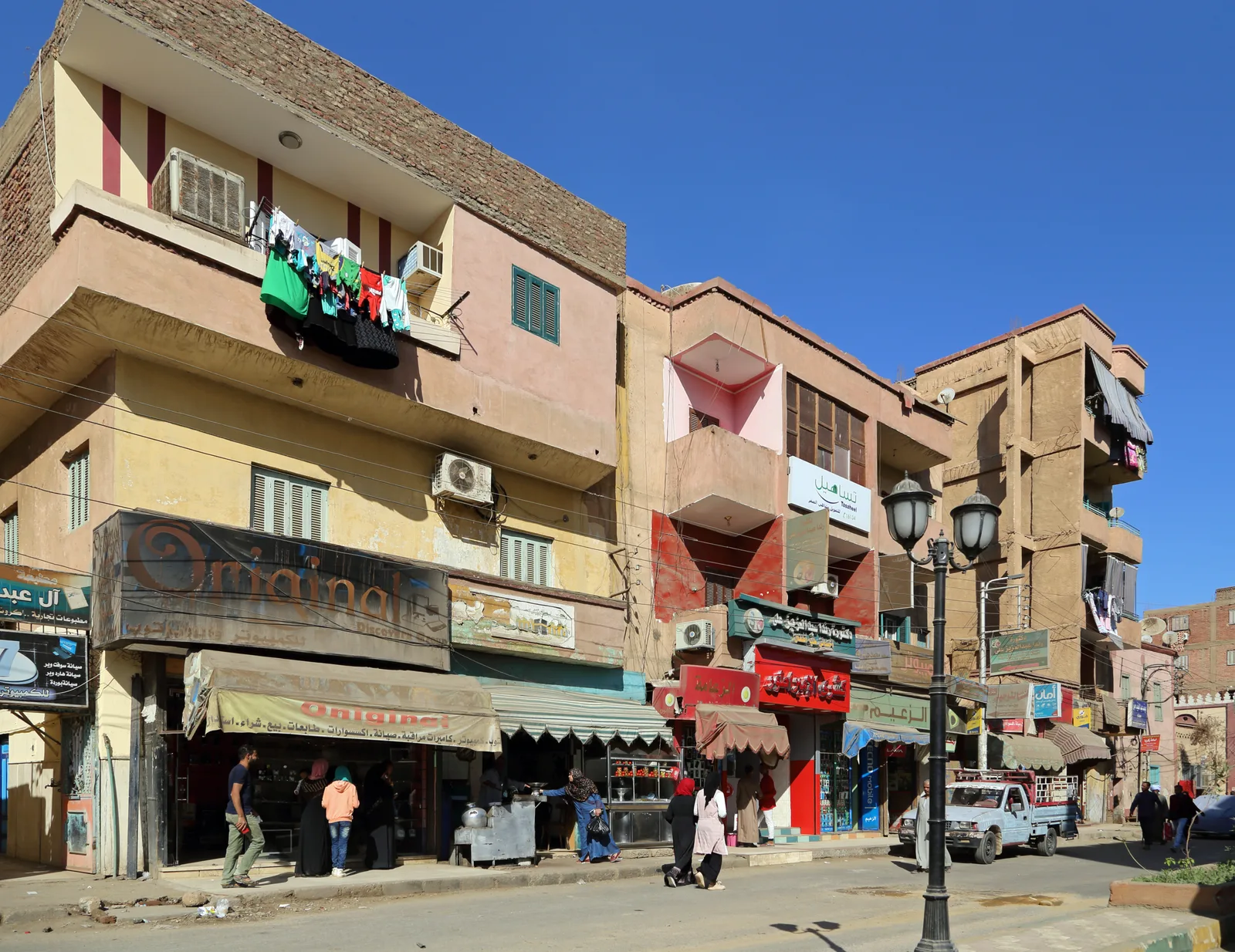
Try walking a main street in any Egyptian city from end to end on the sidewalk, without once stepping down into the roadway. In many districts you will fail before the first hundred metres: a cigarette-and-soda kiosk that expanded into a full shop, fridges and crates of merchandise, awnings and chairs — until nothing is left for passersby but a narrow ribbon, or nothing at all. The result is a daily scene we have grown so used to that we forgot how grave it is: human beings walking among cars because their designated path is occupied.
Let us call it what it is: this is not a cosmetic detail or merely a question of a "civilised appearance" — it is a matter of safety and of life. When pedestrians step into the roadway they are placed in direct confrontation with cars and motorcycles, and the weakest are the most exposed: the child on the way to school, the mother with her infant's stroller, the slow-stepping elderly man, and people with disabilities for whom a city without passable sidewalks is simply impossible to move through. Every kiosk that blocks a sidewalk pushes these people, physically, toward danger.
Before the law, this is a plain moral offence. The sidewalk is pure public property, built with everyone's money so that everyone may walk in safety. Whoever occupies it for his private business is telling every passerby, in effect: my interest outranks your safety — you step into the street and you carry the risk. That is the daily provocation this section exists to name: the small, repeated wound to a citizen's dignity as he picks his way between cars in his own country.
And here we reach the point that must be said with courage: a licence does not make wrong right. A kiosk licensed by the district that then expanded and swallowed the sidewalk is no less harmful than an unauthorised one — it may be worse, because it occupies the public passage with an official stamp. A licence permits an activity within drawn limits; it can never be a title deed to the pedestrians' path. And when an administrative body grants a licence that makes walking on the sidewalk impossible, that body is a partner in the wrong.
Egyptian law settled the principle decades ago: the Public Roads Occupation Law No. 140 of 1956 regulates any occupation of the public way and makes it a licensed exception under conditions — never an absolute rule — because the default is that the road and sidewalk are the shared right of those who pass. The legal foundation exists and the principle is settled. What is missing — as usual in this section's files — is consistent enforcement that makes no distinction between a small kiosk, a large café, and a famous store spreading its goods metres beyond its frontage.
Here too, let us be fair to kiosk owners: many are family breadwinners, the kiosk their only livelihood, and it would ill suit a moral campaign to become a war on poor people's income. But fairness does not mean accepting harm. An honest living cannot be built on endangering the lives of passersby — and the answer is not abolishing kiosks but disciplining them: a defined footprint that is respected, a pedestrian path that is untouchable, and organised alternatives where the sidewalk is too narrow.
Picture with us the reversed image — no fantasy, for it exists in many cities around the world and on Egyptian streets that have already been replanned: a continuous, passable sidewalk; the kiosk within its drawn boundary and not a centimetre beyond; a mother pushing her stroller from one end of the street to the other without once descending into the roadway. The difference between the two pictures is not an imaginary budget; it is the will to enforce, and mutual respect for drawn lines.
What we ask of the kiosk owner: keep to the limits of your licence to the centimetre — the extra fridge and the protruding crate of goods are not cleverness but a trespass on people's passage. And ask yourself the question we put to every protagonist of this section: would you accept your mother or your daughter walking among the cars because her sidewalk is occupied?
What we ask of the state and local authorities: review occupation licences against one explicit criterion — that a continuous, adequate pedestrian path remains; clear what blocks the sidewalks without favouritism toward the big or cruelty that sweeps away the small man's livelihood with no alternative; provide organised alternative locations where needed; and embed pedestrians' rights in every new plan and paving project — for a sidewalk that is built and then abandoned to occupation is wasted twice: once in money and once in purpose.
The sidewalk is a small test of a large idea: does the street belong to everyone, or to whoever seizes it first? Every metre of sidewalk recovered for pedestrians is a message that the weak man's right is protected, even if it is merely the right to pass. And every kiosk that swallows the path and shoves people into the roadway is the opposite message — one we reject. That's just wrong: the sidewalk is the citizen's right, before any private interest.
相关报道

女性割礼:法律定罪、宗教与医学共同否定的罪行——不是值得延续的习俗
女性割礼至今仍打着“习俗”与“合乎教义”的旗号在沉默中延续,尽管埃及法律对其课以重刑,尽管爱资哈尔和埃及宗教裁决机构已明确宣布它在宗教上毫无依据,尽管医学界一致认定它有百害而无一利。这篇文章不是在指控家庭,而是在呼吁保护家庭:保护我们的女儿,从父母口中一句清晰的“不”开始。
2026年8月18日 · 7 分钟阅读
“这是我的地盘”:流氓看车人,当强收的保护费披上“服务”的外衣
他站在一条没有他一寸产权的街上,却像分派自家庄园一样分配车位,收费全凭心情;谁敢不服,车门上就多一道尖利的钥匙划痕,或者当着家人的面挨一句羞辱。靠恐吓强行上岗的无证看车人,不是服务提供者,而是收买路钱的勒索者。这样不对:街道是公共财产,法律也早已规范了这个行当——披着行当外衣的流氓行径,没有任何借口。
2026年8月18日 · 5 分钟阅读

开在你卧室楼下的咖啡馆:当住宅楼底层变成通宵水烟馆
烟雾顺着通风口钻进楼上住户的家,喧哗声、哄笑声闹到天亮,一个第二天早上要考试的孩子不知道该怎么入睡。把住宅楼的地下室和底层改成通宵营业的水烟咖啡馆,是对居民健康与安宁的日常侵害。这样不对——住的权利,先于任何生意。
2026年8月18日 · 6 分钟阅读