锡瓦:沙海边缘的埃及绿洲,盐湖、棕榈与神谕之殿
远离城市喧嚣数百公里,锡瓦绿洲静卧在盐湖与棕榈、橄榄园之间,守护着独一无二的阿马齐格文化遗产,以及两千多年前亚历山大大帝穿越沙漠专程求取神谕的神庙——那一纸神谕,曾改变历史的走向。
In the far reaches of Egypt's Western Desert, more than seven hundred kilometres from Cairo and only about fifty from the Libyan border, Siwa Oasis lies in a depression that sinks below sea level. For centuries the desert's isolation was not a curse but the secret of the oasis's character: it preserved a language, an architecture and a way of life found nowhere else in Egypt. Only when a paved road arrived in the 1980s did Siwa truly open its gates to visitors.
Siwa owes its ancient fame to the Temple of the Oracle of Amun in the village of Aghurmi, one of the most celebrated seats of prophecy in the classical world. It was to this temple that Alexander the Great came in 331 BC, crossing the desert on a perilous journey, to emerge from his meeting with the priests proclaimed a son of the god Amun — a moment that cemented his legitimacy as ruler of Egypt and has fascinated historians ever since.
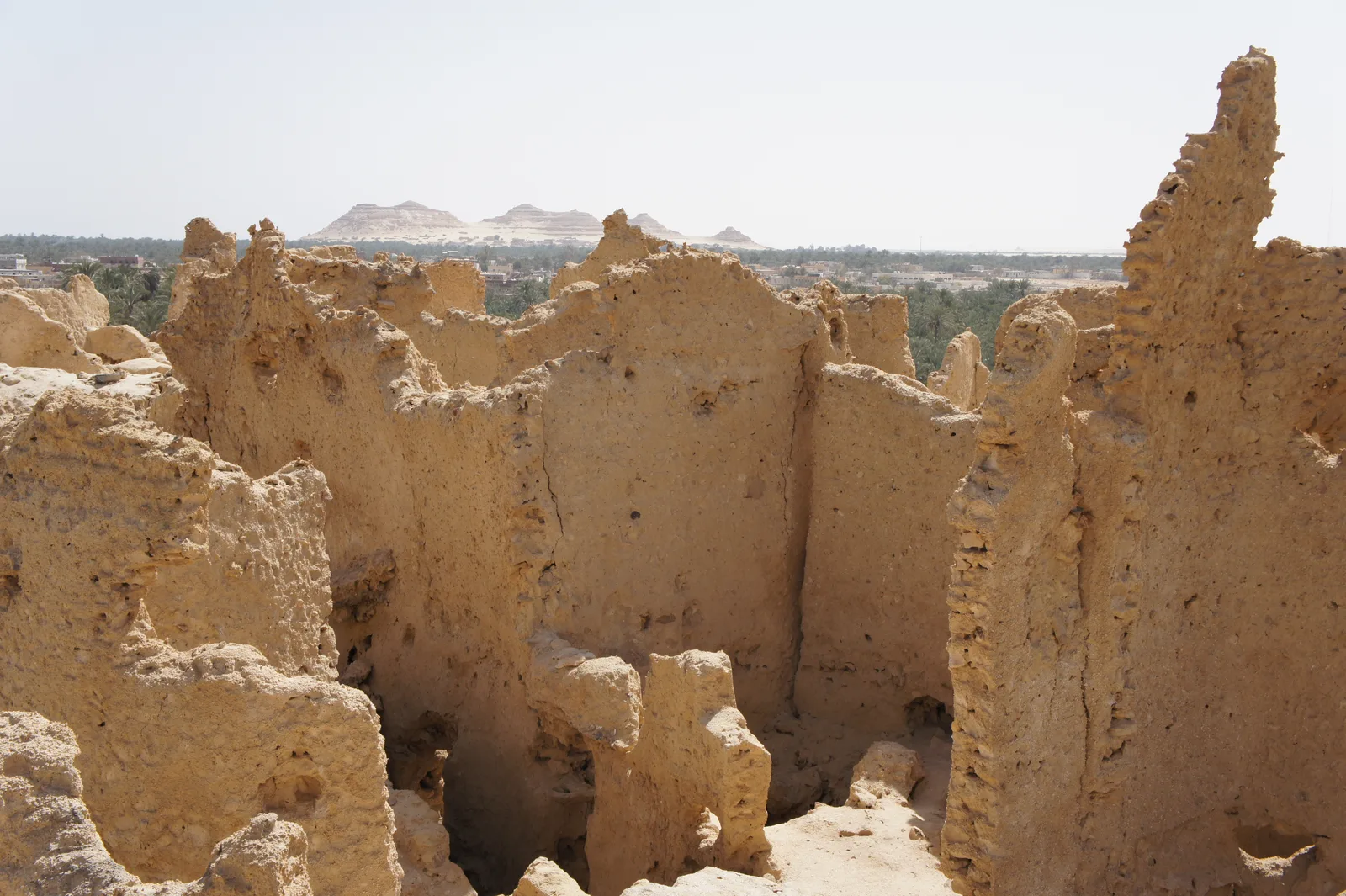
At the heart of the oasis stand the ruins of the Shali fortress, the old town the Siwans built from kershef, a mixture of salt-saturated mud and gravel. Shali withstood raiders and the harshness of the desert for centuries, but rare torrential rains in the early twentieth century dissolved its salty walls, and its people moved into newer houses around it. At sunset the fortress now looks like a vast natural sculpture, and parts of it are being restored using the same traditional materials.
Siwa is living culture as much as stone and history. Its Amazigh people speak their inherited Siwi language alongside Arabic and keep long-standing traditions in weddings, festivals and dress. The women of the oasis are famed for silver jewellery, embroidery and baskets woven from palm fronds. This cultural distinctiveness makes a visit a human experience before a touristic one — provided visitors respect the customs of a conservative community.
The salt lakes are Siwa's rising star of recent years: pools of startling turquoise ringed by white crusts of pure salt crystals, where the water's density lets swimmers float without effort, a scene many compare to the Dead Sea. Photographs of these lakes have become some of Egypt's most shared travel images, drawing a new kind of traveller in search of unspoilt nature.
Hundreds of springs are scattered across the oasis. The most famous is Cleopatra's Spring, a circular stone pool fed by fresh water for thousands of years and mentioned by ancient travellers. On the edge of the sand sea, visitors seek out Bir Wahed, where hot and cold springs sit close to the dunes, while Fatnas Island remains the classic spot to watch the sun sink behind palms and water in one of Egypt's most beautiful sunsets.
On the town's outskirts rises Gebel al-Mawta, the Mountain of the Dead, a hill honeycombed with hundreds of rock-cut tombs from the Late Pharaonic, Greek and Roman periods. Siwans sheltered there during the Second World War and rediscovered tombs decorated with coloured wall paintings, some still vivid today — testimony to the depth of history on which the oasis stands.
Economically, Siwan life has always rested on the date palm and the olive tree. Siwa's dates, olives and olive oil are among the finest in Egypt and reach markets at home and abroad, and the oasis is also known for natural mineral water bottled from its springs. Many visitors leave loaded with dates, oil and lamps carved from rock salt, a craft that has become a Siwan signature.
For the adventurous, Siwa is the gateway to the Great Sand Sea, one of the largest dune fields on Earth, stretching across vast tracts between Egypt and Libya. Four-wheel-drive safaris, sandboarding down towering dunes and nights in desert camps under skies crowded with stars, far from any light pollution, have made the oasis a favourite destination for desert tourism and camping.
Travellers usually reach Siwa by road from Marsa Matrouh on the north coast, a drive of several hours. Autumn through spring is the best season, with mild days and cool nights, while summer heat is punishing. Accommodation ranges from simple hotels to eco-lodges built in the traditional Siwan style from kershef and palm wood, offering a stay unlike any other in Egypt.
Siwa remains a rare example of a fragile balance between tourism and identity. An oasis that lived for centuries in isolation now welcomes its guests generously, but it is betting on responsible tourism that respects its environment and culture. Those who come seeking quiet and authenticity soon understand why its devotees say Siwa is not a place you visit, but a state of being you live.
相关报道

西奈高山:圣凯瑟琳、千年古修道院与贝都因人引路的步道
在西奈的海滨度假胜地之上,耸立着埃及的最高地:摩西山与凯瑟琳山,一座大门从未关闭过的六世纪修道院,高谷中的贝都因果园,还有“西奈步道”——一条由贝都因部落亲手开辟并亲自领队的长距离徒步线路。
2026年8月18日 · 5 分钟阅读

海滩之外的红海:珊瑚礁、潜水规则、儒艮与海豚之家
埃及的红海海岸远不止度假村:有全球科学家争相研究的耐热珊瑚、严格的潜水规则、儒艮觅食的海草湾,还有飞旋海豚栖息休憩的礁湖。这是一份通往沙滩之外那片大海的指南——教你如何游览而不伤害它。
2026年8月18日 · 5 分钟阅读

卢克索西岸:古埃及安葬列王、铸就不朽记忆之地
在卢克索尼罗河西岸,夕阳沉入底比斯群山之处,古埃及人为他们的国王与王后建起一座永恒之城:帝王谷、哈特谢普苏特神庙、门农巨像,还有那座用双手雕刻出历史的工匠村。
2026年8月18日 · 8 分钟阅读