“我是自由的”:止于邻人之肺的自由
在电梯里、办公室里、封闭的咖啡馆里、小巴车厢里:他当着众人点燃香烟,有人抗议,现成的回答脱口而出:“我是自由的。”但二手烟不是一种应被尊重的观点,而是有据可查的伤害——被迫吸入它的,是孩子、是过敏患者、是从未做过这种选择的孕妇。何况埃及法律多年前就已明令禁止。这样不对。
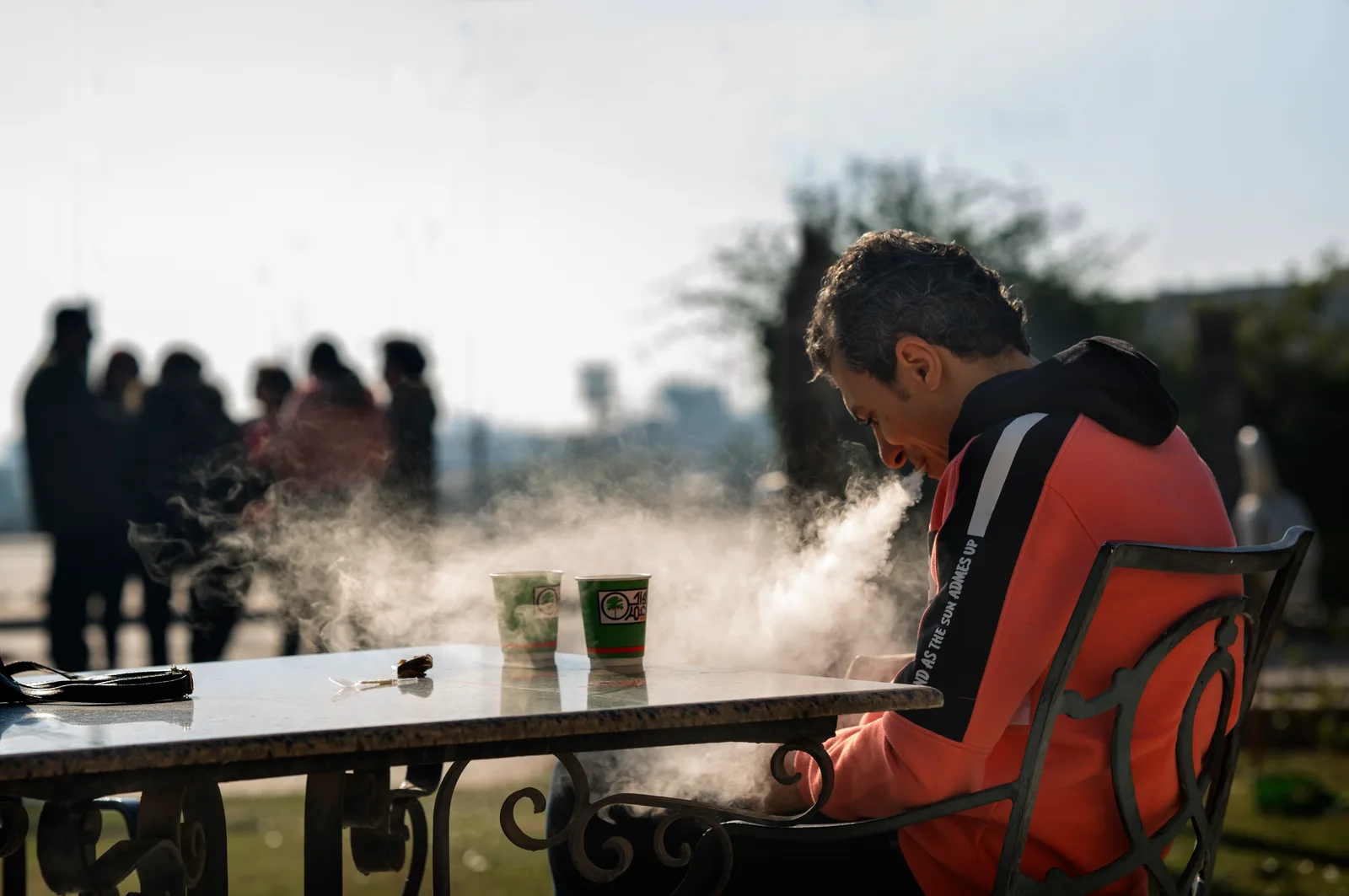
The scene repeats itself in almost every enclosed space: a cramped lift, a government office, a cafe with its windows shut, a packed microbus, a clinic waiting room. Someone takes out a cigarette and lights it in the middle of everyone, as casually as if he were alone in an open desert. And if anyone dares to object, the memorised answer arrives: "I'm free."
Let us take that phrase seriously for a moment, because it contains a fallacy worth dismantling. Yes, you are free to smoke; no one here has demanded you quit. But the smoke that leaves your cigarette does not stay within the borders of your body — it enters the lungs of everyone in the room without asking permission. And your freedom, by definition, ends where another person's body begins. Whoever smokes in an enclosed space is not exercising his freedom; he is confiscating other people's freedom to breathe clean air.
The harm here is not a matter of taste or of disliking a smell. Second-hand smoke is a health hazard documented beyond dispute; the World Health Organization has affirmed for years that there is no safe level of exposure to tobacco smoke, and that it is linked to heart disease, respiratory illness and cancers in non-smokers themselves. The smoke with which you exercised your "freedom" in the cafe goes on working in other people's chests after you have left.
And think of those who do not even have the luxury of objecting. The allergy or asthma sufferer for whom one sitting in a smoke-filled room can turn the day into a respiratory crisis. The child who came with his father and does not yet know he has a right to clean air. The pregnant woman carrying a second, tiny pair of lungs that breathe whatever she breathes. The cafe worker himself, who spends a full shift inside that cloud every day because his livelihood is there, and who dares not ask a customer to put out a cigarette.
And here we reach the fact that makes "I'm free" more fragile still: Egyptian law settled this question years ago. Law 52 of 1981 on the prevention of the harms of smoking, as amended by Law 154 of 2007, prohibits smoking in enclosed public places and imposes a fine on violators. In other words, whoever lights up in an enclosed space is not exercising a freedom; he is committing an explicit legal offence — on top of committing a moral one.
But on this desk we deliberately put ethics before law, because the real problem is not a missing text but a missing conscience. What the smoker needs is not a citation so much as a moment of honesty with himself: when you blow your smoke into the face of someone who does not smoke, you are not exercising a right; you are imposing on another human being's body something he has refused. That is insult, provocation and harm in the literal sense of all three words.
And let us be fair to many smokers, too: there are those who ask permission before lighting up, who step out to the balcony or the street without being asked, who stub out the cigarette the moment they see a child or learn there is a sick person present. They prove every day that smoking is one thing and inconsiderateness quite another — and that this battle is not against the smoker but against the contempt.
What do we ask of the citizen? Of the smoker: respect the simple rule — a shared enclosed space is not a place for smoking, however strong the craving, and without anyone having to ask. Of the non-smoker: object politely but firmly instead of the courteous silence your health pays for. A calm sentence such as "Excuse me — the room is closed and some of us are affected" is not rudeness; it is the exercise of a right.
What do we ask of cafe, shop and office owners? To understand that the law holds them responsible for their premises. The no-smoking sign is not decoration; it is an obligation to be enforced on all customers without favouritism. The cafe that enforces it does not lose its customers, as some imagine — it gains an entire clientele that used to avoid it.
And what do we ask of the state? To move a decades-old law from paper into reality: activate the fines in public and private establishments, hold the negligent establishment accountable and not only the individual smoker, and run announced inspection campaigns that restore to the "No Smoking" sign its lost authority.
"I'm free" is a beautiful phrase in its proper place. But spoken while your cigarette smoke fills the chest of a child or a sick person in a closed room, it flips into its exact opposite: a declaration that your comfort stands above everyone's health. To whoever says it in that place, we answer calmly and clearly: no — this is wrong.
相关报道

女性割礼:法律定罪、宗教与医学共同否定的罪行——不是值得延续的习俗
女性割礼至今仍打着“习俗”与“合乎教义”的旗号在沉默中延续,尽管埃及法律对其课以重刑,尽管爱资哈尔和埃及宗教裁决机构已明确宣布它在宗教上毫无依据,尽管医学界一致认定它有百害而无一利。这篇文章不是在指控家庭,而是在呼吁保护家庭:保护我们的女儿,从父母口中一句清晰的“不”开始。
2026年8月18日 · 7 分钟阅读
“这是我的地盘”:流氓看车人,当强收的保护费披上“服务”的外衣
他站在一条没有他一寸产权的街上,却像分派自家庄园一样分配车位,收费全凭心情;谁敢不服,车门上就多一道尖利的钥匙划痕,或者当着家人的面挨一句羞辱。靠恐吓强行上岗的无证看车人,不是服务提供者,而是收买路钱的勒索者。这样不对:街道是公共财产,法律也早已规范了这个行当——披着行当外衣的流氓行径,没有任何借口。
2026年8月18日 · 5 分钟阅读
人行道属于公民:把行人推向夺命车流的占道小亭
一位母亲推着婴儿车在车流中穿行,一位老人摸索着从小巴旁边挪过——因为为他们修建的人行道,已经被小卖亭、饮料冰柜和摆出来的货物吞掉了。占据人行道的亭子,哪怕有执照,也是在侵吞一条为行人而建的通道,把人推进车流。这样不对:人行道不是可以出租的地产,而是每个公民的安全动脉。
2026年8月18日 · 5 分钟阅读