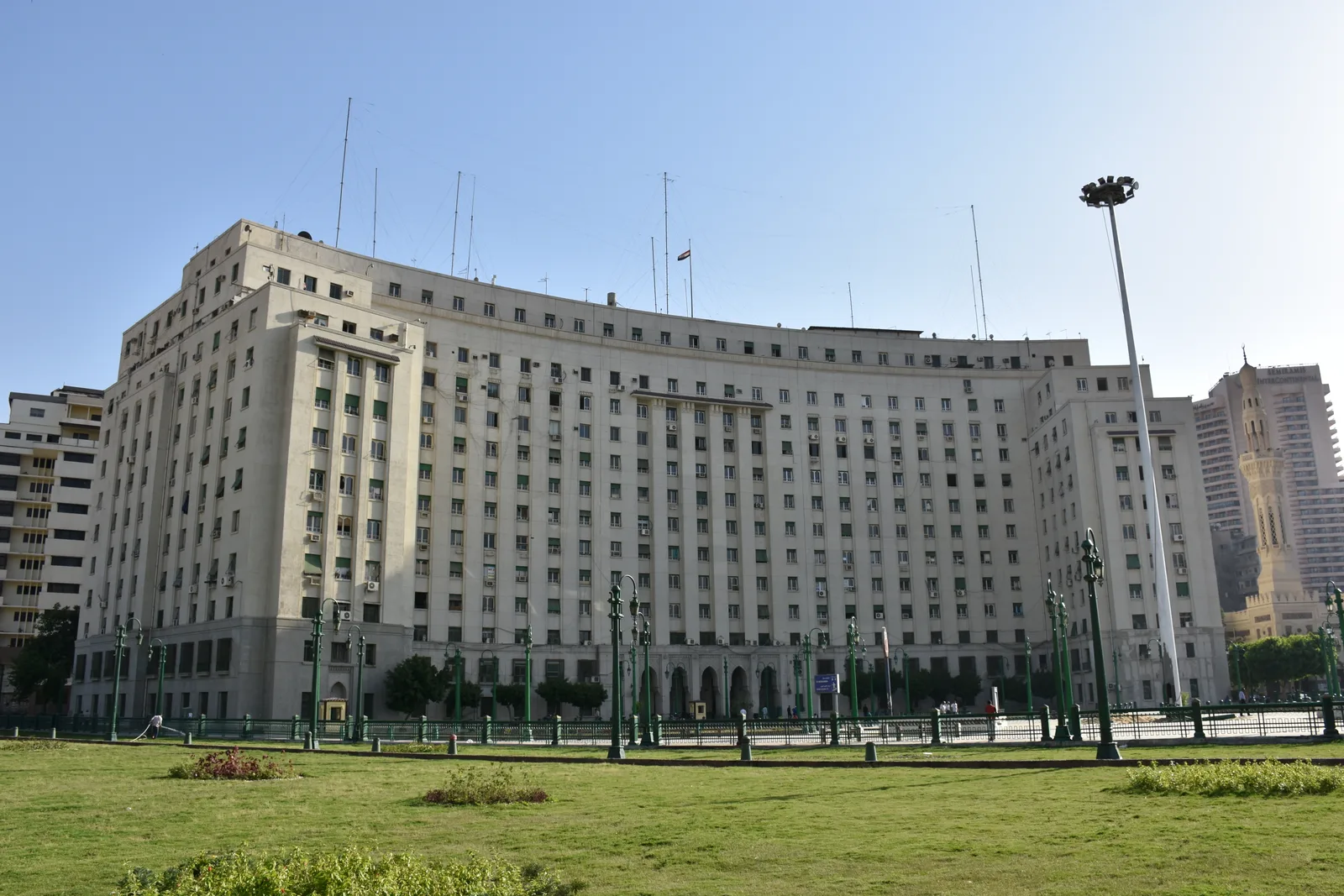
新旧租房法之间:一个屋檐下两个市场的故事
埃及数以百万计的住房仍沿用几十年前的老租约,租金只是象征性的几个埃镑,而隔壁邻居却按市场价支付数千。新旧租房法之间的鸿沟从何而来?宪法法院作出了怎样的裁决?新的过渡期法律又改变了什么?一份兼顾双方立场的平衡解读。

In the same Cairo building, two nearly identical apartments can tell two different economic stories. One is rented under a contract signed decades ago for a sum that today barely buys a sandwich; the other, on a newer contract, costs thousands of pounds a month at market rates. This is the divide between Egypt's 'old rent' and 'new rent' systems, one of the longest-running and most emotionally charged files in Egyptian law, touching millions of families on both sides of the landlord and tenant relationship.
Rent control in Egypt began as an emergency wartime measure in the 1940s, when housing shortages made rents a matter of public order. What started as temporary became permanent and expanded over the following decades. The framework that defined the modern 'old rent' era was completed by Law 49 of 1977 and Law 136 of 1981, which froze rents at their contractual values, renewed tenancies automatically, and allowed them to pass to members of the tenant's family. A lease stopped being a contract for a period and became, in practice, an arrangement for generations.
For tenants, the old system offered security close to ownership without the price of ownership. Rent could not be raised beyond token statutory adjustments, the landlord could not end the contract at will, and when the original tenant died, a spouse or children living in the flat could continue the lease. Many families also paid substantial 'key money' when they first moved in, which they understood as buying a permanent right. For landlords, the same rules meant that a building could remain full for half a century while producing almost no income.
The turning point came with Law 4 of 1996, which removed newly built or newly vacated units from the old regime and returned them to the ordinary rules of the Civil Code. From that date, new leases were freely negotiated: the parties agree on the rent and the duration, and when the term ends, the contract ends. Egypt has since lived with two parallel rental markets, one frozen in the past and one moving with inflation, and the gap between them has widened every single year.
The scale of the divide is documented in official statistics. Census data have counted old-rent units in the millions, concentrated in the older districts of Cairo, Alexandria, and the Delta cities. Rents of a handful of pounds a month are common in this stock, sums that predate several waves of inflation and currency change. Landlords describe collecting annual rent that does not cover the cost of travelling to collect it, while an equivalent flat next door earns market rates that reflect what housing actually costs today.
The tenants' side of the story deserves equal weight. Many old-rent tenants are elderly people who have spent their entire adult lives in the same flat, raised children there, and organised their pensions around a rent fixed long ago. Others point to the key money their families paid on entry, often a large sum at the time, as evidence that they bought more than a temporary stay. For them, the old law is not a windfall but the basis on which decades of decisions were made, and sudden exposure to market rents would mean displacement.
The economic consequences run beyond the two parties. With rent frozen, landlords have had little incentive to maintain ageing buildings, and much of the old-rent stock has visibly deteriorated. Some units stand locked and unused because tenants keep them merely as cheap holdings, while newcomers to the city compete for the shrinking new-rent supply, pushing market prices higher. Economists have long described the situation as a distortion that hurts the housing market as a whole, even as it protects the individual households inside it.
Change ultimately came through the courts. In 2018, the Supreme Constitutional Court struck down the automatic extension of old leases held by companies and other juristic persons. Then, in November 2024, the court issued its landmark ruling on residential tenancies, finding it unconstitutional for the law to freeze rents permanently at their historical contractual values. The ruling did not evict anyone; instead it obliged parliament to design a new balance between the constitutional protection of property and the social protection of tenants.
Parliament answered in 2025 with a law that ends the old-rent era gradually rather than overnight. Residential old-rent contracts continue for a transitional period of seven years, and non-residential ones for five, after which they expire and the units return to the free market. During the transition, rents rise immediately to multiples of their old values, with minimum floors that vary by the area's classification, and increase annually thereafter. The state has coupled this with pledges to give eligible old-rent tenants priority access to alternative housing options.
The debate around the reform reproduces the file's old fault line. Supporters argue that property rights were suspended for two generations, that token rents were an injustice the constitution could no longer carry, and that a dated transition finally gives both sides certainty. Critics worry about elderly tenants on fixed incomes, ask whether alternative housing will materialise where people actually live and work, and note that seven years pass quickly for a family with nowhere else to go. Both arguments are made in good faith, and both describe real people.
For anyone touched by the file, the practical first step is to know which regime governs their contract: the date of the lease and the history of the unit decide everything. Old-rent landlords and tenants alike should follow official announcements on implementation, registration, and alternative-housing procedures, and keep every document related to the tenancy. The details of a transition this large will continue to be clarified in regulations and court rulings, and on a question that decides where families live, official texts and qualified legal advice beat rumour every time.
相关报道

你的消费者权利:消费者保护法中的退货、保修与诚信广告
埃及2018年第181号消费者保护法赋予消费者广泛权利:十四天退货期、维修与换货的真实保修义务,以及免受误导性广告侵害的保护。这是一份通俗易懂的指南,解读许多埃及人从不知道属于自己的权利。
2026年8月18日 · 5 分钟阅读

从月球上能看到中国长城吗?宇航员早已给出答案
教科书里有个人们津津乐道的说法:中国长城是从月球上唯一可见的人造建筑。但亲身登上太空的宇航员——包括中国首位航天员本人——都给出了否定答案,光学原理也支持他们。至于从太空真正能看到什么——从城市灯火到熠熠生辉的尼罗河三角洲——那是一个更精彩的故事。结论:错误。
2026年8月18日 · 5 分钟阅读

维生素C能预防感冒吗?数十年临床试验的真实结论
数百万人一打喷嚏就把希望寄托在维生素C上。但数十年的对照试验讲述的故事更为微妙:对大多数人而言,它并不能预防感冒;若平时坚持服用,或可略微缩短病程——真正的预防效果只见于马拉松选手、滑雪运动员和承受极端体能消耗的士兵。结论:部分属实。
2026年8月18日 · 5 分钟阅读