埃及进军太空:国家航天局与守望土地、庄稼和水源的卫星
埃及航天局依据2018年的法律设立,但埃及与人造卫星的故事更为悠久:从“埃及卫星1号”(EgyptSat-1)到“提巴1号”(Tiba-1)和NExSat。一个农业国为什么需要航天计划?答案就在它的田野、水源和偏远村庄里。
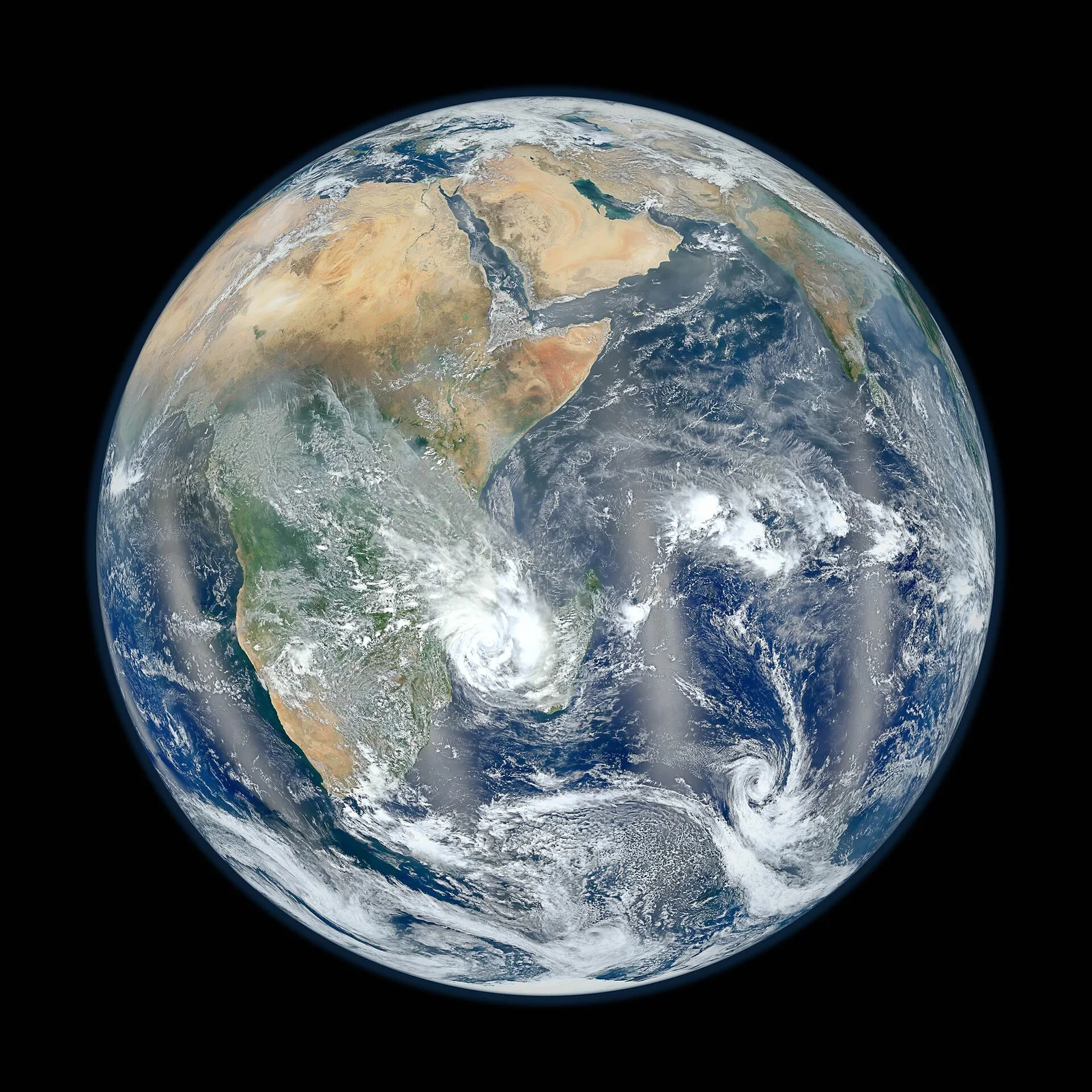
A space programme can sound like a luxury for a country with earthly problems. Egypt's answer has been the opposite: satellites are working tools for exactly those problems — feeding people, managing water and connecting remote communities. The Egyptian Space Agency was established by law in 2018 and is headquartered in Space City in New Cairo, a campus that includes facilities for assembling and testing satellites. Its mandate is to localize space technology and put its products — chiefly images and data — at the service of the state's civilian agencies.
Egypt's satellite story began before the agency existed. EgyptSat-1, the country's first Earth-observation satellite, was launched in 2007, developed in cooperation with Ukraine's Yuzhnoye design bureau, with Egyptian engineers participating in the work. It photographed the ground below for scientific and civil purposes until contact with it was lost a few years later. That loss was a hard early lesson, but the project had already achieved something durable: a generation of Egyptian engineers had been through the full cycle of specifying, building and operating a satellite.
A second attempt, EgyptSat-2, was built with Russian industry and launched in 2014, but its service life also proved short. Its successor, EgyptSat-A, lifted off from the Baikonur cosmodrome in early 2019 carrying improved imaging equipment and an upgraded design. The pattern across these three missions is familiar from every country that has built a space capability: early satellites are as much about training people and testing procedures as about the pictures they send home, and setbacks are part of the tuition.
Communications came next. Tiba-1, launched in November 2019 aboard an Ariane 5 rocket from Kourou in French Guiana, was built for Egypt by European manufacturers and serves government and civil communications. Unlike an imaging satellite, which passes over Egypt for only minutes at a time, a communications satellite sits in geostationary orbit — some thirty-six thousand kilometres up, matching the Earth's rotation so it appears fixed in the sky. From that perch it can relay broadband to places where laying fibre-optic cable is slow or uneconomic.
The newest chapter emphasizes building at home. MisrSat-2, an Earth-observation satellite developed in cooperation with China and launched in December 2023, was assembled and tested with Egyptian participation in facilities inside Egypt. NExSat-1, a research microsatellite developed by the Egyptian Space Agency with a German partner, followed in early 2024. The declared direction is consistent: move from buying satellites, to sharing in their construction, to designing and integrating them domestically — because the long-term value of a space programme lies in people and facilities, not in any single spacecraft.
Why does a farming country need all this? Because a satellite sees what no ground survey can. Multispectral cameras record light reflected from fields in bands beyond human vision, and healthy vegetation reflects infrared light differently from stressed vegetation. Processed correctly, the images become maps of crop type, cultivated area and plant condition across the whole country, updated season after season. Egyptian authorities have also used satellite imagery to detect illegal building on agricultural land — a documented application in a country where every feddan of the Nile Valley counts.
Water is the second great use. Egypt depends overwhelmingly on the Nile, and satellites monitor the river system in ways ground stations cannot: tracking the surface area of Lake Nasser as it rises and falls, observing coastal erosion along the Delta, mapping lakes and wetlands, and supporting irrigation planning by estimating how much water crops are actually consuming. None of this replaces engineers on the ground; it gives them a synoptic view — the whole system in one frame — that makes planning and early warning possible.
Communications satellites serve a different but related purpose. Reaching a desert settlement or a new city with connectivity through space can be faster than extending terrestrial networks, which is why Tiba-1's capacity is aimed at government services and underserved areas. Egypt also has an older, separate satellite tradition: NileSat, a company whose broadcast satellites have carried Arabic-language television across the region since 1998. Broadcasting and broadband are different businesses, but together they illustrate how much of ordinary life quietly passes through orbit.
Egypt has also taken on a continental role. Cairo's Space City hosts the headquarters of the African Space Agency, the African Union's body for coordinating space activity across the continent — the first pan-African institution of its kind. Hosting it places Egypt at the centre of African discussions on sharing satellite data for agriculture, climate and disaster response, and opens the door to training engineers from other African countries in Egyptian facilities. Space cooperation, like river diplomacy, is a field where geography and history give Egypt a natural seat.
The honest way to judge a space programme is not by launches but by decisions. When an irrigation official reallocates water using consumption maps, when a governorate stops a building violation spotted from orbit, when a clinic in a remote area holds a video consultation over satellite broadband — that is the programme working. Satellites age and fail; the capability that endures is people who can specify, build, operate and, above all, use them. That is the infrastructure Egypt is really building, and it is as real as any road.
相关报道
祖尔气田:重绘东地中海能源版图的大发现
2015年夏,意大利埃尼公司宣布在塞得港外海发现祖尔气田,当时被称为地中海历史上最大的天然气发现。本文讲述这一发现的经过、天然气如何从深海开采,以及它为何改变了埃及在地区能源版图上的位置。
2026年8月18日 · 6 分钟阅读

从月球上能看到中国长城吗?宇航员早已给出答案
教科书里有个人们津津乐道的说法:中国长城是从月球上唯一可见的人造建筑。但亲身登上太空的宇航员——包括中国首位航天员本人——都给出了否定答案,光学原理也支持他们。至于从太空真正能看到什么——从城市灯火到熠熠生辉的尼罗河三角洲——那是一个更精彩的故事。结论:错误。
2026年8月18日 · 5 分钟阅读

维生素C能预防感冒吗?数十年临床试验的真实结论
数百万人一打喷嚏就把希望寄托在维生素C上。但数十年的对照试验讲述的故事更为微妙:对大多数人而言,它并不能预防感冒;若平时坚持服用,或可略微缩短病程——真正的预防效果只见于马拉松选手、滑雪运动员和承受极端体能消耗的士兵。结论:部分属实。
2026年8月18日 · 5 分钟阅读