苏伊士运河:扼守世界贸易心脏的埃及水道
一条长193公里的狭长水道,承载着全球约十分之一的海运贸易。从1869年开凿、1956年收归国有,到2015年扩建和"长赐"号搁浅,本文讲述这条水道的故事——正是它,让埃及成为世界经济动脉上不可或缺的枢纽。
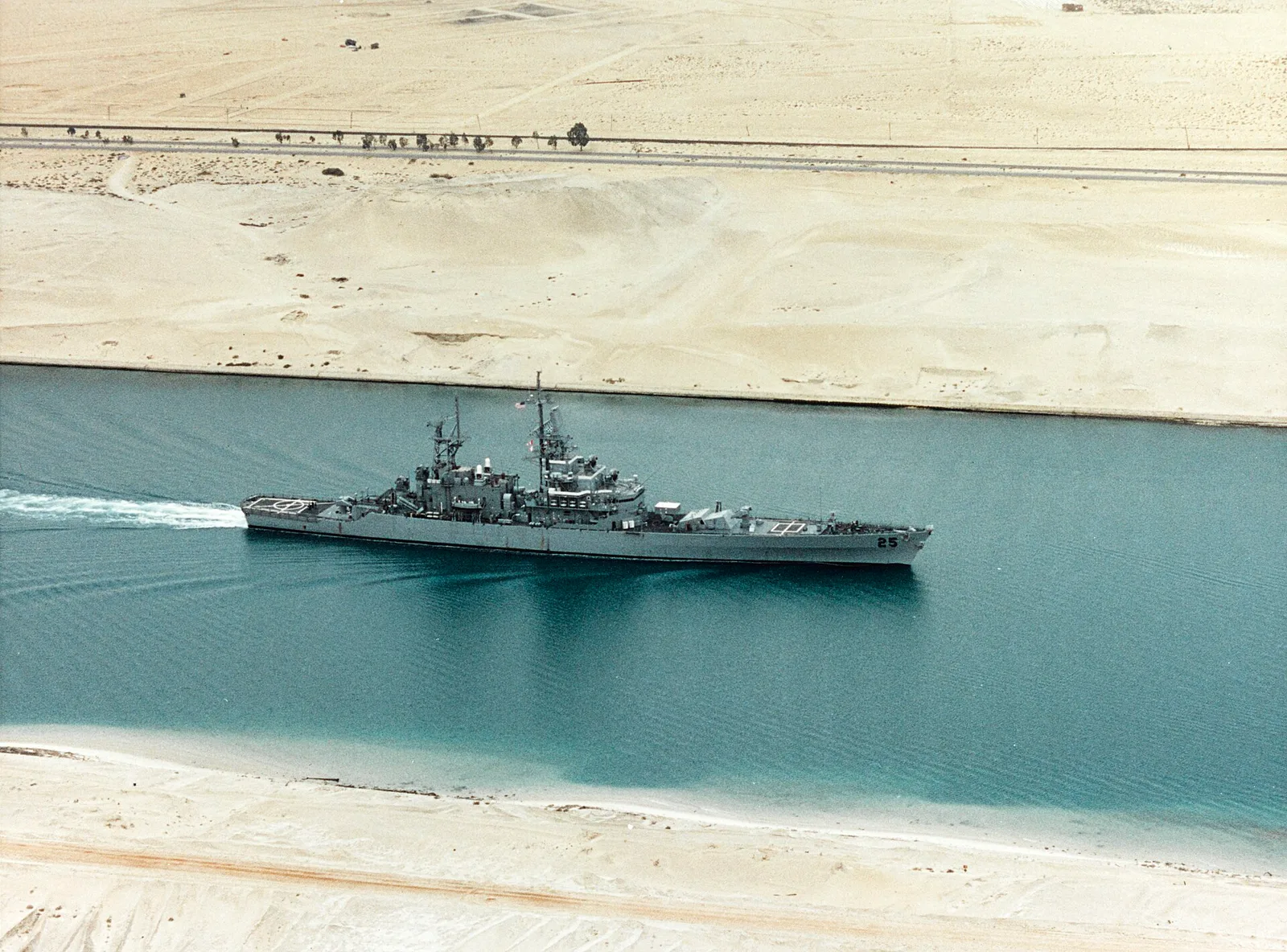
On the map it is a thin blue line through the desert, roughly 193 kilometres long. In the world economy it is one of the most important shortcuts ever dug: the Suez Canal links the Mediterranean and the Red Sea, sparing ships the long voyage around Africa, and carries a share of global seaborne trade commonly estimated at around a tenth or more. For Egypt it is at once a strategic asset, a leading source of hard currency and a symbol of national sovereignty.
The canal opened in 1869 after some ten years of excavation led by the Frenchman Ferdinand de Lesseps, with the heaviest burden borne by tens of thousands of Egyptian labourers working in harsh conditions. Its inauguration was one of the grandest international occasions of the nineteenth century, and from that day the maps of world navigation changed forever.
Unlike the Panama Canal, Suez is a sea-level passage with no locks, which simplifies transit. Ships move through in precisely timed convoys, and the full journey between the two entrances takes between roughly ten and a dozen or more hours depending on direction and traffic.
In July 1956, President Gamal Abdel Nasser nationalised the Suez Canal Company. The decision sparked the Tripartite Aggression — the Suez Crisis — and became one of the defining moments of modern Egyptian history. Ever since, Egyptians have regarded the canal as wholly national property, run by the Egyptian Suez Canal Authority.
The canal was closed to navigation for eight full years, from 1967 to 1975, following the wars with Israel. Ships trapped in its lakes lay at anchor for so long that they became known as the Yellow Fleet, coated by desert sand, before the waterway reopened in 1975 and traffic gradually returned.
In 2015 a major expansion known as the New Suez Canal was inaugurated: a parallel channel of about thirty-five kilometres, alongside the deepening of other sections, allowing two-way passage along parts of the route and cutting waiting and transit times. The project was financed domestically through investment certificates that ordinary citizens bought in large numbers.
In normal times dozens of ships transit each day — approaching or exceeding twenty thousand vessels in busy years — and tolls bring in billions of dollars annually, with revenues in the best years nearing or passing the nine-billion-dollar mark. Together with tourism and remittances from Egyptians abroad, the canal sits at the top of the country's foreign currency earners.
In March 2021 the grounding of the giant container ship Ever Given reminded the entire world of the passage's importance. The vessel blocked the channel for six days, hundreds of ships queued at both entrances, analysts put the value of held-up trade in the billions of dollars per day, and screens around the globe followed the refloating operation hour by hour.
Nor is the canal's position immune to geopolitics. The alternative route around the Cape of Good Hope adds a week or more to voyages and burns costly extra fuel, yet periods of insecurity in the Red Sea have pushed major shipping lines to detour around Africa temporarily, cutting transits and revenues — a reminder that canal income mirrors the condition of the region and the world.
Egypt today aspires to be more than a tollgate. The Suez Canal Economic Zone gathers ports and industrial and logistics areas at Ain Sokhna, East Port Said and elsewhere, part of an ambition to turn both banks of the canal into a global hub for manufacturing, maritime services, bunkering and transhipment, not merely a passage ships pay to cross.
In the Egyptian imagination the canal remains far more than an economic project. It lives in school curricula, in the memory of nationalisation and in the songs of the national era — a daily witness to Egypt's singular position where the continents of the old world meet, and where part of the world economy's bloodstream passes each morning through sovereign Egyptian water.
相关报道

复兴大坝档案实录:埃及、苏丹和埃塞俄比亚各自想要什么?
自2011年以来,复兴大坝问题从三方委员会谈判走向非洲联盟,再到联合国安理会。这是一份中立指南,梳理埃及、苏丹和埃塞俄比亚各方实际提出过的诉求,以及一份具有约束力的协议为何仍然遥不可及。
2026年8月18日 · 6 分钟阅读
海外埃及人:数以百万计的侨民、侨汇生命线与绵延不断的文化纽带
从海湾国家的医院到多伦多的药房,数百万埃及人在海外生活和工作。这一侨民群体规模几何?他们的侨汇为何位居埃及最重要的硬通货来源之列?足球、美食与信仰又如何让故土情结代代相传、绵延不绝?
2026年8月18日 · 5 分钟阅读

从月球上能看到中国长城吗?宇航员早已给出答案
教科书里有个人们津津乐道的说法:中国长城是从月球上唯一可见的人造建筑。但亲身登上太空的宇航员——包括中国首位航天员本人——都给出了否定答案,光学原理也支持他们。至于从太空真正能看到什么——从城市灯火到熠熠生辉的尼罗河三角洲——那是一个更精彩的故事。结论:错误。
2026年8月18日 · 5 分钟阅读