祖尔气田:重绘东地中海能源版图的大发现
2015年夏,意大利埃尼公司宣布在塞得港外海发现祖尔气田,当时被称为地中海历史上最大的天然气发现。本文讲述这一发现的经过、天然气如何从深海开采,以及它为何改变了埃及在地区能源版图上的位置。
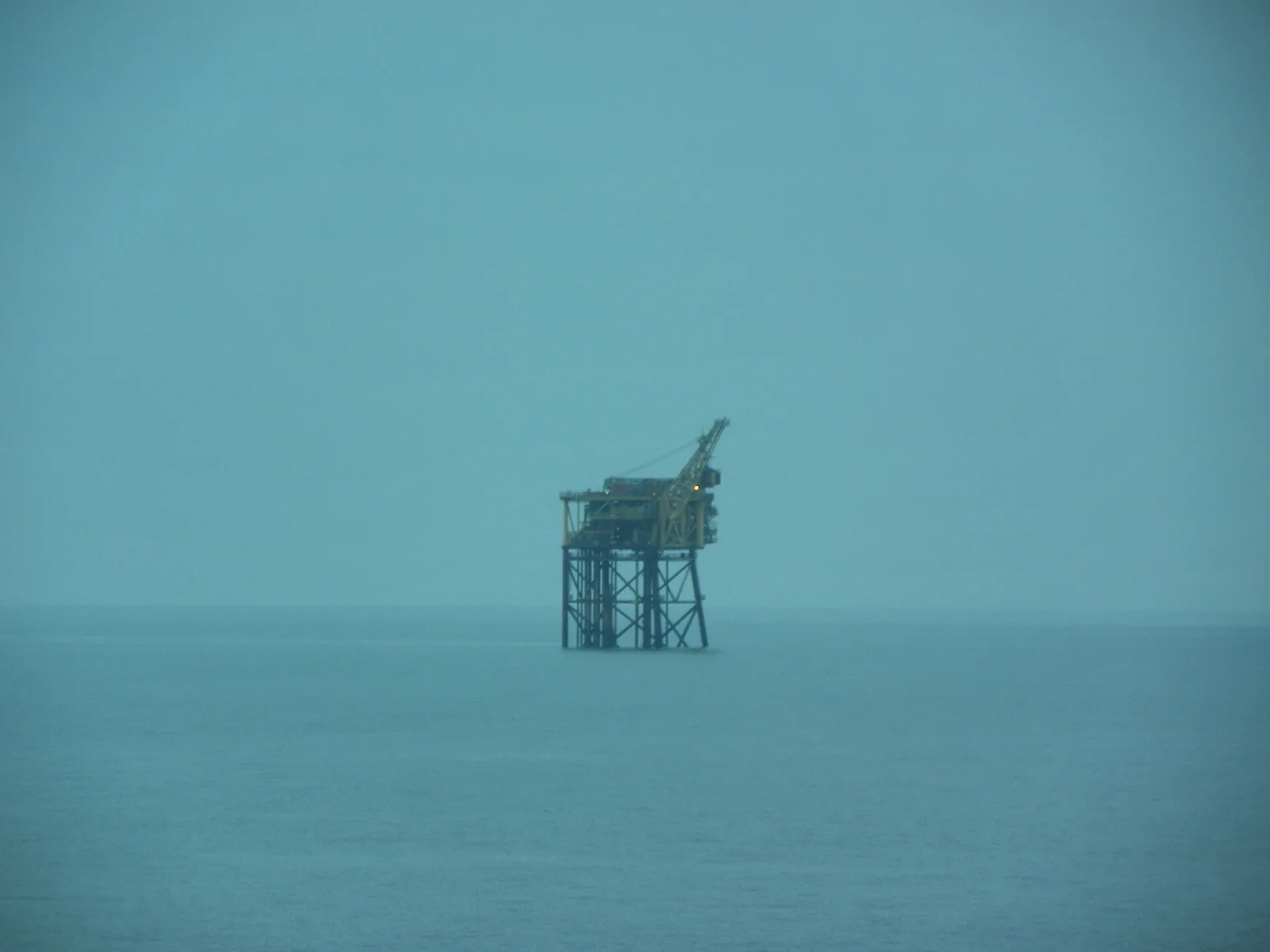
In August 2015, the Italian energy company Eni announced a giant natural gas discovery in the deep waters of the Mediterranean, inside Egypt's Shorouk concession roughly 190 kilometres north of Port Said. The field was named Zohr, and it was described at the time as the largest gas discovery ever recorded in the Mediterranean Sea. The news was more than another entry on an exploration list: it changed how the energy industry viewed the entire eastern Mediterranean, and it returned Egypt to the centre of the region's gas map.
The numbers alone explained the excitement. Initial estimates put the gas in place at around thirty trillion cubic feet, locked in rock beneath some 1,450 metres of water and thousands of metres of seabed. In industry language, Zohr was classed as a 'supergiant' — a category reserved for a handful of fields worldwide. Discoveries of that scale are rare anywhere; finding one in a sea that had been explored for decades, within reach of existing pipelines and processing infrastructure on the Egyptian coast, made it rarer still.
Zohr also surprised geologists. For half a century, exploration off Egypt had concentrated on the sandstone layers of the Nile Delta, where river sediments trapped gas in familiar patterns. Zohr's gas, by contrast, sits in a carbonate build-up — the remains of an ancient reef-like platform — a type of reservoir the region's explorers had largely overlooked. The discovery proved that a completely different geological 'play' existed in the eastern Mediterranean, and companies quickly began re-examining seismic data across Egyptian and neighbouring waters with new eyes.
The timing mattered as much as the geology. In the middle of that decade, Egypt — long a gas exporter — had swung into deficit: domestic consumption for power stations, factories and homes had outpaced production from ageing fields, and the country was importing liquefied natural gas at real cost. A giant discovery in national waters offered a way to reverse that arithmetic. Gas matters disproportionately in Egypt because the electricity grid relies heavily on gas-fired power stations; what happens far offshore is ultimately felt in every home.
What followed became a case study in fast-track development. Production began in December 2017, roughly two years and four months after discovery — an unusually short interval for a deep-water project of this size, where five to seven years is more typical. Achieving it required parallel engineering, early ordering of equipment and heavy investment. International partners later joined the project alongside Eni, sharing costs and risk, while Egyptian institutions completed approvals on compressed timelines. The speed itself became part of Egypt's pitch to energy investors.
How is such a field found in the first place? Offshore exploration starts with seismic surveys: ships tow arrays that send sound waves through the water and rock, and the returning echoes are processed into three-dimensional images of structures kilometres below the seabed. Promising structures are then tested with an exploration well drilled from a floating rig — an expensive gamble, since many such wells find nothing. When a well strikes gas, appraisal wells follow to measure how large and how productive the reservoir really is.
Producing the gas relies on a design known as subsea-to-shore. Instead of a large platform standing over the field, wells are drilled into the seabed and capped with heavy steel equipment on the sea floor. Pipelines gather the gas from these subsea wells and carry it to the coast, while cables running alongside deliver power, control signals and chemicals from land. Operators can open and close valves on the seabed from a control room onshore — an approach suited to deep water, where fixed platforms become impractical.
The gas that arrives onshore is not yet ready to burn. At a processing plant near Port Said it is separated from water and liquid hydrocarbons, dried, and cleaned of impurities before entering the national grid. Condensates — light liquid hydrocarbons that emerge with the gas — are recovered and sold separately. From the plant, the gas joins the same network that feeds power stations, fertilizer and cement plants, and household connections, which is why a reservoir far beyond the horizon can quietly underwrite daily life on land.
Zohr also belongs to a regional story. Israel's Tamar and Leviathan fields and Cyprus's Aphrodite had already shown that the eastern Mediterranean held serious gas; Zohr confirmed it on a larger scale. In 2020, the East Mediterranean Gas Forum, headquartered in Cairo, brought producing and consuming states to one table. Egypt holds a distinctive card: liquefaction plants at Idku and Damietta, built years earlier, can chill gas into liquid form for export by ship — infrastructure its neighbours lack, and the basis of Egypt's ambition to be a regional energy hub.
The deeper lesson of Zohr is about how energy security is actually built. Fields decline as they are produced; no single discovery settles the question forever, and exploration must continue for new chapters to be written. What Zohr demonstrated is the combination that makes those chapters possible: geology that rewards fresh thinking, technology that can work under a kilometre and a half of water, and investment frameworks that let capital move quickly. That combination — not any one field — is what redrew the map.
相关报道
埃及进军太空:国家航天局与守望土地、庄稼和水源的卫星
埃及航天局依据2018年的法律设立,但埃及与人造卫星的故事更为悠久:从“埃及卫星1号”(EgyptSat-1)到“提巴1号”(Tiba-1)和NExSat。一个农业国为什么需要航天计划?答案就在它的田野、水源和偏远村庄里。
2026年8月18日 · 6 分钟阅读

从月球上能看到中国长城吗?宇航员早已给出答案
教科书里有个人们津津乐道的说法:中国长城是从月球上唯一可见的人造建筑。但亲身登上太空的宇航员——包括中国首位航天员本人——都给出了否定答案,光学原理也支持他们。至于从太空真正能看到什么——从城市灯火到熠熠生辉的尼罗河三角洲——那是一个更精彩的故事。结论:错误。
2026年8月18日 · 5 分钟阅读

维生素C能预防感冒吗?数十年临床试验的真实结论
数百万人一打喷嚏就把希望寄托在维生素C上。但数十年的对照试验讲述的故事更为微妙:对大多数人而言,它并不能预防感冒;若平时坚持服用,或可略微缩短病程——真正的预防效果只见于马拉松选手、滑雪运动员和承受极端体能消耗的士兵。结论:部分属实。
2026年8月18日 · 5 分钟阅读