La Grande Muraille de Chine se voit-elle depuis la Lune ? Les astronautes ont tranché
C'est une information chérie des manuels scolaires : la Grande Muraille de Chine serait la seule construction humaine visible depuis la Lune. Les astronautes qui y sont allés — et le premier astronaute chinois lui-même — disent le contraire, et l'optique leur donne raison. Quant à ce que l'on voit réellement depuis l'espace, des lumières des villes au delta du Nil qui scintille, c'est une bien plus belle histoire. Verdict : faux.
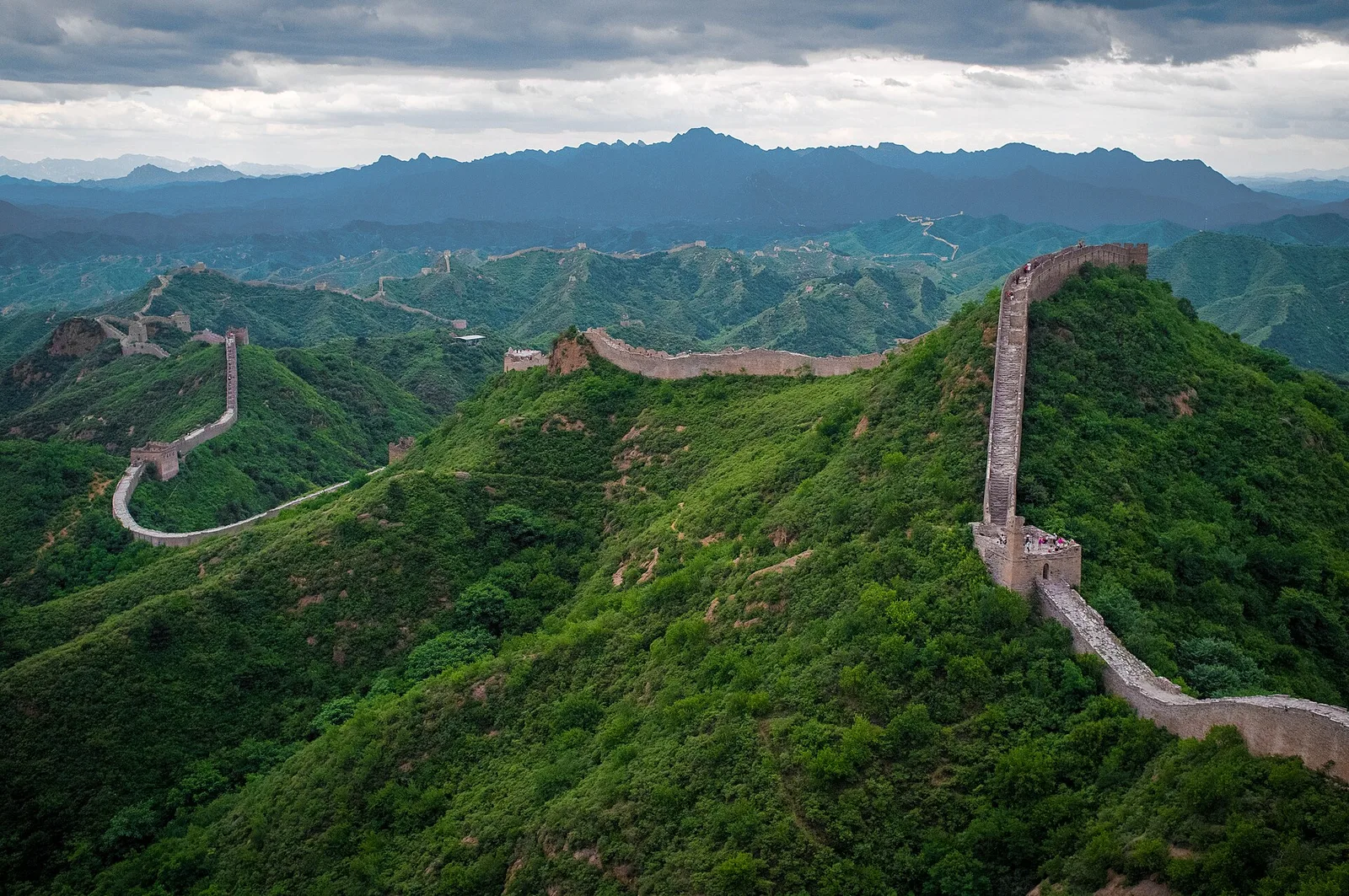
On le lit dans les manuels scolaires, on l’entend dans les jeux télévisés et dans les conversations assurées de fin de dîner, sur tous les continents : la Grande Muraille de Chine serait, dit-on, le seul ouvrage humain visible de la Lune à l’œil nu — ou, dans sa version plus prudente, visible « depuis l’espace ». Peu d’affirmations se répètent avec une telle assurance, et peu sont aussi simples à vérifier, car des hommes ont réellement foulé le sol lunaire et tournent autour de la Terre depuis des décennies. Leur témoignage, confirmé par une optique élémentaire, ne laisse place à aucun doute — et il dit exactement le contraire.
Le plus étonnant, dans cette légende, c’est son âge : elle est née bien avant que quiconque puisse voler. Dès le XVIIIe siècle, l’antiquaire anglais William Stukeley imaginait dans une lettre que la muraille pourrait être visible de la Lune, et les auteurs du XIXe siècle ont repris la formule. Au XXe siècle, la célèbre rubrique « Ripley’s Believe It or Not! » l’a diffusée auprès de millions de lecteurs. Lorsque les fusées ont enfin existé, ce « fait » était déjà installé dans les manuels scolaires — une conjecture sur l’espace formulée depuis un fauteuil, des siècles avant les vols spatiaux.
Commençons par la Lune, distante d’environ 384 000 kilomètres. À cette distance, la Terre tout entière n’apparaît pas plus grande qu’un ongle de pouce au bout du bras tendu : un disque bleu et blanc étincelant sur lequel les astronautes distinguaient les océans, les continents et les tourbillons de nuages — et absolument rien de ce qu’a bâti la main de l’homme. Les scientifiques ont proposé une comparaison parlante pour donner l’échelle : discerner la Grande Muraille depuis la Lune reviendrait à peu près à repérer un unique cheveu humain à plus de trois kilomètres.
Ceux qui étaient le mieux placés pour le savoir l’ont dit sans détour. Les astronautes d’Apollo qui ont voyagé jusqu’à la Lune ont rapporté qu’aucune construction humaine, quelle qu’elle soit, n’y était visible ; Alan Bean, d’Apollo 12, a décrit le spectacle comme une belle sphère de nuages blancs, d’océan bleu et de taches de désert jaune, sans rien d’artificiel de discernable à pareille distance. Douze hommes ont marché sur le sol lunaire et bien d’autres en ont fait le tour ; pas un seul n’a déclaré avoir vu la muraille. Sur la version « depuis la Lune » de l’affirmation, le témoignage est unanime.
Et l’orbite terrestre basse, à quelque 400 kilomètres seulement, là où évolue la Station spatiale internationale ? Ici, c’est la conception même de la muraille qui déjoue le regard. Sur l’essentiel de son tracé, elle ne dépasse pas cinq à neuf mètres de large — moins que bien des autoroutes — et elle a été bâtie avec la terre et les pierres du lieu, si bien que sa couleur se fond dans les crêtes qu’elle épouse. La visibilité d’un ouvrage vu d’en haut dépend de sa largeur et de son contraste avec les alentours, et la muraille manque des deux. Les routes, les aéroports et les barrages, plus larges et plus clairs, se repèrent en réalité bien plus facilement.
Le témoignage décisif est venu en 2003 de Yang Liwei, premier astronaute chinois, après son vol orbital à bord de Shenzhou 5. Interrogé sur la question à laquelle toute sa nation attendait une réponse, il a répondu honnêtement qu’il n’avait pas pu voir la muraille. Sa réponse a fait grand bruit en Chine, précisément parce que l’affirmation figurait dans les manuels scolaires chinois, et elle a nourri un débat public sur leur correction. Les occupants de la Station spatiale internationale ont bien photographié la muraille — mais avec de puissants téléobjectifs et en sachant exactement où regarder, ce qui n’a rien à voir avec une visibilité à l’œil nu.
Pourquoi cette légende a-t-elle si bien résisté ? En partie parce qu’elle flatte : elle couronne un monument réellement impressionnant d’un superlatif qu’aucun rival ne lui dispute. En partie parce qu’elle a circulé deux siècles durant avant que quiconque puisse la vérifier, jusqu’à durcir en « savoir commun ». Et en partie parce que la formule « visible depuis l’espace » est commodément vague : depuis une orbite suffisamment basse, dans une lumière idéale et avec des yeux exercés, on peut discuter à l’infini d’une quasi-visibilité. La version lunaire, elle, n’autorise aucune discussion.
La version honnête de la question appelle une réponse bien plus belle. Ce que les astronautes voient réellement depuis l’orbite, à l’œil nu, ce sont les littoraux et les villes le jour, et la nuit les résilles scintillantes des lumières urbaines — parmi les spectacles les plus photographiés depuis la station spatiale. Les Égyptiens ont ici un motif de fierté particulier : la vallée du Nil et son delta, la nuit, embrasés de lumière au milieu de l’obscurité du désert, forment l’une des vues les plus célèbres de la photographie orbitale, souvent comparée à une fleur de lotus lumineuse. Ce que l’œil accroche, ce sont les objets larges, brillants et fortement contrastés — jamais un mur de neuf mètres de large.
Parmi les autres réalisations humaines visibles ou photographiables depuis l’orbite dans de bonnes conditions figurent les immenses champs de serres d’Almería, en Espagne, qui se lisent comme une tache pâle et luisante sur la côte ; les grands aéroports ; les barrages et réservoirs de grande taille ; et les îles artificielles au large de Dubaï. La leçon de cette liste est constante : ce qui compte, c’est la surface et le contraste, non la longueur. Un ouvrage long de milliers de kilomètres mais large de quelques mètres disparaît tout simplement, comme s’évanouit un long fil fin sur un tapis à motifs que vous regardez de l’autre bout de la pièce.
Le verdict est donc le suivant : faux dans les deux versions de l’affirmation. Depuis la Lune, aucune construction humaine n’est visible — les astronautes qui s’y sont rendus sont unanimes, et l’optique le démontre mathématiquement. Depuis l’orbite terrestre basse, la Grande Muraille se tient au mieux à la limite de la visibilité à l’œil nu, et le premier astronaute chinois lui-même a déclaré n’avoir pas pu la voir. Une affirmation peut difficilement être mise à l’épreuve de façon plus directe qu’en envoyant des hommes au point d’observation concerné — et elle a échoué à l’examen.
Rien de tout cela n’ôte quoi que ce soit à la muraille elle-même. Les relevés officiels chinois du patrimoine évaluent l’ensemble de ses branches et de ses tronçons à plus de vingt mille kilomètres — un système défensif construit et reconstruit sur près de deux millénaires, et l’une des plus grandes prouesses de construction de l’histoire humaine. Elle n’a pas besoin de légende. La vérité porte même la leçon la plus modeste : à quelques centaines de kilomètres d’altitude seulement, presque tout ce que les hommes ont bâti se fond dans la surface de la planète — une pensée utile pour une espèce encline à surestimer sa propre visibilité.
À lire aussi

« Toussez fort pour survivre seul à une crise cardiaque » : le message WhatsApp que la médecine contredit
Un message en chaîne atteint presque chaque téléphone en Égypte : en cas de crise cardiaque quand on est seul, toussez fort et en rythme jusqu'à ce que le cœur se régularise. L'American Heart Association rejette explicitement la « RCP par la toux », le message confond crise cardiaque et arrêt cardiaque, et chaque minute perdue à tousser au lieu d'appeler le 123, l'ambulance gratuite, est ôtée à la vie du patient. Voici ce que dit la médecine.
28 septembre 2026 · 7 min de lecture

« Lire dans la pénombre abîme les yeux » : ce que confirment les ophtalmologistes et le danger que les parents négligent
Avec le retour des devoirs du soir sous une ampoule unique revient le vieil avertissement : « Tu vas devenir aveugle ». Nous avons vérifié l'affirmation mot à mot : les ophtalmologistes sont unanimes, la lumière faible et la proximité de l'écran fatiguent les yeux sans les abîmer. Mais derrière ce constat rassurant se cache un danger réel que la plupart des foyers ignorent, et les estimations régionales placent les enfants d'Égypte en tête.
19 septembre 2026 · 7 min de lecture

« Le thé après le repas bloque le fer » : l’avertissement des mères confirmé par la science
Il est rare qu’un avertissement venu de la cuisine égyptienne soit confirmé avec autant de netteté par le laboratoire. Le thé noir pris avec le repas réduit fortement l’absorption du fer du pain, des lentilles et des légumes, et le lait n’y change rien. La solution n’est pas de bannir le thé, mais de le retarder d’une heure et d’ajouter un quartier de citron. Nous exposons les preuves, et pourquoi l’Égypte est particulièrement concernée.
10 septembre 2026 · 7 min de lecture