Le canal de Suez : la voie d'eau égyptienne au cœur du commerce mondial
Un mince ruban d'eau de 193 kilomètres par lequel transite près d'un dixième du commerce maritime mondial. Du percement de 1869 à la nationalisation de 1956, de l'élargissement de 2015 à l'échouement de l'Ever Given, voici l'histoire du passage qui fait de l'Égypte un maillon indispensable des artères de l'économie mondiale.
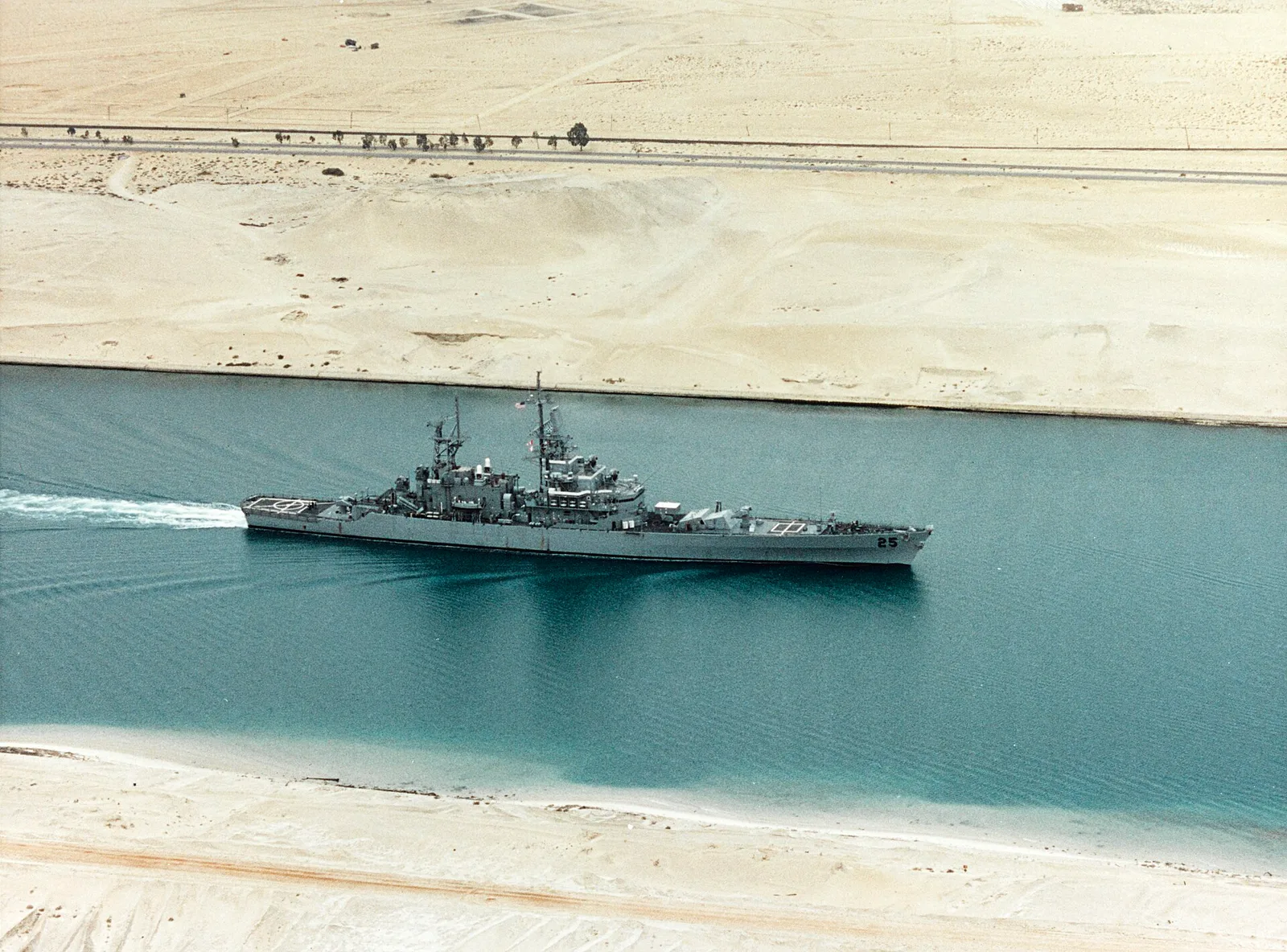
Sur la carte, ce n’est qu’un mince trait bleu qui fend le désert sur quelque 193 kilomètres ; dans l’économie mondiale, c’est pourtant l’un des raccourcis les plus importants jamais creusés par l’homme. Le canal de Suez relie la Méditerranée à la mer Rouge et épargne aux navires le long contournement de l’Afrique ; y transite ce que les sources estiment d’ordinaire à environ un dixième du commerce mondial acheminé par voie maritime, voire davantage. Pour l’Égypte, il est à la fois un actif stratégique, une source majeure de devises et un symbole de souveraineté nationale.
Le canal a été inauguré en 1869, après une dizaine d’années de creusement dirigées par le Français Ferdinand de Lesseps, dont le plus lourd fardeau a été porté par des dizaines de milliers d’ouvriers égyptiens travaillant dans des conditions très dures. Le monde a célébré son ouverture lors de l’un des plus grands événements internationaux du XIXe siècle, et, depuis ce jour, les cartes de la navigation mondiale ont changé à jamais.
Contrairement au canal de Panama, Suez est un passage au niveau de la mer, sans écluses, ce qui simplifie le transit : les navires y circulent en convois aux horaires minutés, et la traversée complète entre les deux entrées demande de dix heures à une quinzaine d’heures, selon le sens de la marche et la densité du trafic.
En juillet 1956, le président Gamal Abdel Nasser a nationalisé la Compagnie du canal de Suez. La décision a été l’étincelle de l’agression tripartite — la crise de Suez — et reste l’un des moments les plus vivaces de l’histoire égyptienne contemporaine dans la conscience nationale : depuis lors, les Égyptiens tiennent le canal pour un bien purement national, administré par l’Autorité égyptienne du canal de Suez.
Le canal est resté fermé à la navigation huit années pleines, de 1967 à 1975, au lendemain des guerres avec Israël. Des navires immobilisés dans ses lacs y sont demeurés à l’ancre de si longues années qu’on les a surnommés « la flotte jaune », tant le sable du désert les avait recouverts, avant que la voie d’eau ne rouvre en 1975 et que le trafic n’y revienne progressivement.
En 2015 a été inauguré un vaste projet d’élargissement, connu sous le nom de nouveau canal de Suez : un chenal parallèle d’environ 35 kilomètres, assorti de l’approfondissement d’autres sections du tracé d’origine, ce qui a permis une circulation à double sens sur une partie du parcours et réduit les temps d’attente et de transit. Le projet a été financé sur des ressources intérieures, par l’émission de certificats d’investissement que les citoyens ont souscrits massivement.
En temps normal, des dizaines de navires empruntent le canal chaque jour — près de vingt mille bâtiments, voire davantage, lors des années les plus actives — et les droits de passage rapportent des milliards de dollars par an, les recettes ayant approché ou dépassé, lors des meilleurs exercices, le seuil des neuf milliards de dollars. Avec le tourisme et les transferts des Égyptiens de l’étranger, le canal demeure en tête des sources de devises du pays.
En mars 2021, l’échouement du porte-conteneurs géant « Ever Given » a rappelé au monde entier l’importance du passage : le navire a obstrué le chenal six jours durant, des centaines de bâtiments se sont accumulés aux deux entrées, des analystes ont chiffré à des milliards de dollars par jour la valeur du commerce paralysé, et les écrans du monde entier ont suivi heure par heure les opérations de renflouement, jusqu’à la libération du passage.
La place du canal n’échappe pas davantage à la géopolitique. La route de substitution par le cap de Bonne-Espérance allonge le voyage d’une semaine ou plus et coûte cher en carburant ; pourtant, les périodes de tension sécuritaire en mer Rouge ont conduit de grands armateurs à contourner temporairement l’Afrique, ce qui a fait baisser le nombre de passages et les recettes — un rappel que les revenus du canal sont le miroir de la situation de la région et du monde.
L’Égypte ne se contente plus aujourd’hui d’un rôle de simple point de passage : la zone économique du canal de Suez regroupe des ports ainsi que des zones industrielles et logistiques à Aïn Sokhna, à Port-Saïd-Est et ailleurs, portée par l’ambition de transformer les deux rives en un pôle mondial de l’industrie, des services maritimes, de l’avitaillement et du transbordement — et non plus en un simple couloir où les navires acquittent un péage avant de poursuivre leur route.
Dans l’imaginaire égyptien, le canal reste bien davantage qu’un projet économique : il est présent dans les manuels scolaires, dans la mémoire de la nationalisation et dans les chansons de l’époque nationale, témoin quotidien de la position unique de l’Égypte, là où se rejoignent les continents de l’Ancien Monde et où une part du cycle de l’économie mondiale passe chaque matin par des eaux purement égyptiennes.
À lire aussi
Un trou dans le ciel, refermé par un traité : le protocole de Montréal et le rôle de l'Égypte pour l'ozone
Le 16 septembre, le monde célèbre la Journée internationale de la préservation de la couche d'ozone : un traité ratifié par tous les pays du monde qui a réellement fonctionné. D'un article scientifique de 1974 à la signature de Montréal en 1987, la ratification de l'Égypte en 1988 et l'amendement de Kigali en 2023 : l'histoire de la bonbonne de réfrigérant dans la main d'un technicien, et pourquoi le ciel devrait guérir vers 2040.
16 septembre 2026 · 7 min de lecture
La Ligue arabe : la maison des Arabes, dont les fenêtres donnent sur la place Tahrir
À quelques pas de la place Tahrir se dresse « la maison des Arabes » : l'une des plus anciennes organisations régionales du monde, née au Caire avant la Charte des Nations unies elle-même. Comment fonctionnent ses sommets et son secrétariat ? Pourquoi ses résolutions n'engagent-elles que ceux qui les acceptent ? Et que raconte le départ à Tunis, puis le retour ? Visite chez un vieux voisin que nous croisons chaque jour sans presque le connaître.
2 septembre 2026 · 7 min de lecture

Sous le plafond bleu : comment fonctionne l'ONU et qui détient le « veto » au Conseil de sécurité ?
Dès qu'une crise éclate, on apprend que le Conseil de sécurité s'est réuni et qu'un État a brandi son « veto ». Mais que se passe-t-il vraiment sous le plafond bleu ? Voyage de la salle de l'Assemblée générale à la table en fer à cheval : comment naît une résolution onusienne, quand devient-elle contraignante, comment un seul mot la fait tomber, et quelle est la place de l'Égypte dans ce décor ?
26 août 2026 · 8 min de lecture