« Ça ne se fait pas » : une peau de banane coûte la vie à un innocent
Une histoire courte à la fin lourde : une main jette une peau de banane par la vitre d'une voiture, et un écolier qui court vers son examen n'y arrivera jamais. Dans ce nouvel épisode, nous racontons l'histoire, interrogeons la religion et la loi, et cherchons comment changer une habitude que l'on dit « anodine » — et qui tue.
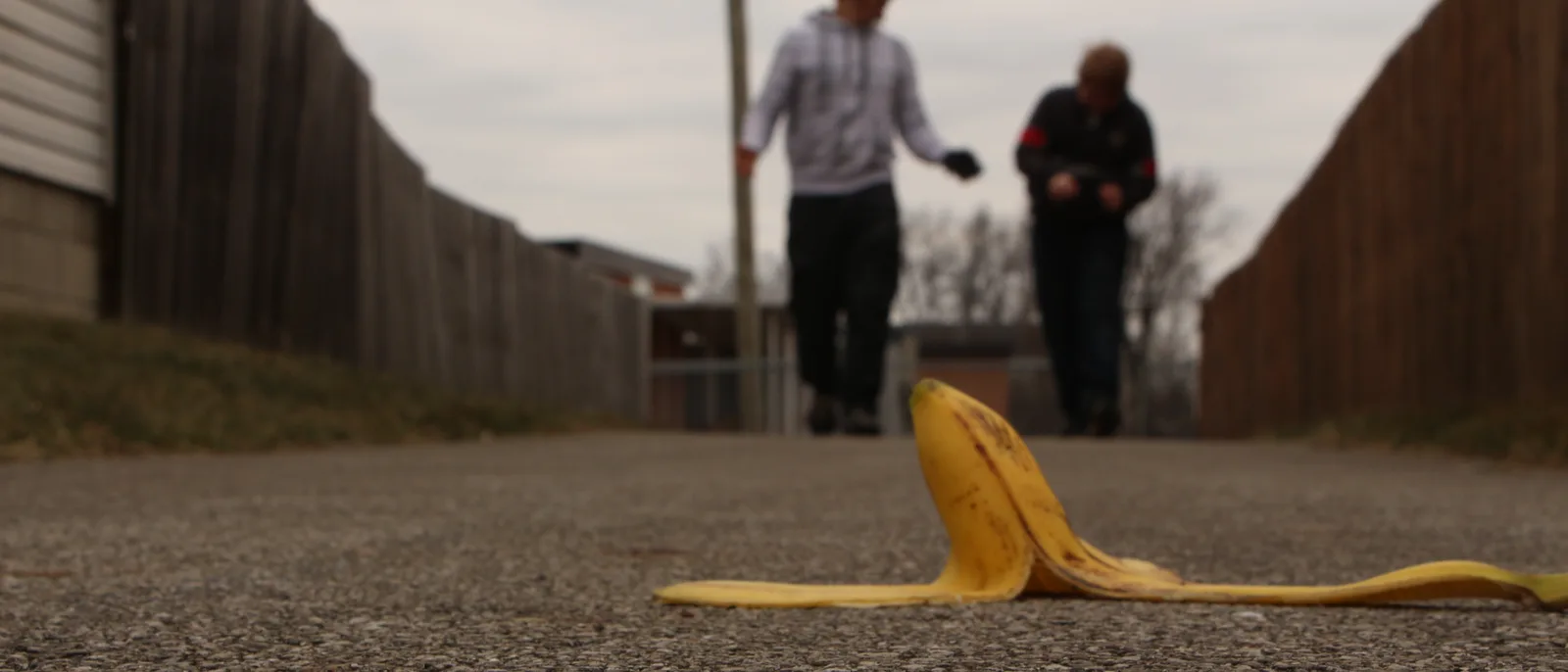
Une histoire qui pourrait sembler banale, si ce n’était sa fin. Une voiture de luxe glisse dans une rue encombrée ; son conducteur épluche une banane, la mange sans se presser, puis tend le bras par la fenêtre et jette la peau sur l’asphalte comme on lance un salut, et poursuit sa route. Il ne s’est pas retourné ; il ne lui a pas effleuré l’esprit un seul instant que ce petit morceau jaune pouvait se transformer, quelques minutes plus tard, en instrument de mort.
Quelques minutes plus tard, un écolier passe au même endroit, son cartable sur le dos et ses rêves avec lui, courant de peur d’arriver en retard à son examen. Son pied se pose sur la peau, il perd l’équilibre, glisse et tombe violemment : sa tête heurte le bord du trottoir. Hémorragie interne grave, cris des passants, une ambulance qui tarde comme elle tarde toujours… puis l’annonce du décès.
Nous la racontons ici comme un récit d’avertissement, non comme un procès-verbal d’accident, car ses détails — sous une forme ou une autre — se répètent chaque jour sur nos trottoirs : une main qui jette, un pied qui glisse, une tête qui heurte. Et la conclusion ne change pas : un enfant est mort parce qu’il allait apprendre, et un homme a jeté une peau parce qu’il n’a jamais appris.
Après chaque accident de ce genre, quelqu’un lâche : « Tout ça pour ça ? » Oui, tout ça pour ça. L’inconscience ne se mesure pas à l’ampleur du geste, mais à celle de ses conséquences : la peau qui manque sa cible dix fois atteint la onzième, et lorsqu’elle atteint, plus rien ne redevient comme avant.
La chaussée n’est pas une poubelle. Nous prenons à la légère ce que nous appelons des « petits gestes » et qui sont en réalité des gestes meurtriers : une peau de banane, un paquet de chips ou une bouteille d’eau lancés par la fenêtre d’une voiture à vive allure ; des déchets jetés du balcon sur la tête des passants ; de l’huile ou de l’eau savonneuse répandue sur l’asphalte, qui le transforme en patinoire invisible. Tout commence par un mouvement de la main qui ne dure pas une seconde, et certains gestes emportent une vie entière.
Que dit la religion ? Écarter du chemin ce qui nuit est une aumône : que dire alors de celui qui y dépose la nuisance de sa propre main ? Le Prophète, paix et salut sur lui, a dit : « Gardez-vous des deux actes qui attirent la malédiction. » On lui demanda : « Quels sont-ils, ô Messager de Dieu ? » Il répondit : « Celui qui se soulage sur le passage des gens ou à l’ombre où ils s’abritent » (rapporté par Mouslim). Si se soulager sur le chemin des gens attire leur malédiction, que dire de celui qui jette sur leur chemin ce qui les fait glisser et les tue ?
Un autre hadith rapporte : « La foi comporte soixante-dix et quelques branches… et la moindre d’entre elles est d’écarter du chemin ce qui nuit » (rapporté par Mouslim). Débarrasser la voie fait donc partie de la foi elle-même, et y déposer une nuisance est un manquement à la foi autant qu’à l’humanité. Devant Dieu, vous répondez de chaque pied qui a glissé, de chaque tête qui a heurté le sol et de chaque mère qui a pleuré à cause de votre indifférence.
Et que dit la loi ? Ce geste n’est ni une « liberté personnelle » ni un « petit péché » : c’est une infraction que la loi sanctionne en toutes lettres. La loi n° 202 de 2020 sur la gestion des déchets interdit, en son article 38, de jeter des déchets ailleurs que dans les lieux prévus à cet effet ; son article 71 prévoit une amende comprise entre 10 000 et 100 000 livres égyptiennes pour quiconque abandonne des déchets non dangereux hors des emplacements autorisés, et, en cas de récidive, la peine devient l’emprisonnement assorti de l’amende, avec confiscation du véhicule utilisé pour commettre l’infraction.
Si cette négligence blesse ou tue une personne, la qualification juridique change du tout au tout : on passe d’une infraction de salubrité à un homicide involontaire ou à des blessures involontaires au sens du code pénal (articles 238 et 244), punis d’emprisonnement, sans compter la réparation civile que la famille de la victime est en droit de réclamer. Certes, établir le lien entre la peau de banane et la chute relève de l’appréciation du parquet et du tribunal, au cas par cas ; mais le principe est acquis : celui dont la négligence a causé la mort d’un être humain répond de cette mort. Vous ne jetez pas une peau par la fenêtre : vous jetez la preuve qui vous condamnera.
Comment sensibiliser les gens ? Le prêche seul ne suffit pas, l’amende seule non plus : ce qu’il faut, c’est changer un comportement, et cette responsabilité nous incombe à tous. Elle commence par cinq gestes simples.
Premièrement, commencez par vous-même et par votre foyer : un petit sac à déchets dans la voiture, et une règle que vos enfants connaîtront par cœur — votre poche est plus propre que la rue. On vieillit avec ce que l’on a appris enfant.
Deuxièmement, la parole engage : prédicateurs, enseignants, créateurs de contenu, racontez cette histoire, celle de la peau de banane qui a tué un écolier. Les récits touchent les cœurs bien plus que les chiffres et les règlements.
Troisièmement, l’école est la solution : une heure de cours par mois consacrée à « la morale de la rue » suffit à former une génération qui ne jette pas un papier. Le véritable examen n’a pas lieu dans la salle, mais dans la rue.
Quatrièmement, la dissuasion sociale : ne riez pas avec celui qui jette par la fenêtre de sa voiture, adressez-lui un regard de désapprobation. Documentez l’infraction si vous le pouvez sans vous mettre en danger, et transmettez-la par les canaux officiels de signalement. La honte devant les siens est la plus forte des lois.
Cinquièmement, l’exemple : placez une petite corbeille dans votre voiture, devant votre boutique, à la porte de votre maison. Les gens imitent les actes, pas les discours.
À vous qui avez jeté la peau et qui avez oublié : une mère, elle, n’a pas oublié ; une larme n’a pas séché ; une place est restée vide dans la salle d’examen. Avant de jeter quoi que ce soit par votre fenêtre, souvenez-vous : accepteriez-vous que cette peau mette fin au rêve d’un être humain ? La rue ne vous appartient pas à vous seul ; elle appartient à l’enfant qui marche vers son avenir, au vieil homme qui se rend à la prière, à la mère qui porte son nourrisson. Nettoyez votre cœur avant de vous laver les mains : celui dont le cœur est propre n’accepte pas de salir le chemin des autres.
Dans sa rubrique « Ça, c’est mal », « La Voix du Citoyen » continue d’appeler la faute par son nom sans blesser personne : c’est le comportement qui est en cause, non les individus. Partagez avec nous ce que vous observez — sans vous exposer au danger ni jeter l’opprobre sur quiconque — via le service « L’Objectif du citoyen » du formulaire « Votre voix » sur notre plateforme, afin de constituer ensemble un dossier documenté à soumettre aux autorités compétentes.
À lire aussi
« Keda ghalat » (« Ça, c'est mal ») : maltraiter un animal est un crime au regard du Code pénal égyptien depuis 1937
Un voisin dépose des gamelles empoisonnées près du mur de l'école ; un charretier frappe son âne au visage sous une charge trop lourde. Beaucoup croient qu'« un animal » n'est protégé par aucune loi. En réalité, les articles 355, 356 et 357 du Code pénal sanctionnent tuer, empoisonner et maltraiter un animal, jusqu'à l'emprisonnement. À la veille de la Journée mondiale des animaux, voici ce que dit la loi.
3 octobre 2026 · 6 min de lecture
Quatre sur une moto et pas un casque : la tête nue est ce qu'une famille peut perdre de plus cher sur la route
En deuxième semaine de rentrée, la même scène se répète : un père au guidon, un enfant devant, un autre derrière, la mère serrant les cartables, pas un seul casque. La presse, citant la CAPMAS, relève un bond des décès de 190 à 897 entre 2020 et 2024, alors qu'une revue Cochrane montre que le casque seul réduit le risque de décès de 42 %. La loi sanctionne la tête nue depuis 1999, amende relevée en 2008. Pourquoi ne s'y plie-t-on pas ?
23 septembre 2026 · 8 min de lecture

« Un branchement sur le câble » n'est pas malin : le vol d'électricité, un crime payé par tout le quartier
Un fil dénudé qui pend d'un poteau à un balcon, un climatiseur sur un compteur immobile, et un fusible qui saute pour la troisième fois, plongeant dans le noir un voisin qui paie sa facture. L'article 71 de la loi sur l'électricité qualifie cela d'appropriation illégale du courant, punie de prison et d'amende, tandis qu'un amendement plus sévère attend la Chambre. Que perd toute une rue pour un seul branchement ? Et quelle est la bonne solution ?
14 septembre 2026 · 7 min de lecture