« Ça, c'est mal » : une rubrique qui appelle la faute par son nom
Dans cette rubrique, nous ne serons ni complaisants ni silencieux. Les comportements qui se sont figés en mauvaises habitudes et en coutumes, nous les appellerons par leur nom, et nous le dirons haut et fort : ça, c'est mal. Car avant d'être des infractions à la loi, ce sont des crimes moraux contre le citoyen : offense, provocation, préjudice. Voici l'acte fondateur de la rubrique, et notre promesse à ses lecteurs.
Chaque matin égyptien nous offre des scènes si familières que nous avons presque cessé de les voir : un sac d'ordures jeté par la vitre d'une voiture lancée à pleine vitesse, un nuage de fumée dans un bureau fermé que respirent ceux qui n'ont jamais touché à une cigarette, un trottoir accaparé par un kiosque, si bien que les piétons descendent en pleine chaussée, entre les voitures. Nous avons appris à hocher la tête et à passer notre chemin. Cette rubrique est née pour s'arrêter devant ces scènes et dire à voix haute : « Ça, c'est mal ».
La doctrine de cette rubrique est simple et claire : certains de ces comportements sont des infractions punies par la loi, d'autres n'entrent dans aucun texte juridique. Mais ce qui nous importe avant tout, c'est qu'ils constituent une faute morale commise contre le citoyen : une offense, une provocation, une atteinte à ses sentiments, à sa santé, à sa sécurité et à sa dignité. La condamnation morale d'abord, la condamnation pénale partout où un texte existe.
Pourquoi les nommer à voix haute ? Parce que c'est le silence qui a transformé la faute en habitude, l'habitude en coutume, et la coutume en scène quotidienne qui ne choque plus personne. Quand un mauvais comportement passe sans commentaire, tout le monde apprend qu'il est acceptable. Nous croyons que le premier pas pour faire disparaître ces habitudes du paysage égyptien est de les dire en public, et que celui qui les commet sache que les gens le voient et le jugent.
Prenez celui qui jette ses détritus par la vitre de sa voiture, fût-elle une voiture de luxe. Il laisse derrière lui un piège sur l'asphalte. Imaginez un élève qui marche au bord de la route sur le chemin de l'école, glisse sur ce qui a été jeté et paie peut-être de sa vie les quelques secondes de paresse d'un homme qui n'a pas pris la peine d'attendre une poubelle. Et même si l'acte n'a aucune conséquence, il reste immoral, incivil et provocant.
Prenez celui qui fume dans un lieu fermé et répond à qui proteste : « Je suis libre ». Sa liberté s'arrête aux poumons de son voisin. Autour de lui, il y a des allergiques, des enfants et des femmes enceintes qui subissent de force le tabagisme passif, et une loi qui existe déjà : la loi n° 52 de 1981 sur la prévention des méfaits du tabac, amendée par la loi n° 154 de 2007, interdit de fumer dans les lieux publics fermés.
Prenez ceux qui polluent le Nil. Ce fleuve qui a donné la vie à l'Égypte depuis l'aube de l'histoire, certains le traitent comme une décharge, comme si l'eau où ils jettent leurs déchets n'était pas celle-là même que des millions d'Égyptiens boiront après eux.
Ou ceux qui emmènent des chiens agressifs sur les plages, effraient les enfants, gâchent la journée des familles, puis lavent leurs bêtes dans l'eau où les gens se baignent, avec tous les microbes qu'elle peut transporter. Ou ceux qui roulent à une vitesse folle dans une voiture délabrée, sans freins fiables ni pneus en bon état, et transforment la voie publique en danger pour la vie des citoyens.
Ou ceux qui louent les rez-de-chaussée d'immeubles d'habitation pour qu'ils deviennent des cafés d'où montent les odeurs de tabac et de chicha, ouverts toute la nuit, dans un vacarme qui prive les écoliers de leur sommeil et leurs parents de leur repos. Les habitants de l'immeuble n'ont pas choisi de vivre au-dessus d'un café qui ne dort jamais.
Ou le piéton qui traverse au milieu des voitures lancées à pleine vitesse, sans se soucier des passages prévus, et met en danger sa vie et celle des conducteurs. Ou ceux qui installent des kiosques sur les trottoirs et poussent les passants à marcher au milieu de la chaussée : une pratique qui reste une atteinte au droit du piéton, même munie d'une autorisation de l'arrondissement. Et le « sayes », ce gardien de voitures non déclaré qui s'est autoproclamé propriétaire de la rue et impose sa taxe à quiconque se gare sur la voie publique.
Ou celui qui jette son mégot encore allumé par la fenêtre ou sur le trottoir, sans mesurer qu'une petite braise a été le point de départ d'incendies et de catastrophes. Jusqu'à la pratique de l'excision, expressément incriminée par le code pénal égyptien et qui perdure malgré tout, transmise en secret comme s'il s'agissait d'un destin inéluctable.
Que les choses soient claires : notre objectif est le même pour tous. Celui qui jette ses ordures depuis une voiture de luxe se tient devant cette rubrique exactement là où se tient tout autre contrevenant : le savoir-vivre est un comportement, pas une marque de voiture, et cette rubrique ne juge ni la pauvreté ni la richesse, elle juge un acte. Nous ne deviendrons pas non plus une chaire de sermons hautains : nous faisons partie de cette rue, et nous écrivons sur des habitudes que certains d'entre nous ont un jour partagées, avant de se reprendre.
Cette rubrique fait partie d'une plateforme plus large, fière d'être — à notre connaissance — la première plateforme d'information à affronter les rumeurs des guerres de quatrième génération par une méthode scientifique et rigoureuse, avec le concours d'experts et de spécialistes, en plaçant sous les yeux du citoyen les mensonges destinés à nuire à l'Égypte. Elle ouvre aussi le dossier de la croissance démographique, qui dévore chaque progrès du développement, en proposant des solutions concrètes et en présentant l'expérience de pays qui ont affronté le problème ou transformé cette croissance en capital humain.
Voici notre promesse : nous nommerons le comportement, non la personne ; nous distinguerons toujours la faute morale du délit pénal ; et nous n'inventerons ni fait, ni chiffre, ni nom. Chaque article se terminera par une seule question : que faut-il faire ? Au citoyen de commencer par lui-même et de refuser avec courtoisie et fermeté ; à l'État d'appliquer les lois existantes avant d'en promulguer de nouvelles. Jusqu'à ce que ces habitudes disparaissent du paysage égyptien, nous continuerons de le dire : « Ça, c'est mal ».
À lire aussi

« Keda ghalat » (« Ça, c'est mal ») : maltraiter un animal est un crime au regard du Code pénal égyptien depuis 1937
Un voisin dépose des gamelles empoisonnées près du mur de l'école ; un charretier frappe son âne au visage sous une charge trop lourde. Beaucoup croient qu'« un animal » n'est protégé par aucune loi. En réalité, les articles 355, 356 et 357 du Code pénal sanctionnent tuer, empoisonner et maltraiter un animal, jusqu'à l'emprisonnement. À la veille de la Journée mondiale des animaux, voici ce que dit la loi.
3 octobre 2026 · 6 min de lecture
Quatre sur une moto et pas un casque : la tête nue est ce qu'une famille peut perdre de plus cher sur la route
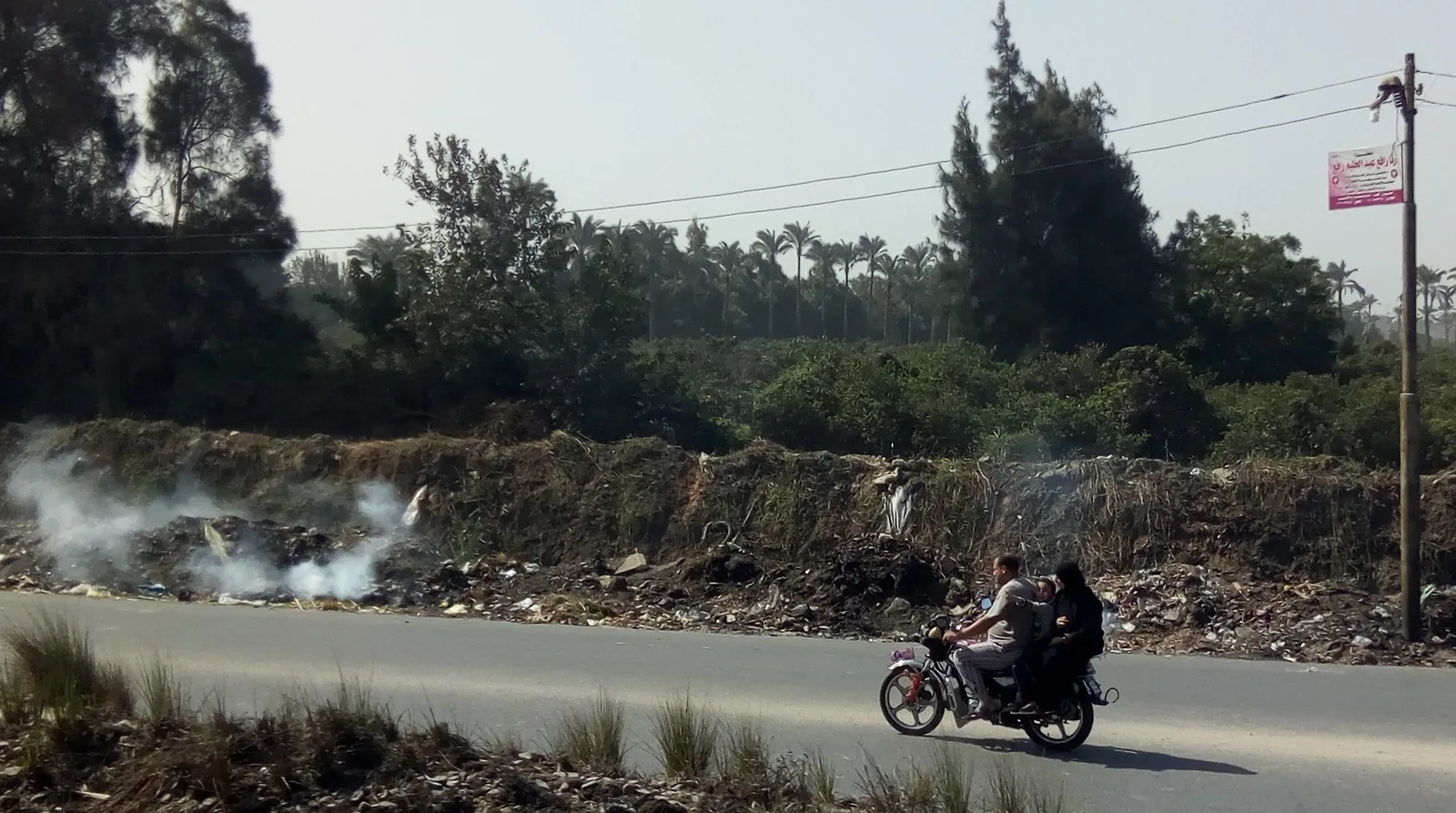
En deuxième semaine de rentrée, la même scène se répète : un père au guidon, un enfant devant, un autre derrière, la mère serrant les cartables, pas un seul casque. La presse, citant la CAPMAS, relève un bond des décès de 190 à 897 entre 2020 et 2024, alors qu'une revue Cochrane montre que le casque seul réduit le risque de décès de 42 %. La loi sanctionne la tête nue depuis 1999, amende relevée en 2008. Pourquoi ne s'y plie-t-on pas ?
23 septembre 2026 · 8 min de lecture

« Un branchement sur le câble » n'est pas malin : le vol d'électricité, un crime payé par tout le quartier
Un fil dénudé qui pend d'un poteau à un balcon, un climatiseur sur un compteur immobile, et un fusible qui saute pour la troisième fois, plongeant dans le noir un voisin qui paie sa facture. L'article 71 de la loi sur l'électricité qualifie cela d'appropriation illégale du courant, punie de prison et d'amende, tandis qu'un amendement plus sévère attend la Chambre. Que perd toute une rue pour un seul branchement ? Et quelle est la bonne solution ?
14 septembre 2026 · 7 min de lecture