Une bombe sur roues : foncer au volant d'une voiture délabrée, un mépris pour la vie des gens
Des freins qui répondent à moitié, des pneus lisses, des feux éteints — et un conducteur qui fait voler l'engin sur la route comme s'il sortait tout juste de l'usine. La voiture délabrée lancée à toute allure n'est pas un moyen de transport : c'est un danger ambulant qui menace chaque famille sur la route. Ça, c'est mal : votre liberté au volant s'arrête au droit des autres d'arriver chez eux vivants.
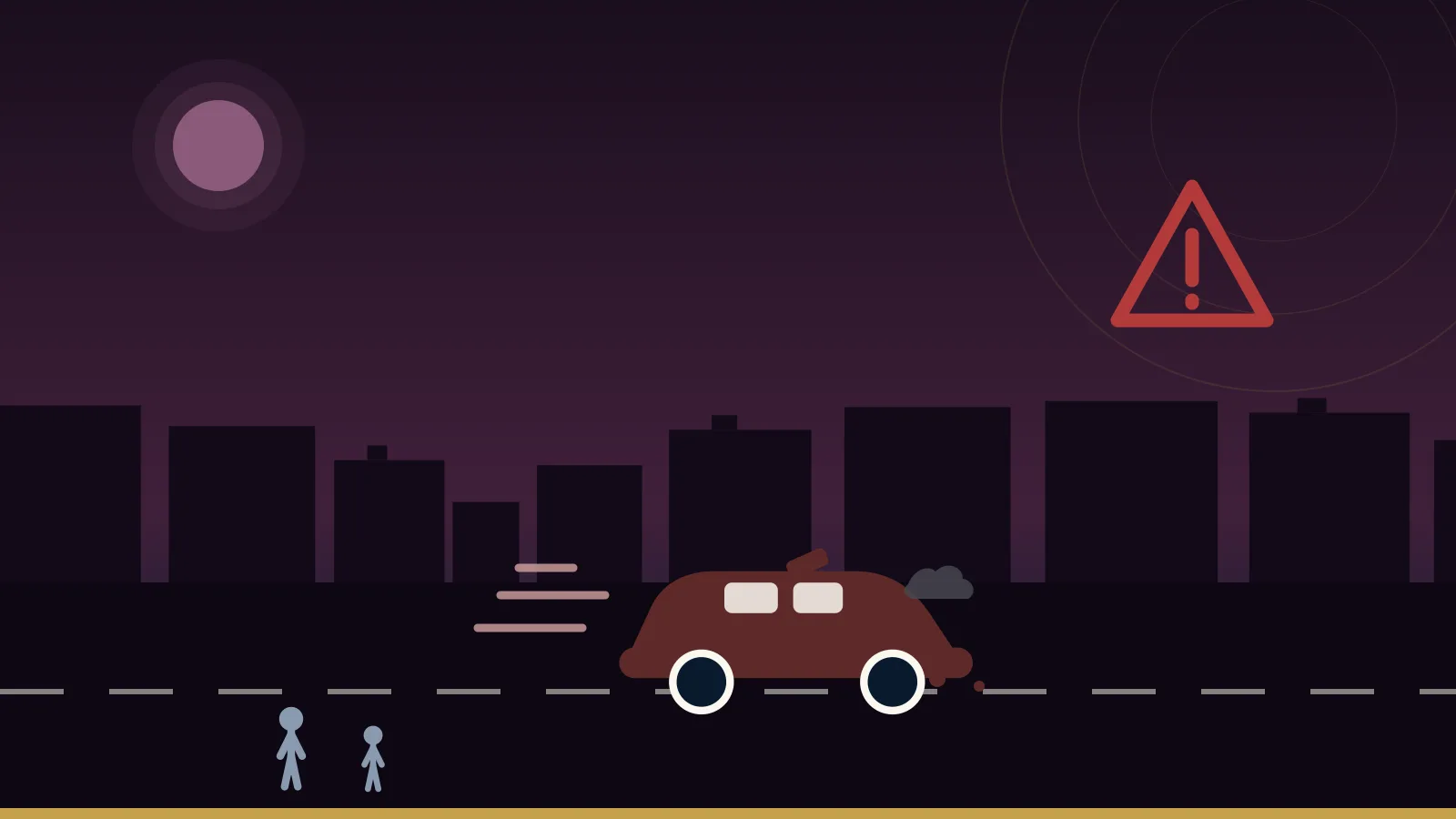
Nous l'avons tous vue, sur les autoroutes comme au cœur des villes : une voiture dont la rouille a rongé la carrosserie, qui tangue lorsqu'elle double, un feu arrière brisé et l'autre éteint, une fumée noire s'échappant du pot d'échappement, des pneus dont les sculptures se sont effacées à force d'usage. Ce qui effraie n'est pas son état, car son propriétaire a peut-être l'excuse de la gêne financière ; ce qui effraie, c'est qu'elle dévore la route à une vitesse folle, qu'elle double à droite et à gauche, comme si son conducteur pilotait une voiture de course et non une carcasse en train de s'effondrer.
Disons-le clairement : conduire à vive allure un véhicule techniquement inapte n'est ni de l'habileté ni une nécessité, c'est une agression morale contre tous ceux qui partagent la route avec vous. Des freins qui exigent deux pressions pour répondre, un pneu lisse qui glisse à la première humidité, une direction qui a du jeu : ce ne sont pas des détails techniques, c'est la distance qui sépare un incident sans gravité d'une catastrophe qui endeuille des familles entières.
Imaginez la scène que l'on ne souhaite à personne : une route saturée à l'heure de pointe, un microbus délabré qui s'élance pour doubler, puis se retrouve soudain derrière une voiture qui ralentit. Le conducteur du véhicule en bon état freine, et le véhicule répond ; le véhicule délabré, lui, répond en retard, ou ne répond pas. En ces quelques secondes, ce n'est pas seulement le propriétaire de la voiture qui paie le prix, mais la famille dans la voiture voisine, l'ouvrier au bord de la route, et un passager dont la seule faute est d'être monté dans le mauvais véhicule.
Il faut ici s'arrêter sur un paradoxe douloureux : beaucoup de ces véhicules servent précisément au transport des personnes, microbus et taxis dont la durée de vie a expiré depuis des années. Autrement dit, la victime potentielle paie le prix de son propre trajet vers le danger, sans avoir le luxe du choix dans des zones dépourvues d'alternative. Cela redouble la responsabilité morale du propriétaire et du conducteur, et la redouble encore pour les administrations censées avoir contrôlé le véhicule et délivré son autorisation.
Sur le papier, la loi n'est pourtant pas absente. Le code de la route égyptien impose le contrôle technique comme condition d'immatriculation du véhicule et de renouvellement de son permis de circulation, et il sanctionne aussi bien la conduite d'un véhicule inapte que le dépassement des vitesses autorisées. Comment, alors, des véhicules dont n'importe quel passant voit à l'œil nu qu'ils sont hors d'état circulent-ils parmi nous ? La réponse, affligeante, chacun la connaît : un contrôle qui se réduit parfois à une formalité, et un conducteur qui parie que personne ne l'arrêtera.
Mais avant de faire porter tout le poids à la seule surveillance, regardons-nous en face : celui qui conduit une voiture dont il sait les freins faibles, et qui accélère malgré tout, n'a pas besoin d'un contrôle routier pour savoir qu'il a tort. Il le sait. Simplement, il joue chaque jour sur sa chance, et le problème est que la mise n'est pas sa seule vie, mais celle de gens qui n'ont jamais accepté d'entrer dans ce pari.
Et nous le dirons sans détour, exactement comme nous le disons au propriétaire de la voiture de luxe qui jette ses ordures par la fenêtre : la pauvreté n'est pas une accusation et la gêne n'est pas une honte, mais la vitesse folle au volant d'une épave n'est un destin imposé à personne. Vous pouvez conduire cette même voiture lentement et prudemment jusqu'à pouvoir la réparer : rouler doucement dans un véhicule fragile est une humilité honorable, y rouler vite une vanité meurtrière.
Ce que l'on attend du conducteur et du propriétaire : soyez franc avec vous-même sur l'état de votre voiture, et réparez d'abord ce qui touche à la sécurité, car les freins, les pneus et les feux ne sont pas des accessoires. Et si vous ne pouvez pas encore réparer, roulez au moins à une vitesse qui respecte l'état de votre véhicule. Quant à celui qui gagne sa vie en transportant des passagers, sa responsabilité est double : ceux qui lui paient le prix de la course lui ont confié leur vie.
Ce que l'on attend de l'État : un contrôle technique véritable et non un tampon de routine ; une surveillance des routes qui vise en priorité les véhicules visiblement délabrés, avant les accidents et non après ; et de vrais dispositifs d'aide au remplacement des véhicules vétustes, en particulier ceux qui assurent le transport collectif, afin que le conducteur pauvre ne se retrouve jamais avec, pour seule option, le pari sur la vie des autres.
La route est un bien commun, et les plus vulnérables de ceux qui l'empruntent, piétons, enfants et usagers des transports, méritent que les plus forts y soient les plus prudents. Une voiture délabrée qui avance au pas, on la comprend et on respecte son propriétaire ; une voiture délabrée qui vole sur la route est une bombe sur roues. C'est mal, tout simplement, et la vie des gens n'est le terrain d'essai de la chance de personne.
À lire aussi
« Keda ghalat » (« Ça, c'est mal ») : maltraiter un animal est un crime au regard du Code pénal égyptien depuis 1937
Un voisin dépose des gamelles empoisonnées près du mur de l'école ; un charretier frappe son âne au visage sous une charge trop lourde. Beaucoup croient qu'« un animal » n'est protégé par aucune loi. En réalité, les articles 355, 356 et 357 du Code pénal sanctionnent tuer, empoisonner et maltraiter un animal, jusqu'à l'emprisonnement. À la veille de la Journée mondiale des animaux, voici ce que dit la loi.
3 octobre 2026 · 6 min de lecture
Quatre sur une moto et pas un casque : la tête nue est ce qu'une famille peut perdre de plus cher sur la route
En deuxième semaine de rentrée, la même scène se répète : un père au guidon, un enfant devant, un autre derrière, la mère serrant les cartables, pas un seul casque. La presse, citant la CAPMAS, relève un bond des décès de 190 à 897 entre 2020 et 2024, alors qu'une revue Cochrane montre que le casque seul réduit le risque de décès de 42 %. La loi sanctionne la tête nue depuis 1999, amende relevée en 2008. Pourquoi ne s'y plie-t-on pas ?
23 septembre 2026 · 8 min de lecture
« Un branchement sur le câble » n'est pas malin : le vol d'électricité, un crime payé par tout le quartier
Un fil dénudé qui pend d'un poteau à un balcon, un climatiseur sur un compteur immobile, et un fusible qui saute pour la troisième fois, plongeant dans le noir un voisin qui paie sa facture. L'article 71 de la loi sur l'électricité qualifie cela d'appropriation illégale du courant, punie de prison et d'amende, tandis qu'un amendement plus sévère attend la Chambre. Que perd toute une rue pour un seul branchement ? Et quelle est la bonne solution ?
14 septembre 2026 · 7 min de lecture