El expediente de la presa del Renacimiento, tal como está documentado: ¿qué quieren Egipto, Sudán y Etiopía?
Desde 2011, el expediente de la Gran Presa del Renacimiento Etíope ha pasado de las comisiones tripartitas a la Unión Africana y al Consejo de Seguridad de la ONU. Una guía neutral sobre lo que Egipto, Sudán y Etiopía han exigido realmente, y sobre por qué un acuerdo vinculante sigue estando lejos.
Pocos expedientes de la diplomacia africana han generado tanta negociación, tanta mediación y tanta cobertura informativa como el de la Gran Presa del Renacimiento Etíope, la colosal obra hidroeléctrica que Etiopía levantó sobre el Nilo Azul. Desde que en 2011 se anunció el inicio de las obras, la presa se ha discutido en comités tripartitos, en cumbres presidenciales y en la Unión Africana, y llegó incluso al Consejo de Seguridad de la ONU. Aun así, el expediente se reduce con frecuencia a consignas. Entenderlo de verdad exige saber qué ha dicho realmente que quiere cada uno de los tres países —Egipto, Sudán y Etiopía— y dónde chocan esas posiciones documentadas.
La presa se alza sobre el Nilo Azul, en la región etíope de Benishangul-Gumuz, a unos quince kilómetros de la frontera sudanesa. Es el mayor proyecto hidroeléctrico de África y se diseñó en torno a un embalse con capacidad para unos 74.000 millones de metros cúbicos de agua. Su emplazamiento importa tanto como su tamaño: el Nilo Azul, que nace en la meseta etíope, aporta la mayor parte del agua que acaba llegando a Sudán y a Egipto. Por eso, lo que ocurre en este tramo del río se siente, directa o indirectamente, a lo largo de todo el valle situado aguas abajo.
La posición etíope, sostenida sin variaciones desde hace más de una década, descansa en dos pilares: el desarrollo y la soberanía. Decenas de millones de etíopes viven sin electricidad, y Adís Abeba presenta la presa como la locomotora de la industrialización y de la electrificación rural, financiada en su mayor parte con recursos internos, incluidas campañas de bonos populares. Los responsables etíopes subrayan que una presa hidroeléctrica no consume agua, sino que la hace pasar por sus turbinas, y rechazan los acuerdos sobre el Nilo firmados en la época colonial, de los que Etiopía nunca fue parte. En su relato, el proyecto es un derecho nacional ejercido en suelo etíope y sin intención, afirman, de perjudicar a los vecinos de aguas abajo.
La posición egipcia parte de un hecho geográfico excepcional: Egipto es uno de los países del mundo más dependientes de una única fuente de agua, ya que obtiene del Nilo la abrumadora mayoría de su agua dulce mientras sus lluvias son casi inexistentes. El Cairo se apoya en el acuerdo de 1959 con Sudán, que le asignó 55.500 millones de metros cúbicos anuales, y habla de derechos históricos acumulados a lo largo de milenios de asentamiento en las orillas del río. Egipto sostiene que no se opone por principio al desarrollo etíope; lo que ha reclamado en cada ronda de negociación es un acuerdo jurídicamente vinculante que regule el llenado y la operación de la presa, empezando por los años de sequía.
La posición documentada de Sudán es la más compleja de las tres. Responsables sudaneses han reconocido posibles beneficios: un Nilo Azul de caudal regulado podría reducir las devastadoras crecidas estacionales, y la presa puede suministrar electricidad. Al mismo tiempo, Jartum ha planteado inquietudes persistentes sobre seguridad y coordinación, porque la presa sudanesa de Roseires se encuentra a escasa distancia aguas abajo y su operación depende de saber cuánta agua liberará la presa etíope y en qué momento. Por eso Sudán se ha alineado con Egipto al exigir un marco jurídico vinculante que cubra la operación y el intercambio continuo de datos.
El historial de las negociaciones se remonta a los primeros años del proyecto. Un panel internacional de expertos, integrado por miembros de los tres países, revisó la documentación de la presa y recomendó en 2013 realizar estudios adicionales sobre sus efectos en los dos Estados de aguas abajo. El hito más destacado llegó en marzo de 2015, cuando los líderes de Egipto, Sudán y Etiopía firmaron en Jartum la Declaración de Principios. Aquel documento comprometió a los tres Estados con principios familiares del derecho internacional de aguas: la cooperación, el uso equitativo y razonable, la obligación de evitar daños significativos y el acuerdo sobre las reglas para el primer llenado del embalse y su operación anual.
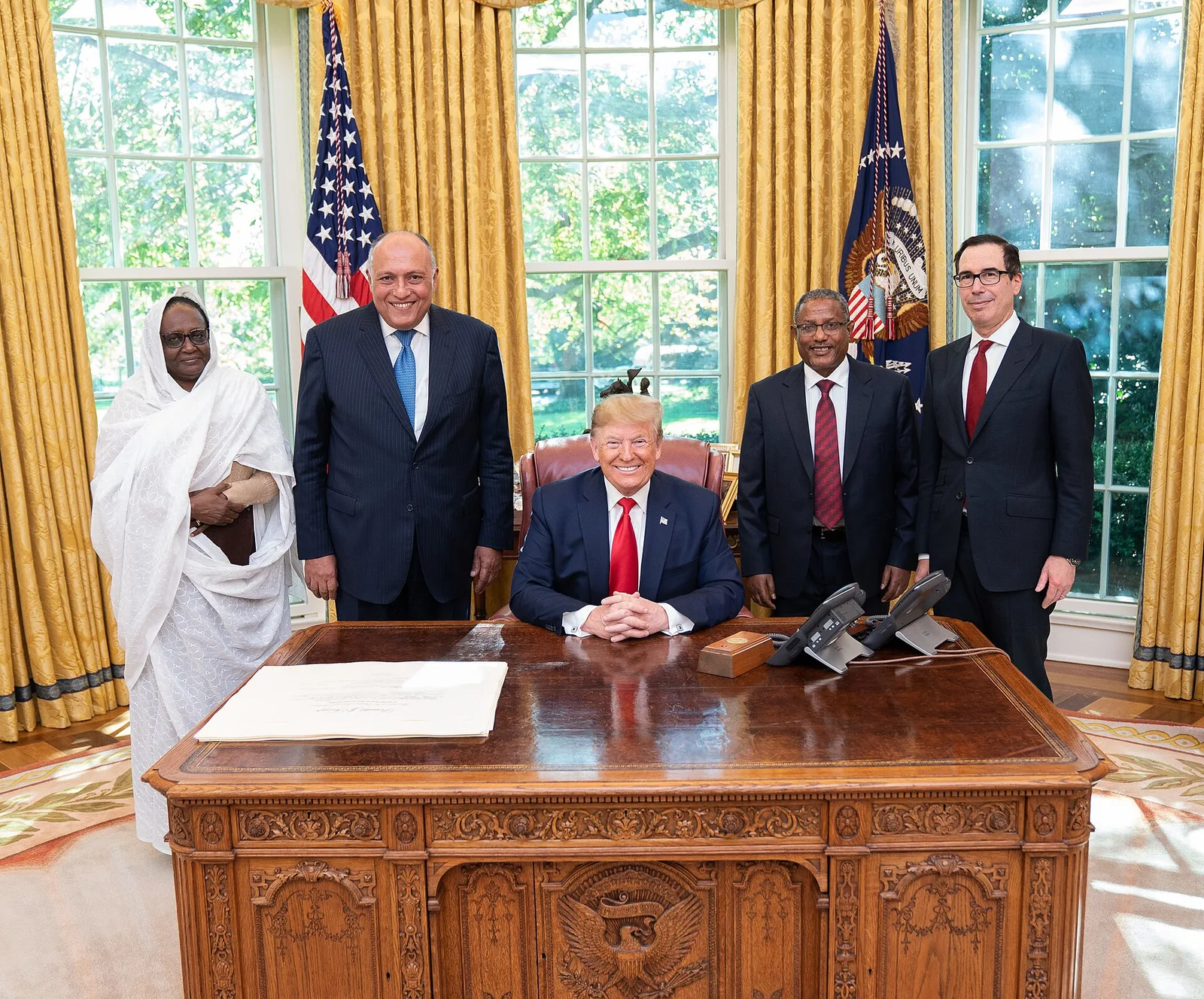
Convertir esos principios en un acuerdo de operación resultó mucho más difícil. A finales de 2019 los tres países entraron en unas negociaciones acogidas en Washington, con el Departamento del Tesoro de Estados Unidos y el Banco Mundial como observadores; se preparó un borrador, pero Etiopía no asistió a la sesión de clausura ni lo firmó, y calificó el texto de desequilibrado. Las conversaciones pasaron después a la vía de la Unión Africana, bajo presidencias sucesivas. En 2021 el Consejo de Seguridad de la ONU abordó el asunto y emitió una declaración presidencial que animaba a las partes a reanudar, bajo dirección de la Unión Africana, unas negociaciones encaminadas a un acuerdo aceptable para todos, dejando el expediente, formalmente, en manos africanas.
Sobre el terreno, Etiopía siguió adelante en solitario con el llenado del embalse: ejecutó fases sucesivas durante las temporadas de lluvias desde 2020 y anunció la conclusión de cada una año tras año. Las primeras turbinas de la presa empezaron a generar electricidad en 2022, Etiopía declaró completado el llenado en 2023 y el proyecto se inauguró oficialmente en septiembre de 2025. Egipto y Sudán protestaron por cada paso unilateral en cartas dirigidas al Consejo de Seguridad, con el argumento de que llenar y operar la presa sin un acuerdo vinculante contravenía la Declaración de Principios de 2015. Etiopía rechazó esa lectura y sostuvo que el llenado no había causado daño documentado alguno aguas abajo.
Dejando de lado la retórica, el núcleo de la disputa es jurídico más que hidrológico. Egipto y Sudán quieren un tratado vinculante con protocolos claros para la sequía —reglas que fijen cuánta agua debe liberar la presa si una sequía prolongada coincide con su operación— además de un mecanismo obligatorio de resolución de controversias. Etiopía, en cambio, prefiere directrices flexibles que pueda ajustar, con el argumento de que unos compromisos vinculantes de liberación equivaldrían en la práctica a reconocer cuotas fijas de agua a los dos países de aguas abajo y podrían limitar futuros proyectos en el curso alto del río. Todas las rondas de negociación que fracasaron acabaron encallando en esa misma división entre un tratado y unas directrices.
¿Qué significa el llenado en la práctica para los dos países de aguas abajo? Aquí solo cabe, con honestidad, trasladar las posiciones documentadas. Responsables egipcios han advertido de que una sequía prolongada durante varios años mientras la presa está en operación, sin reglas acordadas, podría imponer recortes dolorosos en el agua que llega a los campos y a las ciudades de Egipto. Responsables etíopes replican que las fases de llenado se hicieron en temporadas lluviosas y que no provocaron, según su evaluación, escasez apreciable aguas abajo. Las autoridades sudanesas, por su parte, han informado unas veces de un caudal más regular y se han quejado otras de fluctuaciones no anunciadas que complicaron la gestión de sus propias presas. Una evaluación independiente a largo plazo depende en gran medida de las lluvias de los próximos años.
El trasfondo jurídico más amplio explica lo difícil que resulta alcanzar un acuerdo. No existe ningún tratado global que obligue a los once Estados de la cuenca del Nilo. El Acuerdo Marco de Cooperación, impulsado por los países de cabecera, fue rechazado por Egipto y Sudán por su redacción en materia de seguridad hídrica y notificación previa. El derecho internacional de aguas ofrece dos principios en tensión permanente: el uso equitativo y razonable de un río compartido, que subrayan los países de aguas arriba, y la obligación de no causar daños significativos, que subrayan los de aguas abajo. El expediente de la presa es, en esencia, una prueba de cómo equilibrar ambos principios.
Por eso el expediente sigue abierto incluso después de la inauguración de la presa: es la operación, y no la construcción, donde los intereses de los tres países se encontrarán año tras año. Lo que está en juego no es abstracto: la seguridad hídrica de más de cien millones de egipcios, las aspiraciones de electricidad y desarrollo de un número similar de etíopes y, entre ambos, la seguridad y la agricultura de Sudán. Ya termine todo en un tratado vinculante, en una coordinación informal o en un bloqueo prolongado, seguir esta historia con rigor empieza por saber qué ha puesto realmente cada capital sobre la mesa, que es exactamente lo que este expediente ha intentado exponer.
Noticias relacionadas
Un agujero en el cielo, cerrado por un tratado: el Protocolo de Montreal y el papel de Egipto en el ozono
El 16 de septiembre el mundo celebra el Día Internacional de la Preservación de la Capa de Ozono: un tratado ratificado por todos los países del planeta que realmente funcionó. Desde un artículo científico de 1974 hasta la firma de Montreal en 1987, la ratificación de Egipto en 1988 y la Enmienda de Kigali de 2023: la historia de la bombona de refrigerante en manos de un técnico, y por qué el cielo debería sanar hacia 2040.
16 de septiembre de 2026 · 7 min de lectura
La Liga Árabe: la casa de los árabes cuyas ventanas dan a la plaza Tahrir
A unos pasos de la plaza Tahrir se alza «la casa de los árabes»: una de las organizaciones regionales más antiguas del mundo, nacida en El Cairo antes que la propia Carta de la ONU. ¿Cómo funcionan sus cumbres y su secretaría? ¿Por qué sus resoluciones solo obligan a quien las acepta? ¿Y cuál es la historia del traslado a Túnez y del posterior regreso? Un recorrido por dentro de un viejo vecino ante el que pasamos cada día sin apenas conocerlo.
2 de septiembre de 2026 · 7 min de lectura
Bajo el techo azul: cómo funciona la ONU y quién tiene el «veto» en el Consejo de Seguridad
Cada vez que estalla una crisis oyes que el Consejo de Seguridad se ha reunido y que un país ha levantado el «veto». Pero ¿qué ocurre realmente bajo el techo azul? Un recorrido desde el salón de la Asamblea General hasta la mesa en herradura: cómo nace una resolución de la ONU, cuándo es vinculante, cómo la tumba una sola palabra y qué lugar ocupa Egipto en el escenario.
26 de agosto de 2026 · 8 min de lectura